☰     THENEWSCREDIT
HOME BREAKING NEWS POLITICS METRO EDUCATION HEALTH SPORT ENTERTAINMENT OPINION VIDEOS SEARCH CONTACT

NEWS


NEWS /  Wed 18 Mar
Posted By; Akintayo Asamu

Police and Community Leaders establish content accord to protect Ogbomoso`s image

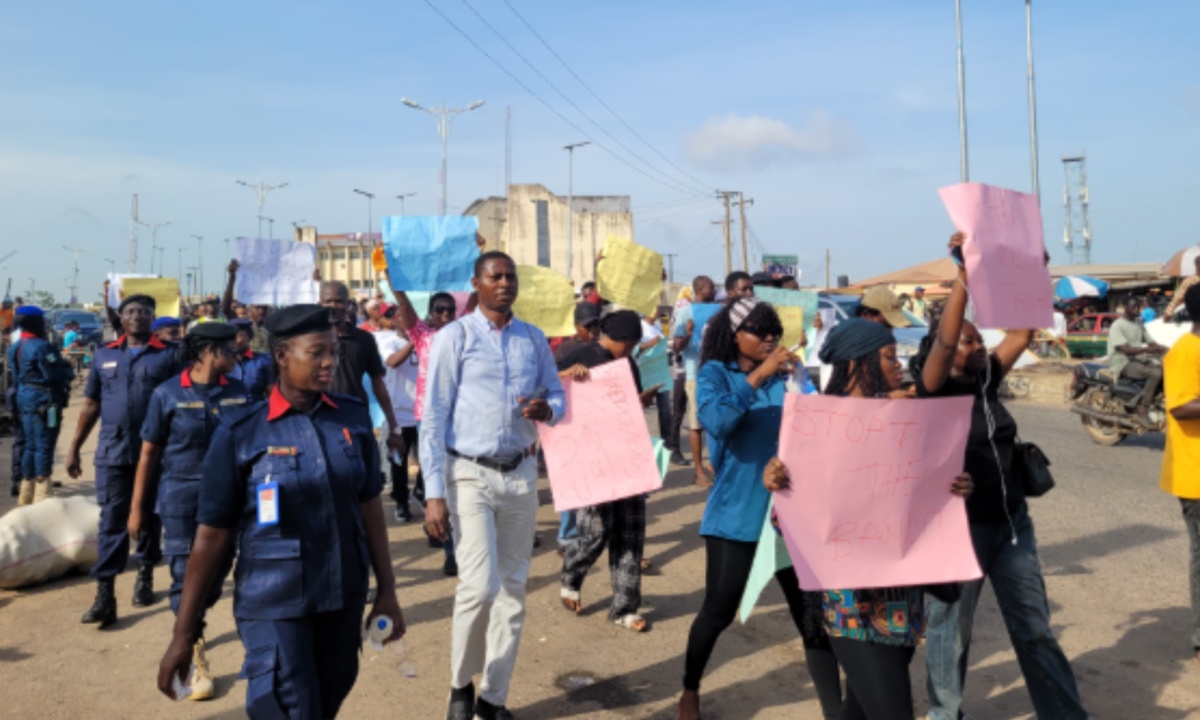
OGBOMOSO – In a strategic move to restore order and decorum to the digital landscape of Ogbomoso, the Area Commander and the Divisional Police Officer (DPO) of Owode Division have successfully brokered a peace accord with local journalists, bloggers, and content creators. The initiative, described by community leaders as a "landmark laurel," aims to curb the rising tide of provocative social media posts that have recently threatened the peace of Oyo State’s second-largest city. The meeting brought together high-profile local digital voices, including representatives from Amotekun Oodua, Karohunwi, Olorire, Femi, Coded, Bukola Omo Ogbomoso, and Mary D. The core of the agreement mandates that influencers shift their focus toward "Lessons and Blessings" for the community rather than fueling division. A key directive issued to the creators is to avoid digital "clout-chasing" or retaliatory posts. Instead, they have been instructed to report any individual who breaks the accord directly to the police. While acknowledging that some popular creators—including Gudugudu, Facobless, Oro ku topo, Arosophy, Kabisanra, Seyi, and Baba Lobanika—were absent from the initial meeting, community leaders emphasized that "ignorance of the law is no excuse." "The police have spoken. The government has spoken," a spokesperson for the concerned citizens stated. "The city is watching. If you cannot make our city better, do not make it bitter." The peace move specifically highlighted that sensitive communal issues—such as the Imamship tussle, Oba-related matters, and the Ayilara family disputes—are beyond the jurisdiction of social media commentary. Influencers were warned that previous peace efforts had been frustrated by "avoidable media jabs" and that the excuse of "using my own data on my own page" would no longer justify provocative content. A coalition of Ogbomoso sons and daughters, both at home and in the diaspora, has reportedly been formed to provide logistics and support to the police. This team is prepared to fund the prosecution of any content creator who continues to incite violence or defame individuals, as well as those who sponsor such activities. The message to the digital community remains clear: Ogbomoso is a civilized city that deserves first-class media projection. Loyalty to a cause or person should be shown through promotion, not by dragging others unscrupulously.
NEWS /  Tue 17 Mar
Posted By; Akintayo Asamu

Sultan Calls for Search of Shawwal Crescent this Wednesday.

The Sultan of Sokoto, Muhammad Sa’ad Abubakar, has called on Muslims in Nigeria to begin searching for the crescent moon that will mark the end of Ramadan and the start of Shawwal. A statement from the Sultanate Council, signed by the Wazirin Sokoto, Sambo Wali Junaidu, said that Wednesday, March 18, 2026, the 29th day of Ramadan 1447 AH, has been set for the moon sighting. “The Sultan of Sokoto urges Muslims throughout the country to look out for the new moon of Shawwal on Wednesday, March 18, 2026,” the statement said. Muslims who sight the crescent are asked to report it to their local district or village head, who will forward the information to the Sultanate Council for confirmation. The phone lines shared by the council for direct reports include 08037157100, 08066303077, 08035965322, 08035945903, and 07067146900. The sighting of the Shawwal moon marks the end of Ramadan fasting and the start of Eid al-Fitr celebrations across the Muslim world. The Sultan, as Nigeria’s top Muslim spiritual leader, officially announces the start and end of Ramadan after verifying moon sightings from different parts of the country.
NEWS /  Tue 17 Mar
Posted By; Akintayo Asamu

Rev. Dr. David Olusola Idowu Nominated as Incoming President of Nigerian Baptist Convention

The Search Committee of the Nigerian Baptist Convention (NBC) has officially nominated and recommended Rev. Dr. David Olusola Idowu of Emmanuel Ajayi Dahunsi Memorial Baptist Church as the incoming President of the Convention. If confirmed by the delegates at the upcoming 113th Annual Convention-in-Session, scheduled to hold in Abuja from April 18th to April 23rd, 2026, Dr. Idowu will succeed the incumbent president, Rev. Dr. Israel Adelani Akanji. Rev. Dr. Idowu is a distinguished leader, currently serving at The Ajayi Dahunsi Memorial Baptist Church in Ilasamaja, Lagos State. His recommendation marks a significant moment for the Baptist denomination in Nigeria as it prepares for a transition in leadership during the #NBCABUJA2026 conference. The current President, Rev. Dr. Israel Adelani Akanji, who has led the convention since 2021, is scheduled for a send-forth service on April 22, 2026, at the Baptist International Convention Centre (BICC), Abuja. The 113th Annual Convention-in-Session, themed "Entering into Newness Through the Fruit and the Gifts of the Spirit," is expected to draw delegates from across the country to BICC, Abuja, for the leadership transition. The Baptist community and well-wishers have begun extending congratulations to Rev. Dr. Idowu on his nomination, wishing him a successful tenure ahead of the final ratification by delegates.
NEWS /  Mon 16 Mar
Posted By; Akintayo Asamu

International Human Rights Commission Calls for Relief as Fuel Costs Cripple Nigerian Households

The International Human Rights Commission – Relief Fund Trust has expressed concern over the continuous rise in fuel prices in Nigeria, warning that the development is worsening hardship for many citizens. This was contained in a statement issued by the Country Director of the organisation, Abdullahi Bakoji Adamu, on Monday. In the statement, the group said the persistent increase in fuel prices is placing a heavy burden on ordinary Nigerians, leading to higher transportation costs, rising food prices, and an overall increase in the cost of living across the country. “The International Human Rights Commission- Relief Fund Trust expresses serious concern over the continuous rise in fuel prices in Nigeria and the growing hardship it is causing for ordinary citizens,” the statement said. The organisation noted that Nigeria is an oil-producing nation with significant petroleum resources and some refining capacity, making the situation difficult for many citizens to understand. “Nigeria is an oil-producing country with significant petroleum resources and existing refining capacity. Many citizens therefore find it difficult to understand why domestic fuel prices continue to increase despite these advantages,” the statement added. According to the group, although global oil prices sometimes fluctuate, Nigerians expect that the country’s natural resources should provide some form of economic relief for the population. “While global oil prices may fluctuate, the expectation of Nigerians is that the nation’s natural resources should translate into economic relief and shared benefits for its people,” the organisation stated. However, it said the current reality appears to be different, as rising fuel prices continue to put additional pressure on households already facing economic challenges. “Unfortunately, the opposite appears to be the case, as rising fuel prices continue to place additional pressure on already struggling households,” the statement said. The organisation therefore called on the country’s leadership to respond to the situation with urgency, transparency and a strong sense of responsibility toward citizens. “We call on the leadership of the country to act with urgency, transparency, and a strong sense of responsibility toward the welfare of citizens,” the statement noted. It also urged stakeholders, especially members of the National Assembly of Nigeria, to review the situation and take steps that would address the growing concern. “We also urge all relevant stakeholders, particularly members of the National Assembly, to carefully review the situation and take appropriate measures to address this growing concern,” the statement added. IHRC stressed that the wellbeing of Nigerians must remain a top priority in the management of the country’s resources. “The wellbeing of the Nigerian people must remain a central priority in the management of our national resources,” the statement concluded.
NEWS /  Mon 16 Mar
Posted By; Akintayo Asamu

President Tinubu Directs Nationwide Rice Distribution to Support Citizens During Ramadan and Lent

Renewed Hope Ambassadors, a political support group of President Bola Tinubu, has received directives from the President to distribute rice nationwide in support of citizens observing Ramadan and Lenten fasts. This was disclosed by the Director-General of the Renewed Hope Ambassadors and Imo State Governor, Hope Uzodinma, in a statement on Saturday. According to the statement, the exercise was aimed at strengthening “national unity and demonstrating compassion during a period that holds deep spiritual significance for both Muslims and Christians.” Uzodinma said the initiative demonstrated the President’s commitment to unity and compassion. “Ramadan and Lent are seasons that remind us of sacrifice, charity, and care for one another. Through this distribution, the Renewed Hope Ambassadors will ensure that families across Nigeria feel the spirit of togetherness during this sacred period. “Under the directive, the Renewed Hope Ambassadors will coordinate the distribution through their nationwide grassroots network to ensure that families across Nigeria benefit from the intervention during this holy season when both Muslims and Christians are fasting,” the statement said. A similar initiative took place last Christmas, when rice was distributed to assist Nigerians during the festive season, demonstrating the administration’s ongoing dedication to supporting citizens at key religious and cultural times. The distribution will cover both Christian and Muslim communities, highlighting the President’s focus on inclusivity and unity.
NEWS /  Sun 15 Mar
Posted By; Akintayo Asamu

Hold on to God, Not Men": Sanusi Advises Against Desperation

A former Governor of the Central Bank of Nigeria and 16th Emir of Kano, Muhammadu Sanusi II, has explained why he remained calm and steadfast after losing two of the most powerful positions he once held in public life. Sanusi spoke on resilience and faith while addressing participants at the Fola Adeola Annual Ramadan Lecture on Sunday. Sanusi served as CBN governor from 2009 to 2014 before being installed as Emir of Kano. He was dethroned in 2020 by the administration of former Kano State Governor Abdullahi Ganduje and reinstated to the throne in 2024 by current Governor Abba Yusuf. As reported by Daily Trust, the monarch reflected on how his belief in God helped him navigate difficult periods following his suspension as CBN governor and his later removal as Emir of Kano. He said people often make the mistake of attributing power and outcomes to individuals rather than recognising that circumstances change only by the will of God. “Too often in our lives, we attribute things to human beings, but they are all created. “Remembering that situations are not permanent, that Allah changes your circumstances, helps you cope and conduct yourself,” Sanusi said. He also cautioned against humiliating oneself in pursuit of favour from powerful individuals, noting that many people wrongly believe their fortunes depend entirely on others. “I’ve seen people who beg, cringe, and bow to human beings. They humiliate themselves because they feel this person is the one who holds the path to their position,” he said. Drawing from his personal experience, Sanusi said his life journey demonstrates how quickly fortunes can change. “I was suspended from being governor of the central bank. Three months later, I became an emir,” he said. “Several years ago I was removed as emir; four years later, I came back. I’m now in the same palace, I’m on my throne. Yes, there are challenges but at the end of the day you hold on to God. You don’t panic.” Sanusi said his time away from Kano following his dethronement allowed him to avoid situations that might have been humiliating and gave him the opportunity to pursue academic work. “I think of all the things that could have happened if I was in Kano in the last four years, the humiliation I could have faced, the people I would have had to deal with, the people I would have had to report to, but God was so merciful, so kind. He took me away from that. He gave me a chance, I went and did a PhD and I’m back,” he said. He also emphasised that losing positions should not be seen as the end of one’s purpose in life, urging people to remain guided by their principles. “If I’m taken away from positions, it’s not a big deal. At the end of the day, I ask myself, have I done anything to offend God?” he said. “It’s better for you to leave there and keep to your principles than to stay there and earn the wrath of Allah.”
NEWS /  Sun 15 Mar
Posted By; Akintayo Asamu

Rural Women’s Business Growth Stunted by Power, Internet Deficits — Women Radio CEO

The Chair of the Board of Directors of Women Radio WFM 91.7, Toun Sonaiya, has said Nigerian women, particularly those in rural communities, face significant challenges that hinder their ability to contribute fully to national development. Sonaiya stated this during her remarks at the second edition of Nigerian Women’s Day, held as part of activities at the 70th session of the United Nations Commission on the Status of Women in New York on Thursday. According to a statement made available to PUNCH Online on Sunday, the event, themed “31 Years of Progress, Resilience, Impact and Renewed Hope,” was organised by the Federal Ministry of Women Affairs and Social Development under the leadership of the Minister, Imaan Sulaiman-Ibrahim. It brought together members of the Nigerian diaspora, diplomats, gender advocates and global leaders, including the United Nations Deputy Secretary-General, Amina Mohammed. Speaking at the event, Sonaiya said, “Nigerian women, children, families and vulnerable people, especially in 774 rural areas, face big challenges that stop them from contributing to the country’s growth.” She identified some of the challenges as lack of electricity, limited access to finance and internet services, poor healthcare, limited educational opportunities and low representation of women in leadership positions. Sonaiya called on Nigerians at home and in the diaspora, as well as development partners, to support programmes aimed at empowering women and strengthening communities. She noted that the Ministry of Women Affairs had introduced several initiatives under the Renewed Hope Social Impact Interventions 774 framework, designed to support women and vulnerable groups across the country. Among the programmes highlighted were PowerHer774, which seeks to expand clean energy access to one million women and their households across the 774 local government areas, and the Women Agro Value Expansion programme targeting three million women in agriculture. Other initiatives include programmes focused on digital literacy for women and girls, child development support and interventions aimed at improving women’s health and economic empowerment. “Your positive contribution is like a piece of a jigsaw. Bit by bit we will build a bigger positive Nigeria,” Sonaiya said, urging stakeholders to partner with the government in implementing the programmes. In her address, Sulaiman-Ibrahim called for increased global and domestic investments to advance women’s empowerment. “Transforming women’s lives at scale requires sustained investment, strong partnerships, and coordinated action,” the minister said. “There is an urgent need for greater investment in women and girls, both domestically and globally. Women’s empowerment is not a social programme; it is an economic strategy, a security strategy, and a development imperative.” The event also featured a fireside conversation between the minister and the United Nations Deputy Secretary-General, focusing on Nigeria’s gender equality goals and the global agenda for women’s empowerment. Participants discussed challenges and opportunities affecting women and girls across Africa and beyond. Panel discussions held during the event addressed topics including Global Leadership, Peace and Security for Social Impact; Women, Institutions and the Economy; and Positive Masculinity. Speakers included the Minister of State for Labour and Productivity, Nkeiruka Onyejeocha; Chairman of the National Population Commission, Aminu Yusuf; Executive Secretary of the National Human Rights Commission, Tony Ojukwu; and Country Director of ActionAid Nigeria, Andrew Mamedu, among others. The programme also featured cultural performances and presentations highlighting the role of women in leadership, innovation and social development.
NEWS /  Sat 14 Mar
Posted By; Akintayo Asamu

Gowon Applauds Tinubu’s Efforts to Stabilize Nigeria

Former Head of State, Yakubu Gowon, on Saturday said President Bola Tinubu is “doing the best he can all round” in managing the affairs of Nigeria. Gowon made the remark after his meeting with Tinubu at the Presidential Villa, where he commended the president’s performance. He expressed satisfaction with Tinubu’s leadership across key sectors, including politics, the economy and social development, as well as efforts to tackle insecurity. “As far as it goes, isn’t he doing the best he can all round? So there is no particular place. Every other area—political, economic, social, etc.—and of course, the major problem that we have today, security in the area, he’s doing everything to deal with those for the good of Nigeria,” Gowon said. When asked to highlight specific areas where the president should improve, the elder statesman maintained that Tinubu’s administration is already addressing the country’s key challenges. “There is no particular place. He’s got to look after the interests of Nigeria in all areas,” he added. Gowon explained that his visit to the Presidential Villa was primarily to appreciate the president’s efforts and acknowledge what he described as progress being made under the current administration. “I came to see him and to thank him for all the good work that he’s doing for the country. “We had to look at all the good work that the president is doing and the progress that Nigeria is making economically and otherwise,” he said.
NEWS /  Fri 13 Mar
Posted By; Akintayo Asamu

Oyo State Electricity Market Takes Shape with New Acting Board Appointments

The Oyo State Governor, Seyi Makinde, has appointed the Commissioner for Energy and Mineral Resources, Prof. Dahud Kehinde Shangodoyin, as the Acting Chairman of the Oyo State Electricity Regulatory Commission. This is in a bid to facilitate the oversight functions of the commission and accelerate the opening of the state’s electricity market. The governor also appointed Mr. Ayanniyi Taiwo as Acting Secretary; Solomon Oyekunle, Acting Technical Member; Abiodun Adedoja, Acting Strategy Member; and Mrs. Omolara Omoremi, Acting Legal Member, according to a release issued on Friday by his Special Adviser (Media), Dr Sulaimon Olanrewaju. The Acting Chairman, in a statement, said the appointments were significant in the operationalisation of the Oyo State Electricity Regulatory Commission. According to him, the step “marks a major step in the implementation of the Electricity Act 2023 and the Oyo State Electricity Regulatory Commission Law 2024, which empowers Oyo State to regulate its intrastate electricity market under Nigeria’s evolving dual-tier regulatory framework.” It added that the appointments in acting capacity were aimed at “driving the institutional take-off of the commission and establishing foundational regulatory systems, licensing frameworks, compliance mechanisms, tariff oversight methodologies, consumer protection architecture, and internal governance structures.” Shangodoyin said the governor would make substantive appointments upon the formal passage of the Oyo State Electricity Market Bill into law. Explaining the oversight functions of the OYSERC, Shangodoyin stated that the commission will focus on the licensing of generation, distribution, embedded generation, captive power, and mini-grid projects within Oyo State, tariff regulation and service band oversight to prevent arbitrary upgrades, consumer complaint resolution and protection mechanisms, monitoring, compliance, and enforcement of service standards, promotion of embedded generation and local electricity market development and enforcement of technical and safety standards. He said: “By decentralising regulatory oversight, Oyo State is now positioned to respond more quickly to electricity service gaps, strengthen accountability of operators, and encourage private sector investment in local power solutions. “As a commission, we have recorded some achievements within the initial operational period, including the receiving and reviewing of consumer petitions, engaging constructively with distribution operators and stakeholders, facilitating resolution of select electricity disputes, initiating alignment with the Oyo State Electricity Priority Plan & Implementation Roadmap (2026–2031) and advancing institutional systems, staffing, and administrative frameworks. “Our focus is to open up the Oyo Electricity Market and we are positioning the state to encourage embedded and distributed generation, attract private sector investment, improve service delivery and accountability, strengthen consumer confidence, accelerate infrastructure expansion and enhance power reliability across the state. “This is a milestone that underscores Oyo State’s commitment to regulatory clarity, institutional robustness, financial sustainability, and improved electricity access for residents, businesses, and public institutions.” In a related development, the statement indicated that on February 12, the OYSERC held a high-level technical meeting with the Nigerian Electricity Regulatory Commission in Abuja to ensure regulatory coordination and seamless market transition. The statement read: “The engagement focused on jurisdictional clarity under the Electricity Act 2023, licensing and regulatory frameworks, tariff oversight and service band accountability, consumer protection systems, compliance monitoring and enforcement, digital regulatory platforms and data integration and institutional capacity development. “The meeting reaffirmed the spirit of cooperative federalism embedded in Nigeria’s electricity reform and laid the groundwork for structured collaboration between federal and state regulators.”
NEWS /  Fri 13 Mar
Posted By; Akintayo Asamu

No More Loans: CBN Restricts Services for Defaulters

The Central Bank of Nigeria (CBN) has issued a stern directive to commercial banks, ordering them to immediately halt the extension of further credit to “large-ticket obligors” who have failed to repay existing loans. This move targets high-value borrowers, both individuals and corporations, whose massive unpaid debts are deemed a systemic risk to the stability of the nation’s financial infrastructure. Under the new mandate, any borrower identified as a non-performing large-ticket obligor within the Credit Risk Management System (CRMS) or by licensed private credit bureaus is strictly barred from accessing new loans. The restriction extends beyond simple cash advances to include a wide array of banking services such as letters of credit, performance bonds, bankers’ confirmations, and advance payment guarantees. To further insulate the banking sector from potential defaults, the apex bank has instructed financial institutions to demand additional realisable collateral from these heavy debtors. This measure is intended to ensure that existing exposures are adequately secured, protecting depositors’ funds and maintaining the capital adequacy ratios of the affected banks. The CBN defined these specific obligors as customers whose total debt across the banking industry either exceeds the Single Obligor Limit (SOL) or materially threatens a bank’s financial health. By targeting these specific entities, the regulator aims to curb credit abuse and prevent a ripple effect that could destabilize the broader economy. This latest policy reinforces a previous circular from 2014, signaling a renewed and more aggressive stance on credit discipline. Coming just a week after the CBN ordered banks to conduct comprehensive stress tests, the directive underscores a prioritized mission to sanitize the Nigerian banking system and enforce stricter prudential compliance.
Page 36 of 106


Home   About Contact

2026  ©
Developed by KITE