☰     THENEWSCREDIT
HOME BREAKING NEWS POLITICS METRO EDUCATION HEALTH SPORT ENTERTAINMENT OPINION VIDEOS SEARCH CONTACT

HEALTH


HEALTH /  Fri 26 Jun
Posted By; Akintayo Asamu

Check Before You Chew: NAFDAC Launches Campaign Against Killer Diets

The National Agency for Food and Drug Administration and Control (NAFDAC) has ordered Nigerians to strictly inspect food labels before buying or eating packaged foods. The Director-General of NAFDAC, Prof. Mojisola Adeyeye, issued this warning on Friday during the official launch of the "Read the Food Label Campaign" in Abuja. Prof. Adeyeye revealed that reckless consumption of foods packed with hidden sugars, salt, saturated fats, and trans fats is directly driving up lethal health conditions across Nigeria. These include:Hypertension, Diabetes, Obesity, Cardiovascular diseases. The new safety campaign, built alongside key development partners, aims to rapidly boost nutrition literacy nationwide. NAFDAC insists that understanding ingredient lists must transition from an afterthought into an everyday, life-saving routine for all citizens. "The ability of consumers to understand, interpret, and apply information on food labels has never been more important," Prof. Adeyeye emphasized, noting that clear awareness will drastically slash the country`s heavy burden of preventable, diet-related illnesses.
HEALTH /  Mon 22 Jun
Posted By; Akintayo Asamu

Oyo Plans Mass Burial, Gives Families 7 Days to Claim Corpses

The Oyo State Government has issued a strict seven-day ultimatum to families and next of kin to identify and claim bodies deposited in state-owned mortuaries, or face seeing them buried in a mass grave. The directive, aimed at decongesting overflowing public health facilities, was announced on Monday in a statement by the state Commissioner for Health, Dr. Oluwaserimi Ajetunmobi. According to the Commissioner, a massive influx of unclaimed bodies has pushed public mortuaries to their maximum storage capacities. Many of these corpses were brought in by law enforcement and emergency response agencies over an extended period. "The corpses were brought to the facilities by the Nigeria Police Force, the Federal Road Safety Corps, the Nigerian Correctional Service, and other relevant agencies," Ajetunmobi stated. "Over time, the bodies have remained unclaimed, resulting in severe congestion." With public health standards at risk, the government is urging citizens with missing relatives to immediately visit public hospital mortuaries across the state for verification. Final arrangements for the mass burial are already underway. The exercise will commence exactly one week from the date of the official announcement. Ajetunmobi emphasized that the window is a final opportunity for families to give their loved ones a proper, individual burial while ensuring state healthcare facilities can return to efficient operations.
HEALTH /  Wed 10 Jun
Posted By; Akintayo Asamu

Health is Wealth: Kano Hisbah Screens Hundreds of Couples Ahead of State Mass Wedding

As part of preparations for the state’s planned mass wedding, the Kano State Hisbah Board has announced that nearly 720 prospective couples have so far undergone medical screening across 24 local government areas. The figure forms part of the 3,000 prospective couples the state intends to marry soon in a state-sponsored mass wedding for the less privileged. THENEWSCREDIT recalls that the Hisbah Board, in collaboration with the State Ministry of Health, has been mandated to conduct mandatory tests for HIV/AIDS, hepatitis B, genotype compatibility, drug use, pregnancy, and other sexually transmitted infections to ensure healthy unions. The Deputy Commander-General of the Board, Mujahideen Aminudddeen, confirmed the development in a statement, saying the exercise is ongoing, with couples from metropolitan local government areas scheduled to continue their screening on Wednesday at the Kano State Agency for the Control of AIDS (KSACA) office along Naibawa. He explained that participants are expected to present copies of their registration forms at the venue, adding that couples from the remaining local government areas will be notified of their screening dates in due course. The mass wedding programme, revived under Governor Abba Kabir Yusuf, is designed to support widows, divorcees, orphans, and other less-privileged residents by covering marriage expenses and providing financial and household support.
HEALTH /  Fri 29 May
Posted By; Akintayo Asamu

Ebola Alert: FG Places FCT and 21 States on High Preparedness Watch

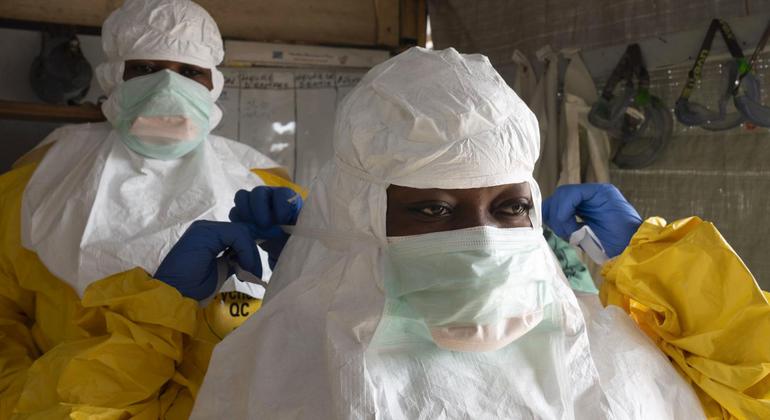
The Nigeria Centre for Disease Control and Prevention, NCDC, has placed the Federal Capital Territory (FCT) and nine other states on heightened Ebola surveillance following the outbreak of the deadly Bundibugyo strain of the virus in parts of East and Central Africa. In a public health advisory issued to state Commissioners for Health, the agency warned that Nigeria remains at high risk of importing the virus due to increased regional transmission, cross-border movement, international travel, and porous borders. The advisory, dated May 27, 2026, identified Lagos, the FCT, Rivers, Kano, Enugu, Borno, Akwa Ibom, Cross River, Taraba, and Adamawa as high-risk areas because of their international airports, seaports, border corridors, and heavy human traffic. According to the NCDC, the current outbreak involving the Bundibugyo strain presents a major concern because there is presently no approved vaccine or targeted treatment for the variant. “The immediate objective of our national preparedness and readiness efforts is to ensure that every state and the FCT can reasonably detect, contain, and respond swiftly to any suspected case while protecting health workers and sustaining essential health services,” the agency stated. Although Nigeria has not recorded any confirmed Ebola case, the NCDC disclosed that a recent risk assessment conducted after the outbreak was declared a public health emergency of international concern indicated that the threat of importation into the country remains significant. The agency revealed that Uganda and the Democratic Republic of Congo had already recorded over 1,000 suspected cases and hundreds of deaths linked to the outbreak, with a fatality rate estimated at 24.6 per cent. The outbreak has also raised global concern, with reports of suspected cases emerging in India, while Canada reportedly imposed temporary restrictions on certain travel applications involving residents from Uganda, the DRC, and South Sudan. Uganda has equally introduced border control measures aimed at curbing the spread of the disease. Health authorities stressed that the Bundibugyo strain differs from the more common Zaire Ebola strain, which existing vaccines and antibody therapies primarily target. “The current Bundibugyo virus outbreak has no licensed vaccines or approved targeted therapeutics,” the advisory warned. The NCDC further cautioned healthcare workers against relying solely on visible bleeding as a sign of Ebola, noting that symptoms may initially resemble malaria, Lassa fever, or other common illnesses. “Health workers must not wait for bleeding before suspecting Ebola in any patient with compatible symptoms and relevant travel or exposure history,” the agency advised. As part of its emergency response strategy, the NCDC said the National Emergency Operations Centre had already been activated in alert mode to coordinate nationwide preparedness efforts. State governments were directed to activate emergency preparedness structures, strengthen surveillance at entry points, identify isolation centres, equip frontline health workers with personal protective equipment, and intensify public awareness campaigns to prevent panic and misinformation. Meanwhile, the Lagos State Government has assured residents that no confirmed or suspected Ebola case has been detected in the state. The Commissioner for Health, Prof. Akin Abayomi, said there was no cause for alarm, adding that Lagos remained on high alert due to its strategic position as Nigeria’s major entry point. According to him, the state’s bio-security and disease surveillance systems remain fully operational and capable of responding swiftly to any biological threat. “The Lagos Biosecurity Bio-shield was built to protect and remains ready to respond to biological shocks. Preparedness for us is not a temporary reaction; it is a permanent culture embedded within our health system,” Abayomi stated. He explained that the state’s preparedness system, first tested during the 2014 Ebola outbreak and later strengthened during the COVID-19 pandemic, remains active in managing recurring public health threats such as cholera, diphtheria, and Lassa fever. Nigeria’s latest Ebola alert has revived memories of the country’s successful containment of the virus during the 2014 outbreak after an infected Liberian-American traveller, Patrick Sawyer, arrived in Lagos and exposed several people before authorities intervened. At the time, public health experts feared a major outbreak in Lagos due to its dense population and commercial significance. However, swift contact tracing, isolation protocols, emergency coordination, and aggressive public awareness campaigns helped contain the virus within months. The World Health Organisation later described Nigeria’s response as one of Africa’s most successful Ebola containment efforts. Health authorities are now urging Nigerians to remain calm, avoid misinformation, maintain proper hygiene practices, and promptly report any suspected symptoms as surveillance and emergency preparedness measures intensify across the country.

HEALTH /  Sun 17 May
Posted By; Akintayo Asamu

Ebola Threat: Nigerian Govt Activates High Alert, Monitors Regional Outbreaks

The Federal Government, through the Nigeria Centre for Disease Control and Prevention, NCDC, says it has stepped up surveillance and emergency response following an Ebola outbreak in the Democratic Republic of the Congo and a confirmed imported case in Uganda. In a public health advisory signed by NCDC Director-General, Dr Jide Idris, the agency said it was closely monitoring developments in affected countries and coordinating preparedness efforts with the Port Health Services and other stakeholders. “Response activities are ongoing in affected areas, and we are ensuring continued vigilance within Nigeria’s public health system,” Idris said. Highlighting preparedness measures activated, Idris said NCDC had strengthened nationwide surveillance systems for Ebola and other epidemic-prone diseases, while intensifying event-based monitoring and coordination with state health authorities. Other measures include enhancing laboratory and diagnostic readiness, strengthening infection prevention and control awareness in healthcare settings, and expanding community engagement and public risk communication. According to him, the agency was closely tracking global and regional developments to ensure a rapid response if the situation changed. THENEWSCREDIT reports that Ebola Virus Disease is a severe and often fatal viral infection transmitted through direct contact with the blood, bodily fluids or contaminated materials of infected persons or animals. The health agency further stated that the disease has an incubation period ranging from two to 21 days.
HEALTH /  Thu 14 May
Posted By; Akintayo Asamu

Gone from Our Sight, Never Our Hearts: Oyo State Bids a Painful Farewell to Dr. Sunday Oladeji

The medical fraternity in Oyo State and across Nigeria is reeling from the sudden and shocking demise of Dr Sunday Oladeji, the Proprietor and Supervising Consultant at Mainsprings Hospital, Ogbomoso. Dr Oladeji passed away at approximately 3:00 AM after suddenly developing an acute health complication while in bed talking with his wife. Hospital sources confirmed he treated patients the previous day before complaining of fatigue. Immediate medical tests revealed no anomalies, normal blood pressure, and a clean bill of health before he was urged to rest. His body has been moved and deposited at the Ladoke Akintola University of Technology (LAUTECH) Teaching Hospital mortuary. His untimely death at just 46 years old leaves a massive deficit in rural healthcare delivery for the Ogbomoso region. Colleagues, patients, and loved ones have expressed profound grief, lamenting the premature loss of a deeply committed healthcare professional. He is widely celebrated for his unparalleled dedication to community health and patient care in Oyo State.
HEALTH /  Tue 30 Dec
Posted By; Akintayo Asamu

Why school-age children should eat two eggs daily – Nutritionists

Nutritionists have recommended that school-aged children can safely consume two eggs per day to meet their growing protein needs and support brain development. They noted that protein in eggs is of high quality because it contains all essential amino acids, is easily digested, and is fully utilised by children to meet their protein needs. In exclusive interviews with PUNCH Healthwise, the registered dietitian-nutritionists further emphasised that the consumption of eggs helps to reduce malnutrition in children and urged parents to ensure it is included in their children’s meals daily, including fruits, vegetables, whole grains, and healthy fats. The experts added that parents should mainly give their children boiled or poached eggs, as these methods retain most of the nutrients without added fats, making them the healthiest options. According to the World Health Organisation, malnutrition refers to deficiencies, excesses, or imbalances in a person’s intake of energy and nutrients, covering two broad groups of conditions: undernutrition, which includes stunting, wasting, underweight, and micronutrient deficiencies; and overweight, obesity, and diet-related noncommunicable diseases such as heart disease, stroke, diabetes, and cancer. The WHO disclosed that about 150 million children under the age of five globally are stunted, with Nigeria having the second-highest burden of stunted children. The United Nations Children’s Fund says malnutrition is a violation of children’s rights, while good nutrition sets children on the path to grow, develop, learn and reach their full potential. The Paediatric Association of Nigeria also said that about 12.3 million Nigerian children suffer from chronic malnutrition, out of which 300,000 are at risk of dying. THENEWSCREDIT had reported that many parents, due to rising food prices, could no longer afford to give their children eggs, one of the cheapest and most commonly available sources of protein. The price of eggs began to rise in late 2023, increasing from about N2,600 to N6,000 per crate. Currently, a crate sells for around N6,500, while a single egg costs between N250 and N300. Commenting on the matter, a registered dietitian nutritionist and former Director of Nutrition Services, Osun State, Mr James Oloyede, stated that eggs help to reduce malnutrition in children. James Oloyede James Oloyede “The protein in eggs is of good quality as it contains all the essential amino acids, easily digested and fully utilised by children, helping to meet their protein requirements. The egg protein is far better in quality and utilisation than any other animal or plant proteins,” Oloyede stated. Continuing, he said, “This is because of all meat proteins, egg has the highest quality in addition to certain vitamins, especially vitamins A, D, B12, E, minerals such as selenium and phosphorus, whilst it also contains antioxidants that are known to neutralise free radicals that could predispose individuals to certain cancers. Though not generally accepted, studies recently also show that eating eggs may lower the risk of heart disease,” the nutritionist explained. He stated that school-aged children, between five and 12 years, should consume two eggs per day, noting that children less than three years old may consume up to four eggs a week. “Above this age, a child can consume one egg per day, but also as the child grows, his protein needs increase, especially during school age, when egg consumption can be safely increased to two per day. As a general recommendation, between one and two eggs a day is good for a child, depending on his or her age,” he said. On the best method of preparing eggs, Oloyede stated that boiled eggs offer the best benefits because no additional cooking ingredients, such as oil, butter, or fat, are required in preparation. “When an egg is boiled, the body has the capacity to utilise over 90 per cent of the protein compared with other forms of cooking. When cooking eggs, they should not be overcooked so as not to destroy vitamins and antioxidants that are available. Hard-boiled eggs have no advantage. Once the white and yolk parts of the eggs are firm, they are ready for eating. This is important too to prevent food-borne infections,” he added. Speaking on how eggs can help curb malnutrition in children, a Consultant Dietitian and Public Relations Officer for the Association of Nigerian Dietitians, Lagos State, Charles Oguikpe, stated that eggs are a powerful tool in combating malnutrition, especially in low- and middle-income countries like Nigeria. “Eggs are excellent for growing children because they provide high-quality protein, essential vitamins like B12 and D, healthy fats, and minerals such as iron and zinc, all crucial for brain development, muscle growth, and immune support. Egg is a source of good protein, which helps in tissue repair, growth, and body development,” Oguikpe said. For children, he recommended that children aged one to three years should consume half to one egg per day, children aged four to eight years should have one egg per day, whilst older children and teens can consume one to two eggs per day, depending on activity level and dietary needs. “It is generally safe for school-aged children, five to 12 years, to eat up to two eggs per day, as long as they have no egg allergies and maintain a balanced diet. Eggs provide essential nutrients that support growth, brain development, and immunity. Balance and moderation are key,” the registered nutritionist said. He further emphasised that eggs should be part of a diverse diet that includes fruits, vegetables, whole grains, and healthy fats. Regarding the most nutritious forms of eggs, the dietitian stated that boiled eggs retain most nutrients with no added fat and are ideal for heart health, whilst poached eggs are similar to boiled eggs, with gentle cooking preserving nutrients. He noted that scrambled eggs are nutritious but often cooked with butter or oil, which increases fat content, whilst fried eggs are tasty but higher in fat and calories depending on the oil used. “Raw eggs carry the risk of salmonella and are not recommended, despite minimal nutrient loss. Egg whites are high in protein, low in fat and cholesterol, but lack yolk nutrients like choline and vitamin D. Whole eggs offer the best overall nutrition—the yolk contains essential vitamins and healthy fats. Boiled or poached whole eggs offer the best nutritional value with minimal added fat,” Oguikpe said.
HEALTH /  Mon 08 Dec
Posted By; Akintayo Asamu

Makinde approves LAUTECH teaching hospital’s staff outstanding salaries

Governor Seyi Makinde of Oyo State has approved the outstanding salaries and minimum wage arrears of staff of the Ladoke Akintola University of Technology, LAUTECH Teaching Hospital, Ogbomoso. Makinde made this disclosure on Monday. He spoke while inaugurating the governing board of the teaching hospital. The event was held at the Executive Chamber of the Governor’s Office, Secretariat, Agodi, Ibadan. Makinde, while addressing the gathering, noted that he will resolve the issue of LAUTECH lecturers embarking on strike soon. He promised that the state government will provide the necessary support to the board to make the facility operational. Makinde said, “One request that I have before this Board is that the LAUTECH Teaching Hospital Complex, Oyo, must be totally revamped. It should be operational within 12 months. “So, by this time next year, we will not be going back and forth. I thought it was included in the French grant, but they came back and said no. I said okay, even if it was not included, we will take it on as a state. It is a special project for 12 months. And I will be available to provide and give any kind of support that you may require.”
HEALTH /  Fri 28 Nov
Posted By; Akintayo Asamu

160,000 Lagos residents living with HIV – Govt

The Lagos State Government has revealed that an estimated 160,000 residents are currently living with the Human Immunodeficiency Virus. The Lagos State AIDS Control Agency made this known during its World AIDS Day 2025 press briefing held on Thursday. Presenting the state’s progress report before journalists at Alausa, Ikeja, the Chief Executive Officer of LSACA, Dr Folakemi Animashaun, said the figures reflect the latest estimates from January to September 2025. “As of January to September 2025, Lagos State currently has an estimated 160,000 residents living with HIV, of whom 147,466 persons are on antiretroviral treatment,” she said. Animashaun commended the leadership of Governor Babajide Sanwo-Olu, noting that his support “strengthens both our health systems and community networks, ensuring that every effort to prevent, detect, and treat HIV is empowered and sustained.” The year’s theme, “Overcoming Disruptions: Sustaining Nigeria’s HIV Response,” she said, mirrors the realities faced in Lagos, especially following the Stop Work Order issued by the United States Government, which disrupted community-level HIV interventions. THENEWSCREDIT reported in March that the United States Government terminated its agreement with the Joint United Nations Programme on HIV/AIDS, an innovative joint venture of the UN family which leads the global effort to end AIDS as a public health threat by 2030 as part of the Sustainable Development Goals. US President Donald Trump, earlier in January, issued an Executive Order called “Reevaluating and Realigning U.S. Foreign AID” which ordered a 90-day freeze of all foreign aid pending a review of assistance efforts to ensure alignment with current U.S. foreign policy. According to Animashaun, the order significantly slowed testing and counselling activities. “These pauses in community activities slowed essential interventions, limiting access to testing, counselling, and psychosocial support,” she said, warning that vulnerable groups felt the impact most. During the reporting period, the state conducted 222,415 HIV tests, representing just 28.9 per cent of last year’s testing output, further highlighting the impact of the disruptions. Animashaun emphasised that the decline “reinforces the need to sustain engagement, early testing, and strong community support.” Despite the setbacks, she lauded community groups for adapting swiftly and restoring services. “Their unwavering commitment has allowed Lagos to regain lost momentum,” she noted. According to her, the agency’s ongoing Statewide Community HIV Testing Campaign, which began on November 18, has tested 9,943 residents, with a 2.0 per cent positivity yield, all of whom have been linked to care. “Women are showing strong participation, particularly in Ikorodu, Badagry, Ojo, and Mushin, demonstrating the success of market-based and community-cluster strategies. “Positive cases have been identified across multiple LGAs, confirming that HIV remains a disease of public health concern in the state,” she added. Animashaun also spotlighted the state’s intensified anti-stigma efforts and outlined activities lined up for the World AIDS Day commemoration, including a Jumat service, a novelty football match, church outreach, an awareness walk, and a stakeholder symposium. “Together, we can sustain the HIV response for a healthier, stronger Lagos,” she concluded as she called for collective action to tackle the menace.
HEALTH /  Sat 15 Nov
Posted By; Akintayo Asamu

Mixed reactions trail Nigerian government’s move to end sachet alcohol production

Since the idea of banning alcoholic drinks in sachets and small bottles in Nigeria was first mooted, certain Nigerians have not been comfortable with the idea. The idea was first mentioned in 2018 but due to the public outcry then, the Federal Ministry of Health, Federal Competition and Consumer Protection Commission, FCCPC, National Agency for Food and Drug Administration and Control, NAFDAC, and bodies like the Association of Food, Beverages and Tobacco Employers (AFBTE), came together and agreed to sign a five-year memorandum of understanding (MoU) to gradually phase out sachet and small-bottle alcoholic drinks. Ever since then, the government has shifted the implementation a couple of times. However, following the latest moves, reactions have continued to trail the idea. First, it was alleged that the manufacturers of these categories of drinks went into an intense lobby to ensure that the idea was buried but that didn’t happen as it kept coming on and on. What the manufacturers have been able to do was to have delayed the full implementation of the policy. However, last week, specifically on Tuesday, November 5, the Senate ordered NAFDAC not to extend the December 31 implementation deadline for the production of alcohol in sachets and small bottles. The resolution followed a motion of urgent national importance sponsored by Senator Asuquo Ekpenyong representing Cross River South at plenary session on Tuesday last week. Presenting the motion, Ekpenyong said the directive was in line with global regulatory standards and international best practices aimed at reducing alcohol-related harm among Nigerians. He recalled that in 2018, the Federal Ministry of Health, Federal Competition and Consumer Protection Commission (FCCPC), NAFDAC and industry’s bodies, including the Association of Food, Beverages and Tobacco Employers (AFBTE) voluntarily signed a five-year memorandum of understanding (MoU) to gradually phase out sachet and small-bottle alcoholic drinks. Ekpenyong explained that the Federal Government, upon appeals from manufacturers, had already granted a one-year moratorium in 2024 to enable producers to exhaust the existing stock and transition to compliant packaging alternatives. However, the lawmaker expressed concern that some manufacturers were lobbying for another extension, which he said, would undermine regulatory authority, endanger public health and perpetuate the circulation of harmful alcoholic products in the market. “As the December 2025 deadline approaches, certain manufacturers are lobbying for another extension, thereby undermining the regulatory process and jeopardising public health. “We cannot continue to expose our youths to cheap, easily accessible alcohol that destroys lives and endangers public safety,” Ekpenyong said.
Page 1 of 101


Home   About Contact

2026  ©
Developed by KITE