 NEWS /Posted By; Oladejo Alabi
A prominent Nigerian Muslim activist, Taoheed Adesina Mustapha, has issued a powerful continent-wide call to action, urging peace-loving Muslims across Nigeria and Africa to join him in organizing a peaceful movement against religious extremism. The initiative aims to directly challenge the spread of radical ideologies and reclaim the peaceful core of the Islamic faith from extremist elements.
In a bold strategy to confront radicalization from within, Mustapha revealed plans to mobilize like-minded Muslims to actively walk out of mosques whenever religious leaders preach hatred or justify acts of terrorism. The movement also targets clerics who refuse to openly condemn the extrajudicial killing of innocent people carried out under the guise of religion.
The activist expressed deep frustration over what he described as a culture of silence and excuses among the region`s religious elite. He demanded that Islamic leaders establish an open, consistent, and uncompromising stance against notorious terror groups, specifically naming Boko Haram, ISWAP, the Lakurawa sect, banditry, and all forms of religious killings.
Mustapha emphasized that everyday worshippers can no longer afford to remain passive listeners while violence ravages communities across Africa. He noted that it has become untenable for congregants to sit comfortably through sermons while innocent citizens in Nigeria, Sudan, and Libya are being slaughtered in the name of the same God they gather to worship.
Clarifying the intent behind the movement, the convener strongly maintained that the upcoming actions should not be misinterpreted as a protest against Islam itself. Instead, he framed the campaign as a peaceful, civic duty designed to defend common humanity, protect innocent lives, and directly challenge those who misuse religious platforms.
Addressing the broader Muslim community, Mustapha challenged individuals who believe in the sanctity of life to take a definitive stand. He asked everyday believers if they were ready to unite and walk away from preachers of hate, declaring that regular citizens must refuse to surrender their humanity to violent interpretations of religion.
The call to action, which was publicised by Mustapha on his official Facebook handle on Monday night, concludes with a plea for self-reflection and solidarity among the populace. The campaign urges African Muslims to think critically, question radical rhetoric, and unite globally to protect human lives and regional stability.
 NEWS /Posted By; Akinwale Akintayo
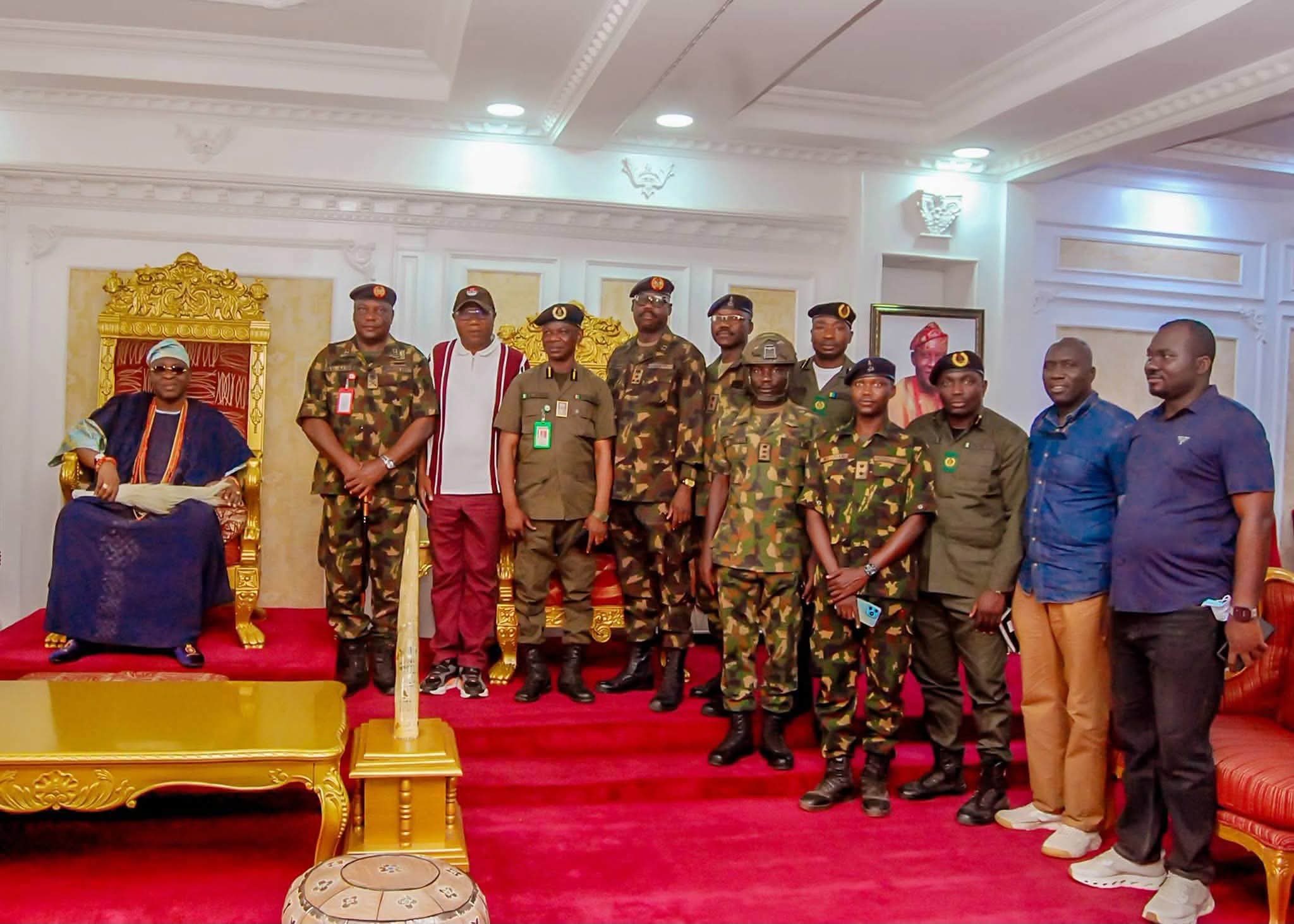
The Federal Government of Nigeria has approved the immediate establishment of a specialized army base at Ahoro-Esinele in Ogbomoso, Oyo State. Named the 169 Motorcycle Battalion, the strategic combat unit is part of a direct response by the President Bola Tinubu-led administration to curb rising banditry and protect vulnerable border communities.
The milestone security development was officially made public by the Soun of Ogbomosoland, His Imperial Majesty Oba Ghandi Afolabi Olaoye Orumogege III. The monarch announced the approval on Monday following a high-level briefing with senior officers of the Nigerian Army who visited his Oja’gbo palace to finalize operational frameworks.
Led by Major General Olabanji (rtd), the military delegation included Major General Audu, Major General Danja, and the Commandant of the Nigerian Army Training Centre in Ogbomoso. The traditional ruler held extensive deliberations with the top brass regarding the immediate construction, logistical planning, and regional development of the proposed military facility.
According to Oba Olaoye, the establishment of the combat base is being facilitated in close collaboration with the Federal Ministry of Interior. The traditional ruler emphasized that the newly approved battalion would drastically improve the state’s security infrastructure and optimize the rapid-response operational capacity of security personnel deployed to the region.
Expressing his deep gratitude to the military hierarchy and the presidency, the Soun commended the Tinubu administration for honoring its word. The first-class monarch noted that the intervention has become deeply vital given the recent traumatic security breaches at Ahoro-Esinele, which directly threatened the lives of local residents and educators.
The security crisis peaked recently when bandits raided Community High School in Ahoro-Esinele, abducting over 40 teachers, students, and pupils, alongside the school principal, Mrs. Rachael Alamu. The victims were held captive in deep forest reserves for 56 grueling days before a coordinated tactical operation by state security forces successfully rescued them.
To prevent a recurrence, the newly formed 169 Motorcycle Battalion will operate as a specialized combat unit under the 2 Division of the Nigerian Army, headquartered at Odogbo, Ibadan. The battalion is explicitly tasked with managing heavy security deployments, conducting aggressive patrols, and securing the expansive, porous boundaries of the Old Oyo National Park.
The combat unit is uniquely structured to utilize specialized military motorcycles to ensure high tactical mobility across rugged terrains that are inaccessible to heavy military trucks. Reaffirming his community`s support, the Soun vowed that the palace would provide all necessary resources to authorities, maintaining that a safe and prosperous Ogbomosoland relies on collective vigilance.
The draft covers the events in exactly eight distinct paragraphs, maintaining a professional and serious journalistic tone suitable for a mainstream Nigerian news portal.
 METRO /Posted By; Oladejo Alabi
A United States cleric has sparked widespread controversy after publicly announcing his marriage to a second wife and declaring that traditional monogamy is not backed by scripture.
Pastor Israel Ford, the leader of LifeWorks Church in Wickliffe, Ohio, made the disclosure via a video broadcast shared on his official Facebook page. Defending his polygynous marriage, the cleric cited Exodus 21:10 from the King James Version of the Bible, which outlines guidelines for a man taking an additional spouse.
In a surprising twist, the pastor`s first wife, Prophetess Lydia Ford, took to the church pulpit to introduce the new co-wife, Minister Shakayla Ford. Prophetess Lydia revealed to the stunned congregation that her husband and the new minister had already been privately married for three years.
Addressing the backlash, Pastor Ford stated that he expected the public resistance but refused to compromise on what he termed an unpopular truth.
"As a nation, we have been taught that a man should have one wife only. This is unbiblical," Ford wrote in an accompanying social media statement. "I understand that this is an unpopular truth that we have gotten away from and many pastors will not preach. I have no plans to choose pleasing man over what God has revealed."
The cleric added that he is at peace with anyone who chooses to cut ties with his ministry over the decision, concluding that the entire congregation can laugh about it in Heaven. The announcement has since gone viral, triggering a massive debate across social media platforms regarding modern Christian doctrines and marital structures.
NEWS /Posted By; Oladejo AlabiA prominent Nigerian Muslim activist, Taoheed Adesina Mustapha, has issued a powerful continent-wide call to action, urging peace-loving Muslims across Nigeria and Africa to join him in organizing a peaceful movement against religious extremism. The initiative aims to directly challenge the spread of radical ideologies and reclaim the peaceful core of the Islamic faith from extremist elements.
In a bold strategy to confront radicalization from within, Mustapha revealed plans to mobilize like-minded Muslims to actively walk out of mosques whenever religious leaders preach hatred or justify acts of terrorism. The movement also targets clerics who refuse to openly condemn the extrajudicial killing of innocent people carried out under the guise of religion.
The activist expressed deep frustration over what he described as a culture of silence and excuses among the region`s religious elite. He demanded that Islamic leaders establish an open, consistent, and uncompromising stance against notorious terror groups, specifically naming Boko Haram, ISWAP, the Lakurawa sect, banditry, and all forms of religious killings.
Mustapha emphasized that everyday worshippers can no longer afford to remain passive listeners while violence ravages communities across Africa. He noted that it has become untenable for congregants to sit comfortably through sermons while innocent citizens in Nigeria, Sudan, and Libya are being slaughtered in the name of the same God they gather to worship.
Clarifying the intent behind the movement, the convener strongly maintained that the upcoming actions should not be misinterpreted as a protest against Islam itself. Instead, he framed the campaign as a peaceful, civic duty designed to defend common humanity, protect innocent lives, and directly challenge those who misuse religious platforms.
Addressing the broader Muslim community, Mustapha challenged individuals who believe in the sanctity of life to take a definitive stand. He asked everyday believers if they were ready to unite and walk away from preachers of hate, declaring that regular citizens must refuse to surrender their humanity to violent interpretations of religion.
The call to action, which was publicised by Mustapha on his official Facebook handle on Monday night, concludes with a plea for self-reflection and solidarity among the populace. The campaign urges African Muslims to think critically, question radical rhetoric, and unite globally to protect human lives and regional stability.
NEWS /Posted By; Akinwale AkintayoThe Federal Government of Nigeria has approved the immediate establishment of a specialized army base at Ahoro-Esinele in Ogbomoso, Oyo State. Named the 169 Motorcycle Battalion, the strategic combat unit is part of a direct response by the President Bola Tinubu-led administration to curb rising banditry and protect vulnerable border communities.
The milestone security development was officially made public by the Soun of Ogbomosoland, His Imperial Majesty Oba Ghandi Afolabi Olaoye Orumogege III. The monarch announced the approval on Monday following a high-level briefing with senior officers of the Nigerian Army who visited his Oja’gbo palace to finalize operational frameworks.
Led by Major General Olabanji (rtd), the military delegation included Major General Audu, Major General Danja, and the Commandant of the Nigerian Army Training Centre in Ogbomoso. The traditional ruler held extensive deliberations with the top brass regarding the immediate construction, logistical planning, and regional development of the proposed military facility.
According to Oba Olaoye, the establishment of the combat base is being facilitated in close collaboration with the Federal Ministry of Interior. The traditional ruler emphasized that the newly approved battalion would drastically improve the state’s security infrastructure and optimize the rapid-response operational capacity of security personnel deployed to the region.
Expressing his deep gratitude to the military hierarchy and the presidency, the Soun commended the Tinubu administration for honoring its word. The first-class monarch noted that the intervention has become deeply vital given the recent traumatic security breaches at Ahoro-Esinele, which directly threatened the lives of local residents and educators.
The security crisis peaked recently when bandits raided Community High School in Ahoro-Esinele, abducting over 40 teachers, students, and pupils, alongside the school principal, Mrs. Rachael Alamu. The victims were held captive in deep forest reserves for 56 grueling days before a coordinated tactical operation by state security forces successfully rescued them.
To prevent a recurrence, the newly formed 169 Motorcycle Battalion will operate as a specialized combat unit under the 2 Division of the Nigerian Army, headquartered at Odogbo, Ibadan. The battalion is explicitly tasked with managing heavy security deployments, conducting aggressive patrols, and securing the expansive, porous boundaries of the Old Oyo National Park.
The combat unit is uniquely structured to utilize specialized military motorcycles to ensure high tactical mobility across rugged terrains that are inaccessible to heavy military trucks. Reaffirming his community`s support, the Soun vowed that the palace would provide all necessary resources to authorities, maintaining that a safe and prosperous Ogbomosoland relies on collective vigilance.
The draft covers the events in exactly eight distinct paragraphs, maintaining a professional and serious journalistic tone suitable for a mainstream Nigerian news portal.
 NEWS /Posted By; Favour Rejoice
 The Ekiti State Police Command has launched a major crackdown on reckless driving following a worrying spike in fatal road traffic accidents across the state, particularly within the capital, Ado-Ekiti.
Expressing deep concern over the rising casualties, the command revealed that most recent accidents were triggered by speeding, impatience, driving without valid licenses, and a blatant disregard for traffic lights and regulations.
In a statement released to journalists by the Command’s Public Relations Officer, SP Sunday Abutu, the police warned that the upcoming festive season demands stricter compliance on the highways.
The statement reads: “As the Yuletide season approaches, a period usually characterised by increased vehicular movement and commercial activities, the command calls on all motorists, motorcycle riders, tricycle operators, and other road users to exercise greater caution, patience and responsibility while using the roads.
“The Commissioner of Police, Ekiti State Command, CP Falade Adegoroye Michael, urges all road users to prioritise safety over speed and convenience. He emphasises that no journey is worth the loss of a life and that every road user has a responsibility to protect themselves and others."
To curb the menace, the command advised all motorists and riders to ensure their vehicles are roadworthy, possess valid driver`s licenses, avoid overloading, and strictly shun driving under the influence of alcohol or drugs. It also reminded drivers and riders of the compulsory use of seatbelts and crash helmets.
Warning traffic offenders of severe consequences, the Commissioner of Police noted that the command is scaling up joint operations with relevant traffic management agencies.
“The Commissioner of Police reiterates that the command will intensify traffic patrols, visibility policing, and enforcement of relevant traffic laws," the statement added. "Any person found violating applicable traffic regulations will be made to face the full weight of the law.”
The police further urged the public to actively report traffic violations and emergencies directly to the nearest station or via the command`s dedicated emergency hotline: 08062335577.
 EDUCATION /Posted By;
 The Benue State Government has sealed two private schools, Orenda and Opal Schools, following allegations of violating state education policies and victimising pupils whose parents failed to purchase textbooks directly from the institutions. The enforcement action was executed on Thursday by the Benue Education Quality Assurance and Examinations Board (BEQAEB) after obtaining a valid court order, THENEWSCREDIT reports.
According to official statements, the closure followed numerous petitions from aggrieved parents and guardians. The regulatory board resorted to judicial intervention after the proprietor and administrators of the affected schools repeatedly failed to honour invitations to a meeting aimed at resolving the lingering complaints.
BEQAEB Executive Secretary, Dr Terna Francis, led officials of the Directorate of Enforcement and Compliance to serve the court warrant on the premises. State authorities reiterated that the government’s standing policy is designed to provide financial flexibility for families by explicitly allowing parents to reuse textbooks previously purchased for older children.
The state policy also permits parents to obtain textbook lists from schools and purchase the required books from external bookstores where prices might be more affordable. However, Orenda and Opal Schools allegedly insisted on a strict monopoly, forcing parents to buy materials directly from the school or face severe penalties, THENEWSCREDIT reports.
The board revealed that pupils whose parents bought books from outside vendors were subjected to punitive treatments, including having their homework left unmarked by teachers. In worse cases, pupils were barred from bringing external textbooks into classrooms, a practice Dr Francis described as an unacceptable violation of learners’ rights that left several children demoralised.
Further details showed that some parents who had already paid full tuition fees were given an ultimatum by the school administrations to either purchase the school-vended textbooks or withdraw their children entirely. The enforcement exercise, however, took a violent turn after the court order was served on the school’s proprietor, Onyinye Okoye.
The board alleged that the proprietor led members of staff in a physical and verbal assault against the government team, which resulted in the destruction of an official BEQAEB vehicle. The board strongly condemned the attack, emphasizing that regulatory disputes must be resolved through lawful channels rather than violence or intimidation.
Dr Francis confirmed that Orenda and Opal Schools will remain sealed until the management fully complies with government regulations and demonstrates a clear commitment to protecting the rights of pupils. He further urged the public to formally report similar policy violations to the board, assuring them that all petitions backed by evidence will be thoroughly investigated.
 EDUCATION /Posted By; Akinwale Akintayo
The Federal Government has raised a major alarm over Nigeria’s basic education system, warning that high school attendance and enrolment figures are masking a deep-seated learning crisis. The government declared that evaluating schools based solely on the physical presence of pupils is a flawed metrics system that counts heads rather than the actual quality of knowledge acquired.
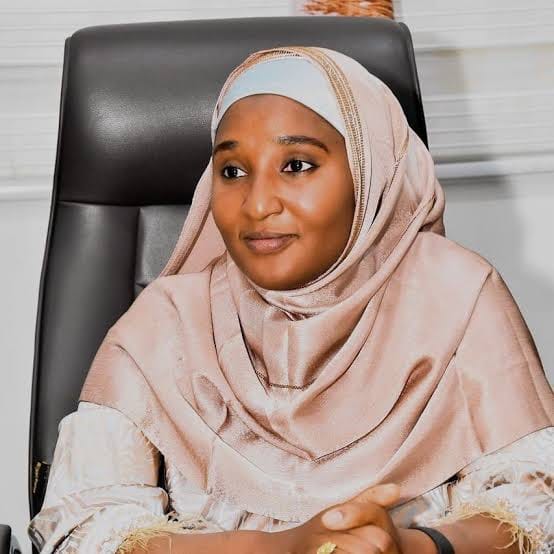
The Minister of State for Education, Prof. Suwaiba Ahmad, brought the issue to the fore during a national trainers` session on safe learning environments, gender-responsive technology, and ICT skills for educators in Teacher Training Institutions. She maintained that traditional registers no longer provide an accurate picture of the country`s educational health, as millions of children spend days in classrooms without receiving a functional education.
To back her concerns, Prof. Ahmad cited alarming 2024 data from UNICEF, which revealed that a staggering 74 per cent of Nigerian children aged seven to 14 years lack foundational reading, cognitive, and mathematics skills. This statistic highlights a grim reality where three out of every four children in the basic education bracket cannot read or solve basic arithmetic despite being enrolled in school.
In response to this systemic failure, the minister announced comprehensive government plans to overhaul how Nigeria assesses basic education. Moving forward, the Federal Government will integrate classroom safety, student participation, and measurable learning outcomes into its educational evaluation framework, completely shifting the focus away from mere daily attendance headcounts.
Explaining the psychological dimension of the crisis, Prof. Ahmad noted that children are frequently shut out from learning long before they ever drop out physically. She pointed out that hostile classroom environments—driven by unchecked bullying, exclusion, ridicule, and general insecurity—force many vulnerable students to mentally and emotionally detach from lessons.
In a poignant address to educators, the minister described how easily these "silent dropouts" go unnoticed by teachers who rely strictly on school registers. "A girl does not always leave school on a day her name disappears from the register. Sometimes she leaves a little early while she is still sitting in the classroom; she raises her hand and is never called upon, other children laugh when she speaks, and no one stops them," Ahmad painted the picture.
Consequently, the minister urged educators and institutional heads across the federation to prioritize what happens to learners once they step inside the school gates. She stressed that a child’s physical presence in school must be strictly matched by verifiable evidence that the learner feels safe, included, actively participates, and is genuinely absorbing the curriculum at every developmental stage.
As part of institutional remedies to curb the menace, Ahmad revealed that the Federal Ministry of Education has introduced the National Policy on Anti-Bullying in Nigerian Schools along with its implementation guidelines. However, she warned that the policy would remain a dead letter unless teachers, school administrators, and adults take decisive, protective action when confronted with cases of child abuse and emotional exclusion.
.jpg) SPONSOR /Posted By; Akintayo Asamu
SPONSOR /Posted By; Akintayo AsamuOGBOMOSO – Atunbi Baptist Church, widely known as the Victorious Church, has finalized arrangements to celebrate its 10th anniversary with a week-long series of spiritual activities, educational foundation stones, and missionary expansions.
Reflecting on the milestone, the Senior Pastor of the church, Rev. Gbenga Stephen Ogunniyi, expressed deep gratitude to Jesus Christ for sustaining the ministry since its establishment. He noted that despite facing numerous trials, storms, and challenges, the church has remained resilient, deeply rooted in faith, and victorious over all adversaries.
Strategic Expansion and Educational Projects
As part of its commitment to community development and human capital investment, the church will officially flag off major infrastructural projects.
On Thursday, June 4, 2026, at 10:00 AM, the church will host a foundation-laying ceremony for the Atunbi Group of Schools. The mega educational project comprises the Atunbi Baptist Nursery School, Atunbi Baptist College, and the Light to the World Bible College.
In line with its evangelical mandate, the church will also expand its terrestrial reach on Saturday, June 6, 2026, by laying the foundation and launching a new church branch at the Pakiotan area of Ogbomoso at 9:00 AM.
Anniversary Schedule of Events
The anniversary committee has released a comprehensive schedule for the historic celebration:
Sunday, May 31, 2026 (Sunday Service): Opening anniversary service. Topic: 10 Years Missionary Journey: Its Challenges, God Alone to be Praised (Scripture Text: 2 Corinthians 11:22-32).
Monday, June 1, 2026 (5:00 PM): Special Prayer of Thanksgiving.
Wednesday, June 3, 2026 (5:00 PM): Intercessory Session: Prayer for the Year Ahead.
Thursday, June 4, 2026 (10:00 AM): Foundation laying for Atunbi Group of Schools and Bible College.
Friday, June 5, 2026 (5:00 PM): Community Praise Night.
Saturday, June 6, 2026 (9:00 AM): Foundation laying and launch of Pakiotan Branch, Ogbomoso.
Sunday, June 7, 2026 (10:00 AM – 12:00 PM): Grand Finale Thanksgiving Service.
The week-long event is expected to attract community leaders, Christian faithful, and delegates from the Nigerian Baptist convention to the JK Atanda Area of Ogbomoso.
 SPONSOR /Posted By; Akintayo Asamu
Community leader and elder, Mr. Abegunde Taiwo, has felicitated Dr. Zacheous Segun Ogunwobi on the occasion of his birthday. In a glowing tribute, Mr. Abegunde praised the prominent academic and former Tai Solarin University of Education (TASUED) figure, hailing him as a dedicated champion of the people and a devoted ambassador of peace.
Abegunde described Dr. Ogunwobi as a highly respected figure whose contributions go far beyond the confines of the classroom. During an interview reported by THENEWSCREDIT, he noted that Ogunwobi has consistently committed his life, resources, and vast intellectual prowess to the betterment of his community and the nation at large.
Throughout his career, Dr. Ogunwobi has made a name for himself not only as a distinguished titan of mathematics but also as a passionate philanthropist. Friends, colleagues, and community members alike have lauded his selfless service and his commitment to empowering the youth and less privileged.
As the birthday celebrations continue, well-wishers and community leaders continue to pour in their prayers and goodwill messages. They celebrate Dr. Ogunwobi`s enduring legacy of peace, educational excellence, and humanitarian service, wishing him many more years of good health, wisdom, and continued impact on society.