☰     THENEWSCREDIT
HOME BREAKING NEWS POLITICS METRO EDUCATION HEALTH SPORT ENTERTAINMENT OPINION VIDEOS SEARCH CONTACT

NEWS


NEWS /  Wed 10 Dec
Posted By; Akintayo Asamu

Backlash over my interaction with Adeleke at Ooni’s event ‘needless controversy’ — Remi Tinubu

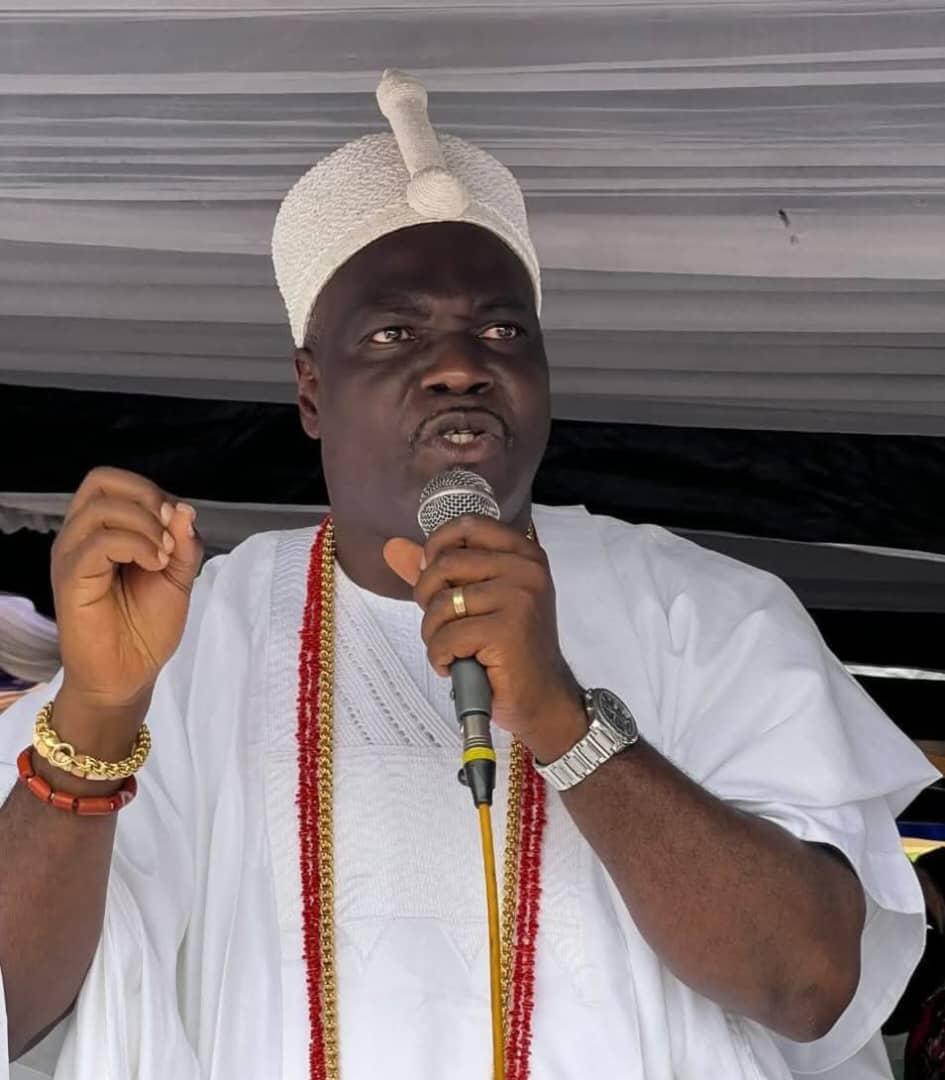
Nigeria’s First Lady, Senator Oluremi Tinubu, has dismissed public backlash over her interaction with Osun State Governor, Ademola Adeleke, calling the reactions a “needless controversy.” In a statement posted on her Facebook page on Tuesday, Mrs Tinubu said critics often magnify minor issues and create distractions around leadership. She wrote: “Those entrusted with leadership understand their duties and how to steer the affairs of society. “More often, it is the followers and critics who scrutinise every step, amplify minor missteps, and turn them into needless controversy. Ọṣun lè tèǹtẹ̀ – Osun is ahead.” The comments followed a video clip from the 10th coronation anniversary of the Ooni of Ife, Oba Adeyeye Ogunwusi, which showed Adeleke pausing after breaking into a short song during his speech. Mrs Tinubu walked to the podium, gestured to him, and whispered to him — a moment that quickly went viral and drew sharp reactions online. The First Lady’s statement marks her first public response since the video circulated. Senior Special Assistant to the Governor on the Bureau of Social Services, Akintunde Bello, said the First Lady should be cautioned, insisting that her gesture toward an elected governor was inappropriate. Similarly, African Democratic Congress chieftain Dele Momodu criticised the act, describing it as bullying and alleging that Mrs Tinubu had “openly disgraced and embarrassed Adeleke before a global audience.” Some, however, believe that Mrs Tinubu’s action was justified. Dayo Fashola, an aide to a former Osun State Governor Adegboyega Oyetola, on her verified Facebook page, said the interaction between the duo was lighthearted. “What transpired between Oluremi Tinubu and Adeleke was light‑hearted and isn’t as serious as people are making it seem,” Fashola wrote. Similarly, Facebook user Oyetunji Ayoade defended the First Lady, writing, “The highest respect the First Lady can give to Osun people is to stand up and inform him by herself, and she did.” Neither Governor Adeleke nor the Presidency has issued further comments, even as the incident continues to dominate social media discussions.
NEWS /  Tue 09 Dec
Posted By; Akintayo Asamu

Kidnapping children lesser evil than killing soldiers — Gumi

Islamic cleric Sheikh Gumi has described the kidnapping of schoolchildren as a “lesser evil” compared to killing soldiers, insisting that Nigeria must negotiate with bandits to prevent greater bloodshed. Speaking in an interview with the BBC shared on Tuesday, Gumi said that while the abduction of minors is “evil,” it remains less grievous than murder — particularly in situations where kidnapped children are eventually released unharmed. “Saying that kidnapping children is a lesser evil than killing your soldiers, definitely is lesser. Killing is worse than, but they are all evil. It’s just a lesser evil. Not all evils are of the same power. He cited previous incidents, including the mass abduction in Kebbi State, arguing that the victims were freed without fatalities. “So it’s a lesser evil than, like, what happened in Kebbi. They abducted children, and they were released. They didn’t kill them.” The remarks come as more than 315 people — including 303 students and 12 teachers — were abducted in Niger State. On 7 December, the Federal Government announced the release of 100 students, while an earlier report confirmed the escape of 50 others just days after the kidnapping. “It’s an evil, and we pray that they escape”, Gumi responded briefly when asked what he would say to their parents. Gumi also defended his long-held stance that negotiating with bandits is unavoidable, describing engagement with bandits and other non-state actors as a practical strategy to secure peace and save lives, and noting that “everybody negotiates with bandits.” “That word [‘we don’t negotiate’], I don’t know where they got it from. It’s not in the Bible. It’s not in the Quran. “In fact, it’s not even in practice. Everybody’s negotiating with outlaws, non-state actors, everybody. So who got it, and where did they get that knowledge from? We negotiate for peace and our strategic interests. If negotiation will bring stoppage to bloodshed, we will do it.” The cleric stressed that his past engagements with bandits were not carried out secretly or independently. “I go there with the authorities. I don’t go there alone. And I go there with the press,” he said. Gumi revealed that his last direct meetings with bandit groups were in 2021, saying he made marathon efforts to bring various factions together, but the federal government at the time “was not keen” on the initiative. He said once the groups were officially designated as terrorists, he completely withdrew from any contact. Turning to the wider security situation, the former army captain argued that Nigeria’s military cannot shoulder the burden alone. “We need a robust army… but even the military is saying our role in this civil unrest, in this criminality, is 95% kinetic. The rest is the government, the politics, and the locals. The military cannot do everything.” Gumi also maintained that most bandits are Fulani herdsmen, not urban Fulani, urging a clear distinction between the two. He described their struggle as rooted in survival and cattle rearing: “They are fighting an existential war… Their life revolves around cattle. In fact, they inherit them. They’ll tell you, ‘This cow I inherited from my grandfather.’ They are mostly Fulani herdsmen, not the Fulani town, because you have to differentiate between the two.” Gumi’s remarks underscore the delicate balance between dialogue and enforcement in addressing Nigeria’s persistent insecurity, particularly in the northwest, where kidnappings, bandit raids, and violence continue to disrupt communities.
NEWS /  Tue 09 Dec
Posted By; Akintayo Asamu

Return home, get N500,000 – Gov Zulum woos Borno refugees in Cameroon

Governor Babagana Zulum of Borno State has assured residents displaced by the Boko Haram crisis who fled to Cameroon that the government is ready to provide each of them with N500,000 if they are willing to return home. Zulum made this statement on Monday while addressing refugees at the Minawao camp in Cameroon’s Far North region. According to him, robust security arrangements had been put in place in their home communities, after years of expanded military operations and civilian security initiatives across Gwoza and other parts of the state. “The welfare of refugees, internally displaced persons, and returnees remains a priority for us,” Zulum said. The governor further explained that rebuilding the lives of insurgency survivors is a core pillar of his administration’s humanitarian and development agenda. “Borno State, in partnership with the federal government, will provide a cash assistance of N500,000 to each refugee who is willing to return home, while women households will be given N100,000 each,” Zulum added. According to him, the measure is designed to help returnees begin reconstructing their homes.
NEWS /  Mon 08 Dec
Posted By; Akintayo Asamu

Obasanjo Lists Four Requirements To Defeat Insecurity In Nigeria

Former President Olusegun Obasanjo Has Outlined Four Critical Pillars: Intelligence, Training, Equipment, And Technology, As Essential To Overcoming Nigeria’s Persistent Security Challenges. Obasanjo Made The Remarks On Sunday During The Toyin Falola Interviews, Held Via Zoom With Professor Toyin Falola As Host. He Was Engaged In Conversation By Bishop Matthew Kukah, Founder Of The Kukah Centre, And Former Presidential Candidate, Professor Kingsley Moghalu. The Former President Noted That Insecurity Has Reached Every Corner Of The Country, Stressing That Nigeria Must Adopt A Comprehensive And Modern Approach To Restoring Peace. According To Him, Strengthening Intelligence Gathering, Improving The Training Of Security Personnel, Equipping The Armed Forces Adequately, And Integrating Advanced Technology Are Non-negotiable Steps. “When I Talk About Intelligence, Training, Equipment, And Technology, I Know Exactly What I Am Saying. And Beyond All These, We Must Cultivate The Right Attitude, An Honest Commitment, To Confront Insecurity Decisively,” Obasanjo Stated. He Cautioned That The Federal Government Must Ensure That No Region Is Neglected In Ongoing Security Operations, Adding That The Scale Of The Problem Requires Both National Unity And Global Cooperation. Obasanjo Argued That Insecurity Has Grown Far Beyond Regional Boundaries And Should Be Addressed As A Nationwide Emergency. He Urged The Government Not To Hesitate In Seeking International Assistance When Necessary. “We Have Security Challenges Across The South-East, South-West, And North-East. This Is A National Issue. “If Our Government Is Overwhelmed, There Is Nothing Wrong With Turning To The International Community. We Are Part Of A Global Family, And The World Has A Vested Interest In Our Peace And Stability,” He Said. He Also Raised Alarm About The Rising Population Of Out-of-school Children, Warning That Failure To Address The Issue Could Create Significant Long-term Security Threats.
NEWS /  Mon 08 Dec
Posted By; Akintayo Asamu

Olubadan urges vigilance in Yoruba land over insecurity

The Olubadan of Ibadanland, Oba Rashidi Ladoja, has urged Yoruba people to remain vigilant as insecurity spreads across the country, warning that recent attacks in northern and central states pose a growing threat to the South-West. A statement issued on Sunday in Ibadan by his media aide, Adeola Oloko, said the monarch made the call in Ode-Omu, Osun State, during the weekend celebration of Ode-Omu Day. In recent weeks, the northern part of the country has recorded a surge in terrorist and bandit attacks, leaving many killed or kidnapped. Fresh incidents in Kwara and Kogi—states that share borders with the South-West—have heightened regional anxiety and prompted governors in the zone to convene an emergency security meeting. Speaking at the Ode-Omu event, Ladoja said the situation demands increased alertness. “Let me use this occasion to urge Yoruba people to be vigilant amid security challenges facing Nigeria,” he said. The monarch commended the community spirit of the people of Ode-Omu under the leadership of the Alaye of Ode-Omu, Oba Bolarinwa Oladipupo, praising their continued investment in development projects. “I want to pledge the readiness of Ibadan to always support Ode-Omu’s development. Next year, an illustrious son and Parakoyi of Ibadanland, Chief Tunde Afolabi, will be drafted to chair Ode-Omu Day,” he added. Ode-Omu Day is an annual celebration during which the community reviews its progress and sets development goals for the future. Earlier, a former Minister of Police Affairs, Jelili Adesiyan, reminded attendees of the historical ties between the two communities, noting that “Ibadan ancient warriors settled Ode-Omu in its present location in 1909.” He also commended the royal fathers for their strong turnout, particularly the Olubadan. Members of the Olubadan-in-Council present included the Balogun of Ibadanland, Oba Tajudeen Ajibola; the Osi Olubadan, Oba Abiodun Kola-Daisi; and the Ekerin Balogun of Ibadanland, High Chief Sharafadeen Alli, who represents Oyo South in the Senate. The Ooni of Ife, Oba Adeyeye Ogunwusi, was represented by the Salu of Edunabon, Oba Kehinde Oladepo, while the Ogunsua of Modakeke, Oba Francis Adedoyin, also attended with his chiefs.
NEWS /  Sun 07 Dec
Posted By; Akintayo Asamu

Insecurity: Put your mind at rest, Adeboye tells Nigerians

The General Overseer of the Redeemed Christian Church of God, Pastor Enoch Adeboye, on Sunday assured churches in Nigeria that an end will come to insecurity, declaring that “the church will laugh last.” This is just as he asked Nigerians to put their mind at rest, saying evil will not prevail. Adeboye made the declaration during his teaching, “The Master Builder”, at RCCG’s monthly thanksgiving service, which was telecast and monitored by our correspondent. According to the renowned preacher, the current security realities in the country serve as a reminder that God can build and protect His church. Churches in Nigeria have, in recent years, grappled with violent attacks, including gunmen invasions leading to kidnappings, ransom demands, injuries, and deaths. Speaking further, he said, “We can pull down. When God opens a door, nobody can shut it. “It’s when God shuts a door that nobody can open it. So, I have good news for you, my children, once again. “Put your mind at rest. The gates of hell shall not prevail. Whether the devil likes it or not, the church is going to laugh last.” Adeboye emphasised that beyond building the church, God also transforms individuals. “Why? Because it is God that is doing the building. “He said, I will build my church and the gates of hell shall not prevail. But then God does much more than that. He builds people,” the GO said. The cleric added that God is not only a master builder but also an architect who shapes lives, destinies, and futures.
NEWS /  Sun 07 Dec
Posted By; Akintayo Asamu

Don’t be scared of coming home for Christmas, your security is guaranteed – IPOB tells Ndigbo

The Indigenous People of Biafra, IPOB, has assured Igbo people, both at home and in the diaspora, of robust security across the Southeast during the festive season, urging them to return in large numbers without fear. The group’s Media and Publicity Secretary, Comrade Emma Powerful, gave this assurance in a statement on Sunday. Powerful stated that security operatives affiliated with the group’s Eastern Security Network (ESN), alongside community volunteers, would help maintain safety throughout the festive period. IPOB described the Southeast as one of the most peaceful regions in Nigeria, insisting that security conditions have improved despite what it termed “sponsored instability” in recent years. According to the spokesman, attempts to portray the region as unsafe were exaggerated and aimed at discrediting the group’s activities. He also dismissed reports of a recent kidnapping along the Owerri–Aba Expressway at Ngor Okpala, describing the circulating video as an old clip that had resurfaced on social media. The group maintained that security operations by the ESN are often carried out discreetly and are not publicized online. It further stated that the ESN does not operate official social media accounts and warned the public against misinformation. The organisation accused the Federal Government and some political actors of trying, unsuccessfully, to dismantle its operations, while reiterating its long-standing demand for the self-determination of the Biafra region. “Return home for the festive season and consider investing in the region. Your safety is guaranteed. We wish travellers a peaceful Christmas and safe journeys,” IPOB said.
NEWS /  Sat 06 Dec
Posted By; Akintayo Asamu

Too much military visibility in democracy not good, ex-IG warns

A former Inspector-General of Police, Sunday Ehindero, on Saturday warned that the increasing visibility of the military in the country was unhealthy for the democratic system being practised in Nigeria. Ehindero, who spoke on behalf of retired IGs at the launch of two biographies of former Inspector-General of Police, Usman Alkali Baba, in Abuja, said while the military plays a crucial role in national security, its expanding presence in civil spaces should worry policymakers. The retired police chief noted that the country’s security architecture needed to be restructured to address this concern. He said, “The security architecture of this country needs to be rejigged. With apologies to the military here, too much military visibility in a democracy is not good. While I praise them for the work they are doing — they are doing marvellously — it is not their fault. They should concentrate more on our borders to prevent these miscreants from coming into the country. Our territorial integrity must be maintained and protected.” Ehindero also corrected some positions earlier expressed at the event, especially on policing, leadership continuity in the force, and the size of the Nigeria Police. He dismissed claims that the country’s growing police population was a result of bad governance, arguing that Nigeria’s large population and persistent security challenges required an expanded police force. “We are about 230 million people. When people retire, die or are dismissed, the police must be replenished. I disagree with the notion that we have more policemen because of bad governance,” he said. The former IG, who had opposed state police for decades, said he now supports the idea following the introduction of new checks and balances in the proposed model. “I have been against the establishment of state police for 30 years. But this time, when I saw the details, I embraced it. It is a step in the right direction, considering banditry, terrorism and other crimes,” he said. He also urged the government to include retired police officers in ambassadorial appointments, recalling instances where senior officers were previously appointed as envoys. On internal security leadership, Ehindero rejected criticism of the current National Security Adviser, Nuhu Ribadu, for being a former police officer, noting that several retired IGs had occupied similar national security roles in the past. The former police chief’s remarks come at a time when the military is deployed across all 36 states and the Federal Capital Territory in support of the police to tackle banditry, terrorism, communal clashes and other security threats. His comments also follow a series of recent coups in West Africa — including in Mali, Burkina Faso, Niger and Guinea — developments that have heightened concerns about democratic stability in the region and intensified debates about military influence in governance. Earlier, former IG Usman Alkali Baba expressed appreciation to President Bola Tinubu for what he described as renewed efforts to restore “police primacy” in internal security. He praised the President’s recent directive withdrawing police personnel attached to what he called “undeserving” personalities. “I am profoundly grateful to His Excellency, President Bola Tinubu, for his consistent action directed at restoring dwindling police primacy in the internal security architecture. This was again made manifest by the recent Presidential Order on the withdrawal of police personnel attached to undeserving personalities. “As far as my memory serves me, this is the first time that such an order will emanate directly from a sitting President. We tried to do it as IGPs, but we couldn’t make it. Let’s see how this one will work.
NEWS /  Sat 06 Dec
Posted By; Akintayo Asamu

12,060 Nigerians live with Hepatitis B, C in 12 states – Report

A total of 12,060 Nigerians have tested positive for Hepatitis B (HBV) and Hepatitis C (HCV) across 12 states in 2025. The HBV and HCV patients were confirmed positive among the 210,947 individuals screened for the viruses, according to the 2025 Health Statistics published by the Federal Ministry of Health and Social Welfare. The report, which was obtained by our correspondent on Friday, showed that 129,602 individuals were screened for HBV, while 81,345 were screened for HCV so far in 2025. The report stated, “In 2025, 9,066 persons were reported to be reactive to the Hepatitis B virus. In the general population, about 15–20 per cent of HBsAg-positive adults qualify for treatment; this translates to about 906 (lower threshold) who needed treatment. Only 179 (25 per cent) were reported to be on HBV treatment.” According to the World Health Organisation, hepatitis is an inflammation of the liver caused by a variety of infectious and non-infectious agents, leading to a range of health problems, some of which can be fatal. The 2024 Global Hepatitis Report by the WHO revealed that viral hepatitis infections are the second leading infectious cause of death globally, with 1.3 million deaths per year, the same as tuberculosis, a top infectious killer. A breakdown of the report showed that in Adamawa State, 2,633 people were screened for HBV infection, out of which 298 tested reactive. A total of 11.3 per cent were HBV positive. For HCV, 1,941 people were screened, and 74 were reactive. In Delta State, 1,049 people were screened for HBV, with 14 reactive cases. Two people were newly started on HBV treatment, and HBV positivity was 1.3 per cent. For HCV, 781 were screened, and 2 were reactive. In Jigawa State, 380 people were screened for HBV, and 24 were reactive. HBV positivity was 6.3 per cent. For HCV, 321 were screened, and 22 were reactive. In Kano State, 28,461 people were screened for HBV, and 2,231 were reactive. Seventeen people were newly started on HBV treatment, and HBV positivity was 7.8 per cent. For HCV, 12,730 people were screened, and 66 were reactive. In Katsina State, 149 people were screened for HBV, with 28 reactive cases. HBV positivity was 18.8 per cent. For HCV, 44 people were screened. In Kebbi State, 193 people were screened for HBV, and 8 were reactive. HBV positivity was 4.1 per cent. For HCV, no screenings were recorded. In Kwara State, 3,627 people were screened for HBV, and 54 were reactive. HBV positivity was 1.5 per cent. Twelve people were screened for HCV. In Lagos State, 41,982 people were screened for HBV, with 2,042 reactive. Thirty-one people were newly started on HBV treatment, and HBV positivity stood at 4.9 per cent. A total of 27,962 people were screened for HCV, and 460 were reactive. In Nasarawa State, 38,035 people were screened for HBV, and 3,348 were reactive. One hundred and four people were newly started on HBV treatment, and HBV positivity was 8.8 per cent. For HCV, 37,227 people were screened, and 2,097 were reactive. In Niger State, 3,486 people were screened for HBV, and 668 were reactive. HBV positivity was 19.2 per cent. For HCV, 2,523 were screened, and 242 were reactive. In Taraba State, 223 people were screened for HBV, with 41 reactive cases. HBV positivity was 18.4 per cent. For HCV, 223 were screened, and 29 were reactive. In Zamfara State, 9,384 people were screened for HBV, with 310 reactive. HBV positivity was 3.3 per cent. For HCV, 104 people were screened, and two were reactive.
NEWS /  Sat 06 Dec
Posted By; Akintayo Asamu

Why it’s hard tracking bandits with technology — Presidential aide

Criminals’ use of foreign internet services makes it difficult for security agents to track bandits in Nigeria, Special Adviser to President Bola Tinubu on Policy Communication, Daniel Bwala, has said. Bwala stated this while speaking in an interview with Nigeriainfofm, posted on their Instagram page on Friday. He explained that while security agencies can trace Nigerians using local social media platforms, tracking criminals who rely on services outside the country is more complicated. “There is a regulatory body in Nigeria that has the database of Nigerians and their phone numbers. There is also a body that deals with internet service provision, where if you are using an internet service covered within the sphere of Nigeria, they can trace through the IP address,” Bwala said. He added, “If you are using Starlink, we cannot trace it because Starlink is not registered in Nigeria; it is in space. That is the problem they have in Ukraine and Russia. These terrorists most of the time are using cellular services from neighbouring countries and not from Nigeria, so it becomes tricky.” Bwala’s comments highlight the technological challenges facing security agencies in the fight against banditry and terrorism across the country. Nigeria has faced a surge in insecurity, with banditry, terrorism, and kidnappings increasingly affecting communities, particularly in the northwest and northeast. In the last few months, there have been multiple attacks on villages, abductions of schoolchildren, and raids on highways, causing widespread fear and disrupting local economies. Recent reports indicate that some criminal groups are increasingly using social media and digital communication tools to coordinate their activities. In May 2025, a report by The Guardian stated that jihadists in the northeast were reported to be using TikTok to spread propaganda, risking youth recruitment and showcasing an arsenal of weapons and cash in videos accessible to millions. In recent months, reports indicate that some suspected terrorists and bandits have turned to social media platforms such as TikTok to post videos of weapons, cash, and their hideouts. These videos sometimes include threats, flaunting of ransom payments, or calls for support, creating a front that spreads fear and may aid recruitment. There are also documented cases where kidnappers and bandits flaunt ransom payments and loot on TikTok.
Page 56 of 106


Home   About Contact

2026  ©
Developed by KITE