☰     THENEWSCREDIT
HOME BREAKING NEWS POLITICS METRO EDUCATION HEALTH SPORT ENTERTAINMENT OPINION VIDEOS SEARCH CONTACT

NEWS


NEWS /  Wed 25 Feb
Posted By; Akintayo Asamu

Ogbomoso’s Cashew Revolution: A Billion-Naira Goldmine Under Siege by Greedy Middlemen

OGBOMOSO– In the heart of Oyo State, the 2026 cashew season has officially kicked off, cementing Ogbomoso’s status as the "premium hub" for Nigeria’s top non-oil export. While the "Hidden Goldmine" of Ogbomoso land continues to power the local economy, veteran broadcast journalist Akintayo Asamu Kowinrin is raising the alarm on a growing crisis: the systematic exploitation of local farmers by unscrupulous produce buyers. The Economic Powerhouse of Ogbomoso Ogbomoso cashew is globally recognized for its superior quality, boasting a Kernel Outturn Ratio (KOR) of 48–52, the highest in Nigeria. This quality allows the nuts to command a premium price on the international market, with current local prices for dry Raw Cashew Nuts (RCN) reaching up to ₦1,950 per kg as of February 2026. The industry is a multi-billion naira market, estimated to generate over ₦5 billion within a single five-month trading window. Beyond the nuts, the value chain offers multiple income streams: Cashew Apples: Processed into juice, wine, and jams. Industrial By-products: Shells used for Cashew Nut Shell Liquid (CNSL) in polymers and paints. Long-term Wealth: A single tree provides a steady income for over 25 to 50 years. A Call to Order: Addressing Exploitation Despite this wealth, the National Cashew Association of Nigeria (NCAN) has raised alarms over "unregulated foreign involvement" and the exploitation of farmers at the farm gate. Many farmers are being cheated by buyers who take advantage of a lack of real-time market information and inadequate storage facilities. Advice to Producers (Farmers): Do not sell blindly. Your price is tied to your KOR. Ogbomoso`s high-grade nuts are worth a premium—demand it. Proper Post-Harvest Care: Gather nuts within 24 hours of falling and sundry them for 2–3 days to prevent deterioration. Use Jute Bags: Never use plastic or polypropylene bags, as they cause the nuts to rot, giving buyers an excuse to lower prices. Join Cooperatives: Individual farmers are easy targets. Strength in numbers through associations like NCAN helps in negotiating fair floor prices Advice to Buyers and Middlemen: Fair Pricing for Sustainability: Cheating farmers today leads them to cut down trees tomorrow, as seen with Nigeria`s former coffee industry. Destroying the source destroys your business. Transparent Grading: Base your purchases on visible quality and KOR, rather than exploiting the farmer`s immediate need for cash. Respect the Roadmap: Stakeholders have called for a "market-driven framework" that safeguards farmer incomes to ensure Ogbomoso remains a global hub. As the 2026 season progresses, the call for local processing facilities remains urgent. Processing raw nuts locally could multiply the industry`s value by five times, turning a $300 million export into a $1.4 billion windfall for Nigeria.
NEWS /  Wed 25 Feb
Posted By; Akintayo Asamu

Restore Peace and Security, Tinubu Commands Acting IGP Disu

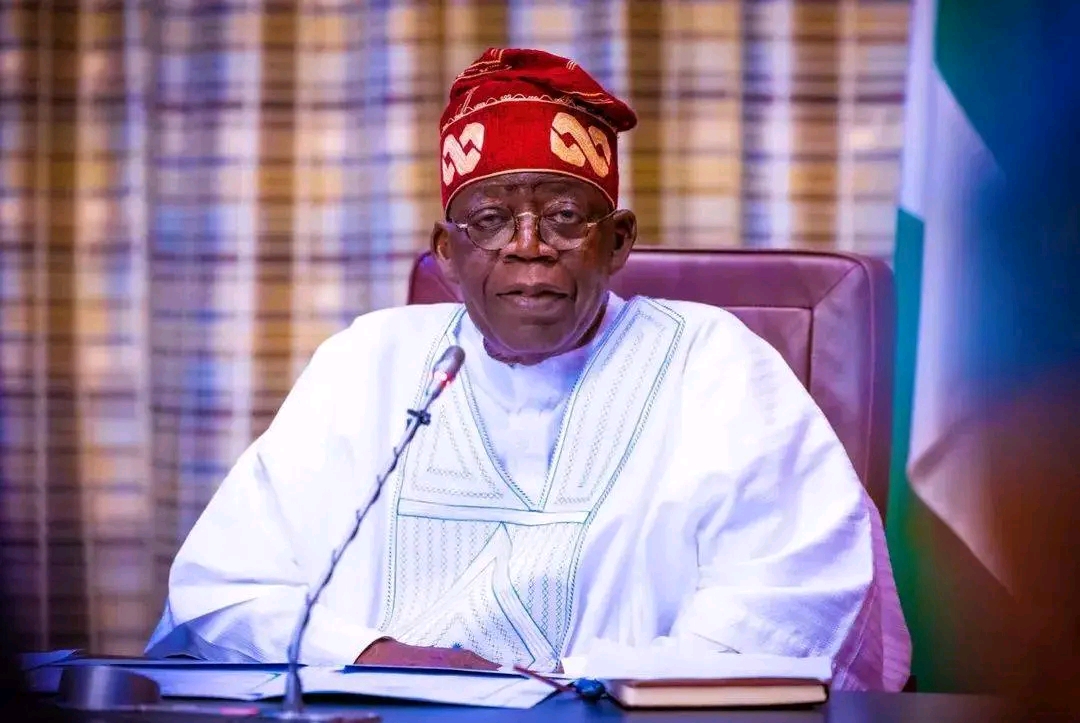
President Bola Tinubu on Wednesday charged the acting Inspector-General of Police, Tunji Disu, to make the Nigeria Police Force better than he met it, as the country grapples with banditry, terrorism, and other criminal activities. The President, who personally decorated Disu with his new rank at the State House, Abuja, said the appointment comes at “a defining moment for our nation’s security,” expressing confidence in the new police chief’s ability to restore public confidence in the Force. “The commitment that I expect from you is for you to make it better than you met it. And I’m sure you can do it. Nigeria is challenged right now with banditry, terrorism and all sorts of criminal activities,” Tinubu stated during the decoration ceremony. The President, who drew on his personal knowledge of Disu from his tenure as Lagos State Governor, said he believes in the dedication the new IGP exhibited while serving in Lagos. “I know your record. I believe in the dedication that you’ve exhibited while you were in Lagos and I was the Governor of Lagos State. “Now you assume this responsibility at a defining moment for our nation’s security,” the President said. Tinubu outlined specific expectations for the new police chief, emphasising discipline, professionalism, and inter-agency collaboration. “I expect you to strengthen the discipline, enhance inter-agency collaboration, and restore public confidence in the Nigeria Police. “Lead firmly but fairly, demand professionalism at every level and ensure that safety of lives and property remains your highest priority,” he charged. Acknowledging the magnitude of the task ahead, the President assured Disu of his full support. “It is a daunting challenge. I know you can do it. “You have my full support as you advance the security pillars of the Renewed Hope agenda. “You are a straightforward individual, committed and respected. You have sufficient discipline,” Tinubu stated. The President urged the new IGP to draw from the experience of his predecessor, Kayode Egbetokun, who attended the ceremony. “You can draw from the experience of Kayode Egbetokun who had been there before you. “You have been part of the thinking, and you’ve been part of the innovation. “The challenge as you hold the baton of this leadership is the belief that you will excel and Nigeria will prevail,” he said. Speaking to the outgoing IGP, Tinubu expressed gratitude for his service while linking his legacy to the success of his successor. “To the outgoing Inspector-General of Police, I extend the gratitude of the entire country. “Nigeria, we are a grateful nation to you for your dedication in service, expression of good leadership attributes within the Force. “You have served with commitment and distinction, and Nigeria appreciates your contribution to maintaining law and order in our country,” the President said. He added, “What you should look back and remember is this: you have not succeeded without a good successor. “Therefore, the success of Tunji Disu as IGP, when confirmed, is part of your responsibility and the joy you should look forward to.” Tinubu noted that Disu’s previous role as Principal Staff Officer to Egbetokun positioned him well for the new assignment. “Having been part of your Principal Staff Officer, I have no doubt he understands the ins and outs of the operation. “He will only improvise. He’s an operational person from what I know,” the President stated. The decoration ceremony, which took place at 4:00 pm at the President’s office, had in attendance Chief of Staff to the President Femi Gbajabiamila, and other senior government officials. Tinubu personally pinned the new insignia on Disu’s uniform, marking the formal transfer of leadership of Africa’s largest police force. In his response, Disu pledged to justify the confidence reposed in him, vowing to end impunity and enforce zero tolerance to corruption within the Force. “The President mentioning a lot of activities about me, mentioning areas I’ve worked, mentioning successes I’ve recorded as a policeman, brought emotion to me, almost brought me to tears,” Disu told State House correspondents. He added, “I will let them know that the era of impunity is over. I will ensure that I train them and encourage them to follow human rights. I will ensure that they know that I will try to follow a regime of zero tolerance to corruption.” The new Police Chief emphasised that Nigerian citizens are the ultimate bosses of the police. “One of the first lectures I’m going to have with my men, I’m going to talk to them, let them know that the citizen, the citizen of the country, are the boss. No police anywhere in the world can succeed without the cooperation of members of the public,” Disu stated. Egbetokun, in his remarks, expressed confidence in his successor’s ability to surpass his achievements. “I invested in likely successors in the Nigerian Police Force, and I’m happy that one of those that I’ve invested in has been found most suitable for the job. I have so much confidence that he would surpass what I have done,” Egbetokun stated. The decoration came barely 24 hours after Egbetokun submitted his resignation letter on Tuesday, citing family issues that require his undivided attention.
NEWS /  Tue 24 Feb
Posted By; Akintayo Asamu

Tinubu Removes IGP Egbetokun, Appoints AIG Tunji Disu as Successor.

President Bola Tinubu has removed the Inspector General of Police, IGP, Kayode Egbetokun. Egbetokun has been replaced by Tunji Disu, an Assistant Inspector General of Police, AIG. His removal is said to have followed Tinubu’s directive for him to resign. It was gathered that Tinubu directed Egebtokun to resign his position at a meeting in the Presidential Villa in Abuja on Monday. Tinubu appointed Egebtokun as the 22nd IGP on June 19, 2023. His substantive appointment was confirmed by the Nigeria Police Council on October 31, 2023. Appointed as IGP at the age of 58, Egbetokun was due for retirement on September 4, 2024, upon reaching the mandatory age of 60. But his tenure was controversially extended by the President.
NEWS /  Sat 21 Feb
Posted By; Akintayo Asamu

Pastoral Fury: Cleric Labels New Bride a `Demon` and Expels Her for Denying Husband Intimacy.

An Abuja-based church, Holiness Revival Movement Worldwide, has expelled a newly married woman, Oyiza, from its congregation for allegedly refusing to consummate her marriage with her husband, Isaac. The couple, who were based in Ibadan, Oyo State, were joined in matrimony on September 6, 2025, after completing their traditional rites in Okene, Kogi State, and a court wedding in Ibadan, Oyo State. Oyiza is from Kogi State. However, shortly after the ceremony, the marriage ran into crisis as the bride resisted her husband’s attempts at intimacy, insisting that she did not love him. She reportedly accused her mother of coercing her into the marriage. THENEWSCREDIT gathered that repeated efforts by both families and church leaders to mediate in the matter failed, as the bride allegedly remained adamant. In a video posted on the church’s YouTube channel in February, the International Director of the movement, Pastor Paul Rika, announced the expulsion of Oyiza after five months of failed mediation. During the announcement, he described her as a “demon” and declared that she must be punished. While accusing her of spiritism, he urged members to pray for her “destruction,” alleging that she had brought shame to the assembly. “So, we have delivered her to Satan. We have expelled, excommunicated her. You want to bring shame, what do you mean that you don’t love Isaac?” he queried. The cleric referenced cultural practices of earlier times when weeping new brides were compelled to go to their husbands’ homes. “Even the harlots, do they sleep with those that love them? It’s business. So, how do you say you don’t love Isaac after accepting him, and you say you don’t love? Demon!” he added. Isaac, the husband, explained that Oyiza consented when he expressed his intention to marry her. Based on this, the church’s marriage committee gave a nod to proceed with wedding preparations. He, however, said some months before the ceremony, Oyiza began expressing doubts and indicated that she was no longer interested because she had lost feelings for him. “(I) thought this could be spiritual and we should pray. The marriage committee also counselled her to go and pray. She returned and said she was convinced and that was how we proceeded,” he added. According to him, the marriage was formalised after the completion of traditional rites and the court wedding. THENEWSCREDIT saw Facebook photos of the couple as Oyiza seemed happy while surrounded by some friends and church members. But Isaac said the situation deteriorated almost immediately after the wedding. “After the wedding, she started complaining again that she no longer had feelings for me. She had also started misbehaving, but because of the fervent love I had for her, I accommodated her deficiencies and lapses, thinking that things will change. “After the marriage, in the hotel where we lodged, I touched her, but she said we should wait for a brief period of time. I asked for her reasons; she did not give me any cogent reason. She had also said she did not like sex all the time. I was also a virgin and was not involved in such things. I agreed we won’t make love in the hotel. So, we said when we get to Ibadan. “We accompanied her, myself and her mother, to the park. She started crying at the park, saying, ‘Mummy, can you see now, when I said I don’t love this man, can you see it now. See the condition you pushed me into now’.” Isaac said his in-laws pleaded with him to exercise patience and keep the matter private. When the problem persisted, he said he reported to a church leader in Lokoja before escalating it to his pastor in Ibadan. He said despite the intervention of his pastor and the wife, who reportedly broke down in tears during one of the counselling sessions, Oyiza remained resolute. “She would tell me almost every time, ‘No love, no joy, no peace,’” he stated, adding that he became more confused and distressed as he had great love for her. He further alleged that she accused him of attempted rape whenever he sought intimacy or initiated moves. “It was a battle. Sometimes, she would just open up herself and say, ‘Do whatever you want to do.’ But I did not also know all these things.” Isaac said counselling sessions organised by the church, including sexual guidance and support, yielded no positive result. “It’s not just about sex. Even bathing. She said she loved me to bath at night. I bath virtually all night. But sometimes, if I don’t bath, she would hold my neck, telling me to go and bath. She would force me. Our leaders would intervene, asking her to release herself, but she refused. “One day, she called some little children into our room to discourage me from touching her. But I ignored the children and continued touching her. A Muslim woman, who is our neighbour, saw us arguing as she was saying, ‘Do you want to rape me?’ She queried her for saying that. But she said, ‘No, I don’t love him. I have told him before. My mother forced me.’” He described the marriage as suffocating. “If I came back from work, to sit on the dining table, she would say no. I was not even free until I bathed and changed my clothes. It was a struggle. “In the kitchen, if she was cooking and I returned home tired, she would ask me to come and join her because I promised to assist her in the kitchen. Everything was like I was in a cage.” Isaac said he made series of efforts to show love and affection, but claimed that his wife did not reciprocate. Oyiza was not in church to respond to the claims and allegations levelled against her by Isaac. Efforts by our correspondent to contact her were also abortive. Before the decision was announced, the church’s leader, Pastor Rika, said his wife had a revelation. He said his wife discovered that Oyiza was “a marine girl who is married to a marine demon and they have children together.” The cleric further stated that “this demon is a harsh type, highly jealous type that will never allow her marry another, and the covenant with the demon is that the day you allow a man enter into you, you will die, or that man will die.” However, mental health professionals who spoke with Saturday PUNCH on the matter pointed to possible psychological and medical factors. Discover more Nigerian art prints Financial planning services Breaking news alerts Business news reports Columns and opinion A clinical psychologist, Oluwakemi Akintoyese, said a range of issues could explain the woman’s behaviour. She said, “Maybe she was forced into the marriage though parental pressure. So, she’s saying, ‘Oh, yes, you guys can force me to get married, but you cannot force me to have anything to do with him’. That could also be another explanation. “And again, we also have some medical conditions or reasons why people will not want to have sex. But at least, the most common one that I know of is vaginismus. So, that is one. But for me, as I have said, if all of these are the reasons, I feel she should have opened up to her husband to talk about it. There is a need to explore more. There is a need to speak to her. There is a need to understand her perspective before conclusions can be made.” Another psychologist, Afolabi Aroyehun, attributed the situation to gametophobia — the fear of sex. “Gametophobia: those who are afraid of sex. A lot of things can make people afraid of sex. Upbringing is one of such issues. Past experience is another thing. Some of them have very terrible childhood traumatic experiences. They have been abused; sexual and psychological abuse. “Then the society does not let them to be free. It is time for you to get married. Some people would rather not touch the concept called marriage at all. But society will not let you be. Society forces people to get into marriage, even when they are not prepared for the responsibilities and challenges of marriage. “A lot have been abused sexually and traumatised. A lot of them must have had the complete sexual experience while they were growing up. For example, sadomasochism, where you see husband and wife, they would not enjoy sex unless they inflict injury on each other. And if they tried such sex while growing up, they will be afraid of sex. Well, apart from the fact that some of them have had near-rape experiences, some of them have actually had a real rape experience, and they do not discuss it with people because any attempt to discuss it, their parents will shut them off.” A marriage counselor, Sunday Anani, said love is a critical foundation of any union. He said, “Sex is an emotional thing. It’s physical, but before the physical comes to bear, there’s first of all an emotional, heart connection. When there is no heart connection between two people, it is difficult, especially in the confines of marriage; difficult, probably impossible, for both of them to agree that sex should happen. If you are pressured to get married to someone that you really do not want to get married to, it would be difficult for you to open up yourself to that person. “Second thing that I can think of is probably that this person in question may have had some ugly sexual encounters in the past. For example, if this person had been raped or was almost raped or was sexually assaulted, it can make her close up her mind entirely to men. And, in fact, it even starts with she not being open to loving men. But, of course, because of family members, they say, you have to marry, you have to marry. “Until she heals from that trauma, she will find it difficult because she will always remember the picture of when something similar happened to her. And when that remains in her mind, it will be difficult for her to even relax at all.” Anani also wondered why Isaac went ahead with the marriage after the lady said she did not like sex. “She already said she won’t want sex. If a woman already told you she would not like sex or she doesn’t want it, why are you going ahead to marry such a person?” he added.
NEWS /  Sat 21 Feb
Posted By; Akintayo Asamu

Insecurity: History will judge you by your response – IHRC warns NASS.

The International Human Rights Commission – Relief Fund Trust (IHRC-RFT), Nigeria Chapter, has warned that history will judge Nigeria’s democratic institutions by how they respond to the country’s worsening security crisis. In a statement signed by its Country Director, Amb. Abdullahi Bakoji Adamu on Saturday, the Commission commended Hon. Alhassan Ado Doguwa for what it described as a courageous intervention on the floor of the House of Representatives in November 2025. Doguwa had declared that Nigeria was running in blood and tears, a statement the IHRC said reflected the painful reality facing millions of citizens across the country. According to the Commission, farmers have abandoned their lands, communities have been displaced, worship centres attacked, and innocent citizens killed in different parts of the country. The group praised Doguwa’s call for urgent and decisive legislative action, noting that his intervention showed leadership rooted in responsibility rather than partisanship. However, the IHRC expressed concern that nearly four months after that appeal, Nigerians are yet to see substantial or measurable improvement in the security situation. “The frequency of violent incidents across multiple regions continues to raise grave concern,” the statement said. The Commission respectfully directed questions to the leadership of the National Assembly. “Mr. Rt. Hon. Speaker of the House of Representatives, Distinguished President of the Senate; where does this matter currently stand?” the statement asked. “Why has decisive and visible legislative action not followed the passionate appeal made on the floor by Hon. Ado Doguwa?” The IHRC argued that when a member of the House raises such a fundamental issue, one that touches on the constitutional responsibility of protecting life and property, it should trigger immediate institutional response, strategic oversight, and measurable accountability. The Commission warned that prolonged inaction in the face of widespread violence could normalize criminality, weaken public trust in democratic institutions, encourage impunity, expand the operational space of armed and organized criminal networks, and undermine national cohesion. “Security challenges of this magnitude require more than debate; they require coordinated legislative oversight, emergency frameworks, intelligence reform, and strict accountability mechanisms,” the group stated. It stressed that the crisis is not sectional, not partisan, and not religious, but national. The IHRC clarified that it is not a political organization and does not align with any political party. “We align with principles, the protection of human life, dignity, and fundamental rights,” the statement said. “Whoever speaks courageously in defense of citizens must be commended. That is why we commend Hon. Alhassan Ado Doguwa. But commendation alone is not enough.” The Commission called on all members of the National Assembly, both in the House of Representatives and the Senate, to rise collectively and convert words into enforceable action. “Nigerians deserve to see outcomes, not only expressions of concern,” it added. Concluding, the IHRC said the security crisis has gone beyond commentary and now demands urgency, courage, and measurable intervention. “History will judge institutions not by the intensity of their debates, but by the effectiveness of their response. The time to act is now.”
NEWS /  Fri 20 Feb
Posted By; Akintayo Asamu

Tinubu’s Executive Order: FG, states, LGs allocation may increase by N15tn

The federal, state, and local governments may receive additional revenue allocations of about N14.57tn following the recent Executive Order signed by President Bola Tinubu, directing that royalty oil, tax oil, profit oil, profit gas, and other revenues due to the Federation under production sharing, profit sharing, and risk service contracts be paid directly into the Federation Account This is based on an analysis of revenue inflows in 2025, drawing on monthly earnings submitted to the Federation Account Allocation Committee and obtained by our correspondent in Abuja on Thursday. Based on estimates from 2025 remittances to the Federation Allocation Accounts Committee, the Nigerian National Petroleum Company is projected remit about N906.91bn in management fees and frontier exploration funds, while oil and gas royalties totalling N7.55tn and gas flaring penalties of N611.42bn collected by the Nigerian Upstream Petroleum Regulatory Commission will now be remitted directly to the Federation Account. The Nigeria Revenue Service will also lose the authority to collect Petroleum Profits Tax and Hydrocarbon Tax, which generated N4.905tn in 2025, while the Midstream and Downstream Gas Infrastructure Fund recorded N596.61bn in the same period, bringing the total affected revenue streams to about N14.57tn. It was reported on Wednesday that the President signed the executive order directing that royalty oil, tax oil, profit oil, profit gas, and other revenues due to the Federation under production sharing, profit sharing, and risk service contracts be paid directly into the Federation Account. The order also scrapped the 30 per cent Frontier Exploration Fund under the PIA and stopped the 30 per cent management fee on profit oil and profit gas retained by the Nigerian National Petroleum Company Limited. The order, which took effect from February 13, 2026, is aimed at safeguarding oil and gas revenues due to the Federation and improving remittances into the Federation Account. According to details of the directive, the President invoked Section 5 of the Constitution of the Federal Republic of Nigeria (as amended), while the policy was anchored on Section 44(3), which vests ownership and control of all minerals, mineral oils, and natural gas in the Government of the Federation. THENEWSCREDIT also gathered exclusively that the implementation of the directive commenced in January, and its impact is expected to reflect in the revenue allocations at the FAAC meeting scheduled for next week. Since the implementation of the PIA in 2021, the Federation Account, shared by the federal, state, and local governments, received only 40 per cent of proceeds from Production Sharing Contracts. The remaining 60 per cent was retained by the NNPC, split between a 30 per cent Frontier Exploration Fund and a 30 per cent management fee. Under the new directive, NNPC will no longer collect and manage the statutory 30 per cent Frontier Exploration Fund, a development expected to significantly alter the revenue landscape of the oil and gas sector. The frontier exploration fund is designed to finance hydrocarbon exploration activities in Nigeria’s frontier basins, areas outside the traditional Niger Delta producing belt, where commercial discoveries have yet to be fully established. These include: the Chad Basin in the North-East, the Sokoto Basin in the North-West, the Bida Basin in North-Central Nigeria, the Benue Trough, and parts of the Dahomey basin. Exploration in these locations is aimed at expanding Nigeria’s reserve base, reducing regional concentration of oil production, and enhancing long-term energy security. Activities typically involve seismic data acquisition, exploratory drilling, geological studies, and appraisal campaigns. The fund was floated under the Petroleum Industry Act because frontier basins are generally high-risk and capital-intensive, and therefore would require sustained funding considered critical to maintaining exploration momentum. In addition, the national oil company will no longer be entitled to the 30 per cent management fee on profit oil and profit gas revenues. The order further directed that all operators and contractors of oil and gas assets under Production Sharing Contracts must now pay Royalty Oil, Tax Oil, Profit Oil, Profit Gas, and any other government interest directly into the Federation Account. The directive also suspended payments of gas flare penalties into the Midstream and Downstream Gas Infrastructure Fund, instructing the Nigerian Upstream Petroleum Regulatory Commission to remit all proceeds from penalties imposed on operators directly into the Federation Account. It further directed that all expenditure from the Midstream and Downstream Gas Infrastructure Fund must now comply with extant public procurement laws and regulations. Tinubu said excessive deductions, overlapping funds, and structural distortions in the oil and gas sector have weakened remittances to the Federation Account, warning that the practice must end to protect national revenue. In a post on his verified X handle, the President stated that for too long, revenues meant for federal, state, and local governments had been trapped in layers of charges and retention mechanisms, thereby slowing development across the country. He said, “For too long, excessive deductions, overlapping funds, and structural distortions in the oil and gas sector have weakened remittances to the Federation Account. When revenues meant for federal, state, and local governments are trapped in layers of charges and retention mechanisms, development suffers. That must end.” Tinubu emphasised that oil and gas revenues must serve Nigerians first, noting that the ongoing reforms in the sector are aimed at promoting fairness and fiscal responsibility. He added, “Oil and gas revenues must serve the Nigerian people first, and this reform is about fairness and fiscal responsibility.” The President explained that as the government strengthens national security, invests in education, expands healthcare, stabilises the economy, and advances the country’s energy transition, every legitimate revenue due to the Federation must be protected. According to him, NNPC will now operate strictly as a commercial enterprise in line with the law, stressing that the era of duplicative deductions and fragmented oversight in the sector is over. Tinubu also disclosed that his administration would undertake a comprehensive review of the Petroleum Industry Act to address structural and fiscal anomalies weakening national revenue. He further announced the approval of an implementation committee to oversee and ensure effective and coordinated execution of the executive order on the matter. The President said, “Nigeria can no longer afford leakage where there should be leadership. We are safeguarding the Federation Account. We are strengthening our budget. We are acting in the national interest.” He reiterated that the reforms are part of his administration’s commitment to Nigerians, adding that the policy direction aligns with his “Nigeria First” promise. Based on the latest Federation Allocation Accounts Committee revenue data for 2025, the reallocation could have far-reaching implications for government earnings and sector institutions. While many Nigerians and energy experts have expressed concerns over the potential impact of the policy on the oil and gas industry, a review of potential revenue reallocation suggests that the NNPC may be the least affected among the key players. Other relevant government agencies operating within the sector could bear a heavier burden, particularly in terms of revenue losses, operational adjustments, and institutional restructuring. Findings indicated that NNPC may lose about N906.91bn in management fees and Frontier Exploration Fund deductions. Each of the funds accounted for N453.455bn in 2025. A breakdown showed that the N453.455bn realised for frontier exploration fell short of the N710.520bn budgeted for the year, leaving a deficit of N257.066bn. The monthly trend reveals the volatility of the fund. In January, N31.77bn was deducted from the frontier line, when PSC profits came in at N105.91bn. The February deduction rose to N38.30bn from a profit of N127.67bn, representing a 20.6 per cent increase on the January inflow. March provided the first big surge, with N61.49bn allocated to frontier exploration from profits of N204.96bn, a jump of 60.5 per cent on February’s figure. April, however, saw deductions ease back to N36.58bn as profits slid to N121.93bn, a 40.5 per cent drop compared with March. In May, the fund received N38.8bn, only slightly higher than April’s contribution, reflecting profit of N129.33bn. June delivered the lowest allocation so far this year, just N6.83bn, after profits collapsed to N22.77bn. That represented an 82.4 per cent fall from May. The flow recovered somewhat in July, with N25.34bn transferred into the fund from profits of N84.48bn. In August, the trend rose sharply to its highest level so far this year, as Profit Sharing Contract earnings surged to N263.13bn. This translated to N78.94bn remitted to the Frontier Exploration Fund, more than three times the July contribution and about twelve times the amount recorded in June. The momentum was sustained in subsequent months. In September, PSC profit stood at N275.38bn, with N82.61bn deducted for frontier exploration. October recorded a sharp decline, as profit dropped to N36.82bn, while deductions amounted to N11.05bn. In November, profit rebounded to N112.32bn, with N33.70bn transferred to the fund. However, by December, PSC earnings moderated again to N26.82bn, resulting in frontier exploration deductions of N8.05bn. The same 30 per cent rule also applied to NNPC’s management fees, which mirrored the frontier deductions exactly. In January, NNPC booked N31.77bn; in February, N38.30bn; in March, N61.49bn; in April, N36.58bn; in May, N38.8bn; in June, N6.83bn; in July, N25.34bn; in August, N78.94bn; N82.614bn in September; N11.046bn in October; N33.695bn in November and N8.046bn in December. The NUPRC is also expected to lose oversight of oil and gas royalty collections, a development that could significantly reduce its revenue from cost-of-collection fees, which are intended to fund its operational activities. Based on 2025 figures, the commission is projected to forgo approximately N7.55tn, while gas flaring penalties during the same period totaled N611.42bn. Under the Petroleum Profits Tax, Hydrocarbon Tax, and other levies administered by the NRS, a total of N4.905tn was collected in 2025. This revenue will now be channelled directly to the Federation Account. The earnings, however, exclude company income tax on upstream activities and other revenue streams. Similarly, the MDGIF, which was established to finance strategic gas infrastructure projects and improve domestic gas utilisation, recorded total collections of N596.61bn in 2025. With the recent directive, these funds will now be subject to the same public finance rules governing statutory allocations, signalling a shift in oversight. Monthly inflows into the MDGIF in 2025 were highly variable: N35.07bn in January, N31.82bn in February, N52.99bn in March, N29.19bn in April, N41.27bn in May, N66.18bn in June, N50.98bn in July, N57.04bn in August, N66.32bn in September, N66.32bn in October, N59.42bn in November, and N46.90bn in December. The highest single-month collection of N66.32bn in both September and October accounted for about 11.1 per cent of the annual total each, while the lowest in April (N29.19bn) represented just under 4.9 per cent of the year’s total. Cumulatively, these revenue streams would amount to a total of N14.72tn, although the actual inflows could rise or fall depending on fluctuations in crude oil production and exploration activities, which directly determine the amount of revenue generated. The anticipated upsurge in oil and gas revenue remittances is expected to deliver a significant boost to sub-national earnings, providing state and local governments with much-needed fiscal resources. This inflow could sharply reduce budget deficits, easing financial pressures across the federation and enabling more consistent funding for critical infrastructure and social services. Over the years, concerns have been raised by the Nigeria Extractive Industries Transparency Initiative and the National Assembly of Nigeria over revenue leakages, delayed remittances, and opaque deductions in the oil and gas sector. With the new directive, Nigeria may be entering a new phase of fiscal discipline and transparency in its most critical revenue-generating industry. Experts react Commenting, the Chair of the Oil, Gas, and Energy Policy Forum, Professor Wumi Iledare, urged careful consideration of the recent Executive Order by President Bola Tinubu directing the direct remittance of oil and gas revenues to the Federation Account. The order, described by Iledare as a “significant fiscal intervention,” aims to strengthen revenue transparency, curb discretionary retention, and ensure statutory remittances flow efficiently to the three tiers of government. In a statement obtained by The THENEWSCREDIT on Thursday, titled “PEWI Responds to Presidential Executive Order on Direct Remittance of Oil and Gas Revenues”, Iledare acknowledged the government’s stated objectives. “Safeguarding public revenues, curbing inefficiencies, and enhancing fiscal discipline are legitimate public finance priorities, particularly in a period of budgetary strain and debt sustainability concerns,” he said. However, Iledare warned that parts of the Executive Order may intersect with statutory provisions under the PIA 2021, including the Frontier Exploration Fund, the Midstream and Downstream Gas Infrastructure Fund, and existing Production Sharing Contract fiscal arrangements. “While Section 5 of the Constitution empowers the President to implement and enforce laws, substantive changes to statutory fiscal frameworks may require legislative amendments to ensure constitutional alignment and institutional certainty,” he noted. The energy expert highlighted the importance of distinguishing between contractual entitlements, corporate retained earnings, and statutory earmarked funds under the PIA. “Clarity in these distinctions is critical to avoid conflating contractual entitlements with discretionary fiscal practices,” Iledare explained. On the issue of direct remittance of royalty oil, tax oil, and profit oil to the Federation Account, PEWI recognised potential benefits in enhancing transparency and reducing intermediation. Yet, the statement stressed that reforms must be carefully sequenced to maintain contractual stability and safeguard investor confidence. “NNPC Limited’s dual role as both commercial operator and concessionaire under certain arrangements has long presented institutional tensions within the post-PIA framework.” Iledare said. “Any reform aimed at reinforcing NNPC’s commercial identity must be anchored in legal clarity and predictable governance mechanisms.” The policy forum therefore recommended a three-pronged approach: prompt legislative consultation to ensure statutory coherence, transparent engagement with operators and investors, and a sequenced reform rollout that balances fiscal urgency with institutional stability. “Reforms that improve transparency and fiscal integrity are welcome,” the statement concluded, “but sustainable reform must align with constitutional processes, statutory frameworks, and investor predictability. PEWI will continue to monitor developments and provide objective, technically grounded analysis in the public interest.” Meanwhile, the Capital Market Academics of Nigeria has thrown its weight behind President Bola Tinubu following his recent signing of Executive Order 9 of 2026, which mandates the direct remittance of 60 per cent of oil and gas profits back to the Federation Account. In a statement released on Thursday, the President of CMAN, Prof Uche Uwaleke, described the move as a “bold and historic” decision that corrects a long-standing fiscal imbalance created by the Petroleum Industry Act of 2021. “This marks one of the most courageous reforms of his administration and a decisive step toward strengthening fiscal transparency and equity in revenue distribution,” Uwaleke stated. Uwaleke noted that this structure undermined the principle of collective ownership of national resources. “By correcting this anomaly, the President has ensured that all tiers of government benefit equitably from the nation’s oil and gas wealth. NNPCL, as a limited liability company, must operate independently on its own revenues rather than relying on public funds,” he added. While praising the reform, CMAN emphasised the need for institutional safeguards to ensure the new policy achieves its intended goals. Specifically, the institute called for the Chairman of the Revenue Mobilisation, Allocation and Fiscal Commission to be included in the committee overseeing the implementation of the Executive Order. “CMAN underscores the importance of including the RMAFC Chairman to ensure transparency and accountability. This development is a victory for the Federation Accounts Allocation Committee and for fiscal justice in Nigeria.” The group also urged the administration to extend these reforms to Joint Venture assets, arguing they should also be returned to the Federation Account to maximise national revenue. According to the statement, the anticipated surge in revenue will enhance the capacity of all government tiers to deliver essential services and stimulate the capital markets.
NEWS /  Wed 18 Feb
Posted By; Akintayo Asamu

Tinubu preaches peace, unity as Christians, Muslims begin Lent, Ramadan

President Bola Tinubu has called on all Nigerians to ensure good neighbourliness, promote peace, unity and stability, and pray for the progress and security of the nation. Tinubu made this call in his message to Christians and Muslims as they embark on Lenten and Ramadan fast observance, respectively. THENEWSCREDIT reports that the Christians’ Lenten season and Muslims’ Ramadan, both period of fasting and prayer began on Wednesday (today). The President charged Nigerians to live by the good precepts of their faiths and be honourable in their duty to God and fellow humans. “With profound reverence to God Almighty, I greet the Christian and Muslim faithful on the solemn occasions of Lent and Ramadan. “This year, Lent and Ramadan begin on the same day. This is not a common occurrence, and it reminds us that as a people of faith, we share a lot in common and are one people under God. “For Christians, the Lenten season is a time for fasting, abstinence, and penitence, following Jesus Christ’s example in the wilderness before His crucifixion, which brought salvation to mankind. “For Muslims, Ramadan is a hallowed season that reflects total submission to God Almighty and His command of sacrifice, devotion, service, and communal love and giving. It marks one of the five pillars of Islam. Beyond the obligatory fasting, Ramadan calls for deep spiritual reflection in obedience to Islam’s injunctions. “As a nation and as a people, I urge us, as we embark on these important observances, to ensure good neighbourliness, promote peace, unity, and stability, and pray for the progress and security of our nation. “I pray that the lessons, blessings, and joys of these sacred seasons abide with us always,” he said.
NEWS /  Wed 18 Feb
Posted By; Akintayo Asamu

Ramadan Respect: Kano Shuts Down Event Centres and Entertainment Hubs.

To ensure a serene atmosphere for the holy month, the Kano State Censorship Board has announced the immediate suspension of all entertainment activities across the state. This includes event centres (gala houses) and Disc Jockey (DJ) services. The directive effective take from Wednesday, 18 February 2026, starting at 10:00 p.m." the statement said. The closure remains in force throughout the entire fasting period of Ramadan. According to Board PRO Abdullahi Sani Sulaiman, the move aims to minimize distractions and allow residents to focus on their religious obligations in a peaceful environment. The Board emphasized that this measure is consistent with its legal mandate to regulate entertainment. While the venues are currently locked, a reopening date—specifically for the Eid celebrations—will be communicated as the month concludes. Officials have called on all stakeholders to comply strictly with the order, offering prayers for a blessed and healthy Ramadan for all citizens.
NEWS /  Tue 17 Feb
Posted By; Akintayo Asamu

Sultan declares Wednesday first day of Ramadan in Nigeria

The Sultan of Sokoto, Alhaji Sa’ad Abubakar, has declared Wednesday, February 18, 2026, as the first day of Ramadan 1447AH, following the sighting of the crescent moon across parts of Nigeria. The announcement was made in a statement issued on Tuesday in Sokoto and signed by Professor Sambo Wali Junaid, Chairman of the Advisory Committee on Religious Affairs to the Sultanate Council. According to the Sultan, reports of the new moon were received from various Islamic leaders and moon-sighting committees across the country on Tuesday, the 29th day of Sha’aban, confirming the commencement of the holy month. He therefore called on Muslims nationwide to begin the Ramadan fast on Wednesday in accordance with Islamic injunctions. The Sultan urged the Muslim faithful to dedicate the sacred month to prayers for peace, unity, and stability in Nigeria, particularly in light of the security challenges facing some parts of the country. He also encouraged Muslims to pray for the nation’s leaders, asking Allah to grant them wisdom and guide them in addressing the country’s pressing issues. Ramadan, the ninth month of the Islamic calendar, is observed by Muslims worldwide as a period of fasting, devotion, reflection, and acts of charity.
NEWS /  Tue 17 Feb
Posted By; Akintayo Asamu

Ramadan 2026: Sultan calls for moon sighting this Tuesday

The Sultan of Sokoto and President-General of the Nigerian Supreme Council for Islamic Affairs, Alhaji Sa’ad Abubakar, has urged Muslims across Nigeria to commence the search for the new moon of Ramadan 1447 AH on Tuesday, February 17, 2026. The call was contained in an official statement issued in Sokoto on Tuesday by the Sultanate Council and signed by Wazirin Sokoto and Chairman of the Advisory Committee on Religious Affairs, Sambo Junaidu. “Muslims who sight the crescent moon after sunset on Tuesday are expected to immediately report the sighting to the Sultan through designated contact numbers provided by the council. “Muslims across the country are hereby requested to look out for the new moon of Ramadan 1447 AH on Tuesday, February 17, 2026, and to report any credible sighting to the Sultan of Sokoto promptly,” the statement read. It added that all reports received would be thoroughly verified before an official announcement would be made on the commencement of the Ramadan fast. The Sultanate Council described the moon sighting exercise as a long-established Islamic practice used to determine the beginning of the holy month. He called on Muslims to carry out the exercise with honesty, fear of God, and a strong sense of religious duty. “The Sultanate Council appeals to Muslims to participate in this important religious obligation with sincerity, as the final decision on the commencement of Ramadan will be based on verified and authentic reports,” the statement further said. In Nigeria, the Sultan of Sokoto, as the spiritual leader of Muslims and head of the NSCIA, traditionally announces the beginning and end of Ramadan, following consultations with Islamic scholars and moon sighting committees across the country. Ramadan, the ninth month of the Islamic lunar calendar, is observed by Muslims as a sacred period of fasting from dawn to sunset, increased prayers, self-discipline, and acts of charity. The month concludes with the celebration of Eid-el-Fitr, marking the completion of the fasting period.
Page 38 of 106


Home   About Contact

2026  ©
Developed by KITE