
☰     THENEWSCREDIT
HOME BREAKING NEWS POLITICS METRO EDUCATION HEALTH SPORT ENTERTAINMENT OPINION VIDEOS SEARCH CONTACT

NEWS


NEWS / 3 days ago 
Posted By; Peace Akintayo

Bridging the Gap: Justice Sector Gathers to Revamp 23-Year-Old Child Rights Act

The Federal Government and key justice sector stakeholders have commenced a comprehensive review of the Child Rights Act (CRA) 2003 to close the widening gap between legislative provisions and the realities confronting Nigerian children. The move aims to introduce implementable and enforceable amendments capable of protecting minors from emerging modern threats across the country. The three-day National Stakeholders’ Engagement on the Review and Amendment of the CRA opened in Abuja with policymakers, legislators, judges, law enforcement agents, and civil society representatives in attendance. Organized by the Federal Ministry of Justice in collaboration with UNICEF and International IDEA, the session marks the first major legal overhaul since the law was enacted 23 years ago. Speaking at the opening session, the Attorney-General of the Federation (AGF) and Minister of Justice, Prince Lateef Fagbemi, SAN, asserted that the development of Nigerian children remains fundamentally linked to national security and sustainable development. Fagbemi stated that protecting children from violence and ensuring access to quality education are core priorities under President Bola Tinubu`s Renewed Hope Agenda. The AGF, who was represented by the Solicitor-General of the Federation and Permanent Secretary, Mrs. Beatrice Jedy-Agba, cautioned that child welfare must no longer be treated as a peripheral social concern. He challenged the delegates to focus on eliminating structural deficiencies that prevent children from fully enjoying the legal protections originally guaranteed by the 2003 Act. Lending judicial weight to the initiative, the Co-Chair of the Review Committee, Justice Suzzette Nyesom-Wike, lauded the multi-sectoral collaboration and pledged the total commitment of the bench to the reform process. Representing the President of the Court of Appeal, she urged participants to utilize their institutional expertise to deliver a flawless, realistic statutory framework. Similarly, the Chief Judge of the Federal High Court, Justice John Tsoho, warned that the contemporary landscape presents severe pressures that the original framers of the law could not have anticipated over two decades ago. In a remark delivered by Justice James Omotosho, Tsoho identified the pressures of the digital age, rising insecurity, widespread child labor, and early marriage as urgent challenges requiring immediate intervention. The Chief Judge specifically frowned upon the lack of uniform domestication and enforcement of the Child Rights Act across various states of the Federation. He noted that legislative intent can only manifest as true justice when coupled with accessible, child-friendly court procedures that insulate traumatized minors from further systemic distress. Justice Tsoho assured that the federal courts stand ready to fully enforce the emerging protections, provided they are backed by precise statutory definitions and enhanced multi-agency coordination. The stakeholders are expected to submit a harmonized draft bill to the National Assembly at the conclusion of the three-day convention.
NEWS / 3 days ago 
Posted By; Akinwale Akintayo

Supreme Court Autonomy is For Service, Not Show: Tinubu Tasks 774 LG Chairmen on Bottom-Up Growth

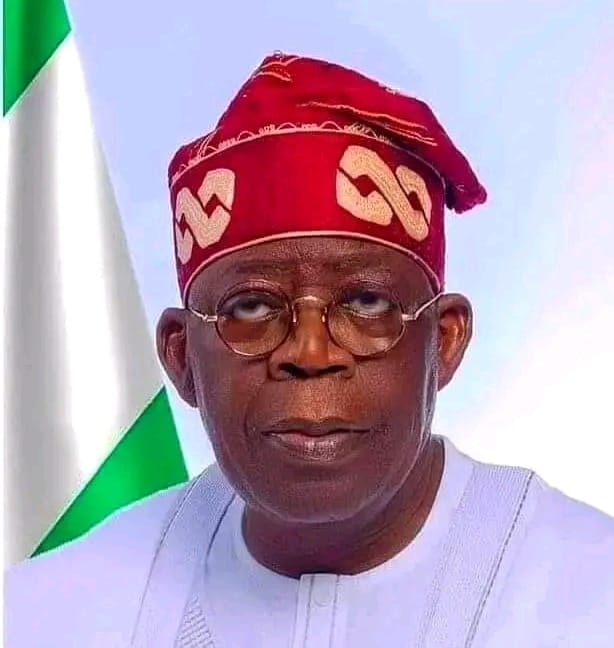
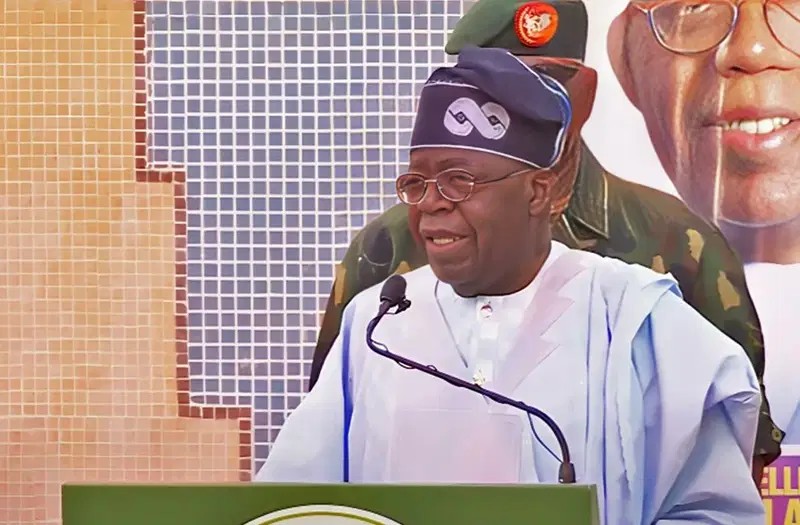
President Bola Tinubu on Tuesday issued a stern charge to the leadership of Nigeria’s 774 local government areas, directing them to immediately translate his administration’s Renewed Hope Agenda into visible structural development at the grassroots level. The President emphasized that the overall success of national growth depends heavily on the performance of local administrations. He declared that a country as vast as Nigeria cannot achieve sustainable advancement solely through policies directed from the central government in Abuja, stating that true transformation must instead take root from the bottom up. Speaking at the maiden Annual National Conference of the 774 Local Government Council Chairmen, held at the State House Banquet Hall, Tinubu insisted that the real impact of government must be measured by tangible improvements in communities. He noted that official policy announcements mean very little if they do not change the daily realities of citizens living in rural wards, villages, and towns. Reflecting on his political journey, the President recalled his tenure as the Governor of Lagos State, during which his administration pioneered the creation of 37 Local Council Development Areas (LCDAs). He explained that this expansion was driven by a rapidly growing population and a structural necessity to bring public services closer to ordinary citizens. Tinubu dismissed historical counter-narratives regarding his local government reforms in Lagos, clarifying that the strategy was strictly focused on widening public access to basic services. By shortening the physical and bureaucratic distance between the governed and the government, his administration successfully established enduring centres of local development. Building on that foundational governance blueprint, the President stated that his federal administration has actively pursued decentralized national development since taking office in 2023. He reiterated his firm conviction that local government councils are the primary engines required to lift millions of Nigerians out of poverty and neglect. Highlighting a major milestone of his administration, Tinubu referenced the decisive legal action initiated by the Federal Government which culminated in the historic July 11, 2024, Supreme Court judgment affirming full financial and constitutional autonomy for local government councils across the federation. However, the President pointed out that the landmark judicial victory was not achieved for mere political showmanship. He cautioned the council leaders that autonomy is not an end in itself, but rather a functional administrative instrument meant to drive aggressive infrastructure and welfare delivery across Nigeria. The President subsequently rolled out specific operational benchmarks, ordering the council chairmen and elected councillors to prioritize drastic upgrades in primary healthcare, basic education, rural road networks, and clean water supply. He added that local administrations must aggressively support small scale businesses, women, and youth groups To achieve these governance targets, Tinubu urged the councils to completely abandon archaic administrative habits and transition into modern centres of precision planning. He directed the leadership to heavily adopt technology and rely on verified statistics to ensure evidence-based decision-making and measurable project implementation. Shifting his focus to national security, the President stated that while the Federal Government continues to heavily equip and reform military institutions, lasting peace can only be secured at the community level. He charged the chairmen to collaborate with traditional rulers, religious figures, and lawful security agencies to detect and neutralize local grievances before they erupt into full-blown crises. With political activities quietly intensifying ahead of the 2027 general elections, Tinubu concluded by warning the council chiefs against turning their domains into breeding grounds for political violence. He demanded a strict zero-tolerance policy for political thuggery, hate speech, and youth intimidation, reminding the leaders of their core responsibility to protect the democratic right of every Nigerian to vote without fear.
NEWS /  Tue 22 Sep
Posted By; Akinwale Akintayo

Post-Abduction Blues: Oyo Government Pleads with Parents as Pupils Desert Esiele, Yawota School for apprenticeship

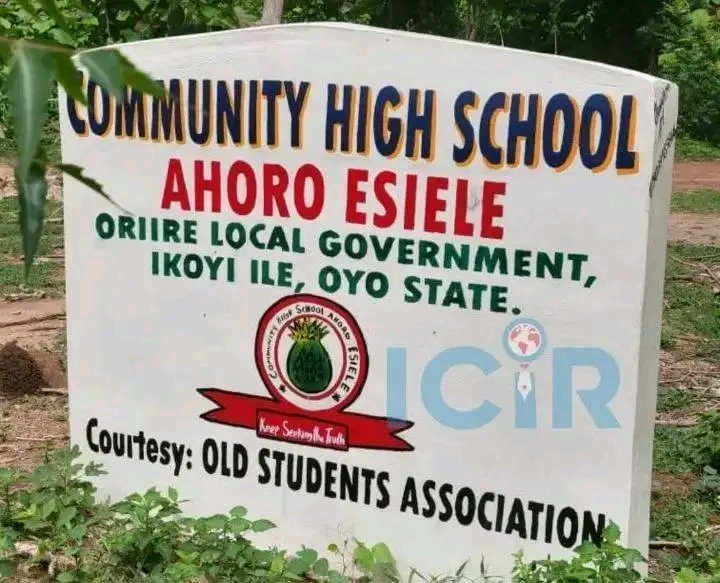
A deep sense of anxiety has paralyzed academic activities in Oriire Local Government Area of Oyo State, as pupils of Baptist Nursery and Primary School, Yawota, have completely boycotted resumption for the new academic session following a recent mass abduction in the community. THENEWSCREDIT revealed that instead of returning to their classrooms, many of the traumatized children have been diverted by their parents into trading and artisan skills-acquisition activities during school hours, effectively spiking the number of out-of-school children in the region. Disturbed by the total desertion of the classrooms, the Oyo State Commissioner for Education, Science, and Technology, Olusegun Olayiwola, led a high-powered ministry delegation on a fact-finding working visit to the affected frontier communities to assess the level of security compliance and educational paralysis. A statement issued by the Commissioner for Information and Orientation, Dotun Oyelade, on Tuesday in Ibadan, noted that the state government is actively engaging students, teachers, parents, traditional rulers, and security agencies to restore immediate normalcy. During the tracking exercise, THENEWSCREDIT gathered that the education commissioner physically caught up with several missing pupils at their various vocational apprenticeship venues, where he urgently pleaded with apprehensive parents not to permanently sacrifice their children’s academic future to fear. To prevent the outright closure of the institution—which is privately owned by the mission—the government has directed the state’s Director of Basic Education to immediately interface with the leadership of the Nigerian Baptist Conference on critical stabilization strategies. Meanwhile, a major infrastructural twist emerged during the delegation’s courtesy visit to the palace of the Elesinele of Esiele, Oba Tajudeen Abisoye, who openly lamented the severe impact of the security crisis on alternative public sectors in his domain. The traditional ruler raised a serious alarm over the continuous occupation of the community’s Primary Health Centre by military personnel as temporary barracks accommodation, stating that the development has drastically disrupted routine healthcare delivery for local residents. The security crisis further exposed severe structural deficits at the neighboring Ahoro-Esiele Community Grammar School, prompting the commissioner to order the immediate deployment of additional core instructors, particularly Mathematics teachers, to fill the existing gaps. In a concluding bid to secure long-term operational stability, the Ministry directed the Tutor General to draft a structural framework to absorb dedicated Parent-Teacher Association (PTA) teachers into the state`s main civil service commission for review by the Executive Governor.
NEWS /  Tue 22 Sep
Posted By; Akinwale Akintayo

NASS to States: Only State Police Amendment Bill Has Been Transmitted

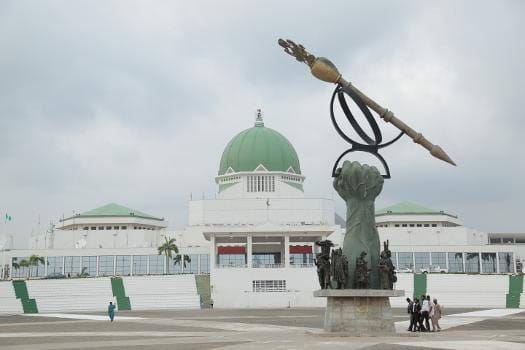
The National Assembly has officially clarified that only one Constitution Alteration Bill has been transmitted to the 36 State Houses of Assembly for legislative consideration. The federal parliament debunked widespread reports suggesting that the entire package of the ongoing constitutional review had been forwarded to the state legislatures. The clarification was contained in an official statement issued on Tuesday in Abuja by the Clerk to the National Assembly (CNA), Kamoru Ogunlana. The statement aimed to correct mounting misconceptions and provide the public with an accurate status update on the amendment process. According to Ogunlana, the National Assembly had on September 16, 2026, announced the formal transmission of the Constitution of the Federal Republic of Nigeria 1999 (Sixth Alteration) Bill, 2026. He emphasized that this remains the singular document sent to the states so far. The specific legislation is titled: “A Bill for an Act to Alter the Constitution of the Federal Republic of Nigeria, 1999 to Provide for the Establishment of State Police Services; and for Related Matters.” The CNA stressed that, for the avoidance of doubt, no other bill has accompanied this proposal. Consequently, the National Assembly declared that it is entirely incorrect for any media or public commentator to create the impression that all pending constitutional amendment bills have been dispatched. The process for other legislative proposals is still ongoing within the federal chambers. Explaining the rationale behind the decision, the Clerk noted that priority was deliberately given to the State Police Bill. This fast-tracking was a direct response to widespread public demands and the critical need for a decentralized approach to managing national security. Ogunlana further observed that the swift legislative action is aimed at permanently addressing Nigeria’s complex policing challenges. The National Assembly intends to resolve these security bottlenecks through a robust and appropriate constitutional and legal framework. Meanwhile, the CNA assured Nigerians that other Constitution Alteration Bills have not been abandoned. They will be transmitted to the 36 State Houses of Assembly immediately after they are passed in an identical format by both the Senate and the House of Representatives.
NEWS /  Mon 21 Sep
Posted By; Akinwale Akintayo

2027 Polls: Tinubu Warns Police Against Partisanship, Threatens Sacking Over Misconduct

President Bola Tinubu has issued a stern warning to the Nigeria Police Force, declaring that any officer found engaging in partisan or unprofessional conduct during the 2027 general elections will be summarily dismissed from service. The President delivered the ultimatum on Monday at the 2026 Conference and Retreat for Senior Police Officers in Owerri, Imo State. Represented by the Secretary to the Government of the Federation (SGF), George Akume, the Commander-in-Chief charged the police leadership to uphold the highest standards of integrity as the nation prepares for its next political transition. Tinubu emphasized that every Nigerian, regardless of political affiliation, ethnicity, religion, or social status, must feel entirely protected by the police. He stressed that the neutrality of the Force is fundamental to maintaining public confidence and safeguarding the overall credibility of the nation’s democracy. “The police must be seen not as an instrument of any political interest, but as a national institution serving the Nigerian people and protecting the constitutional order,” the President stated. He noted that the success of the 2027 polls will heavily rely on meticulous preparation, intelligence-led operations, and close coordination among electoral stakeholders. According to the President, securing the electoral process goes far beyond guarding ballot papers and polling booths. He explained that true election security entails protecting citizens, electoral officials, and materials, while actively preventing violence and intimidation so Nigerians can vote without fear. Reaffirming his administration`s commitment to ongoing police reforms, Tinubu stressed that meaningful transformation requires sustained investment. He promised that the Federal Government would continue to prioritize funding for personnel welfare, training, advanced technology, and operational logistics. To counter increasingly sophisticated security threats, the President urged the Force to strengthen its intelligence gathering, improve emergency response times, and deepen community engagement. He also highlighted the critical need for enhanced inter-agency cooperation among all security arms in the country. The President concluded by commending the Inspector General of Police, IGP Olatunji Rilwan Disu, for his efforts to reposition the Force, while honoring officers who have paid the ultimate price fighting terrorism and banditry. He, however, reminded the remaining top brass that public expectations remain exceptionally high, demanding absolute discipline and respect for human rights.
NEWS /  Sun 20 Sep
Posted By; Temilola Odeniyi

FCT Security: Police Smash Crime Hideouts, Arrest 300 Suspects in Massive Swoop

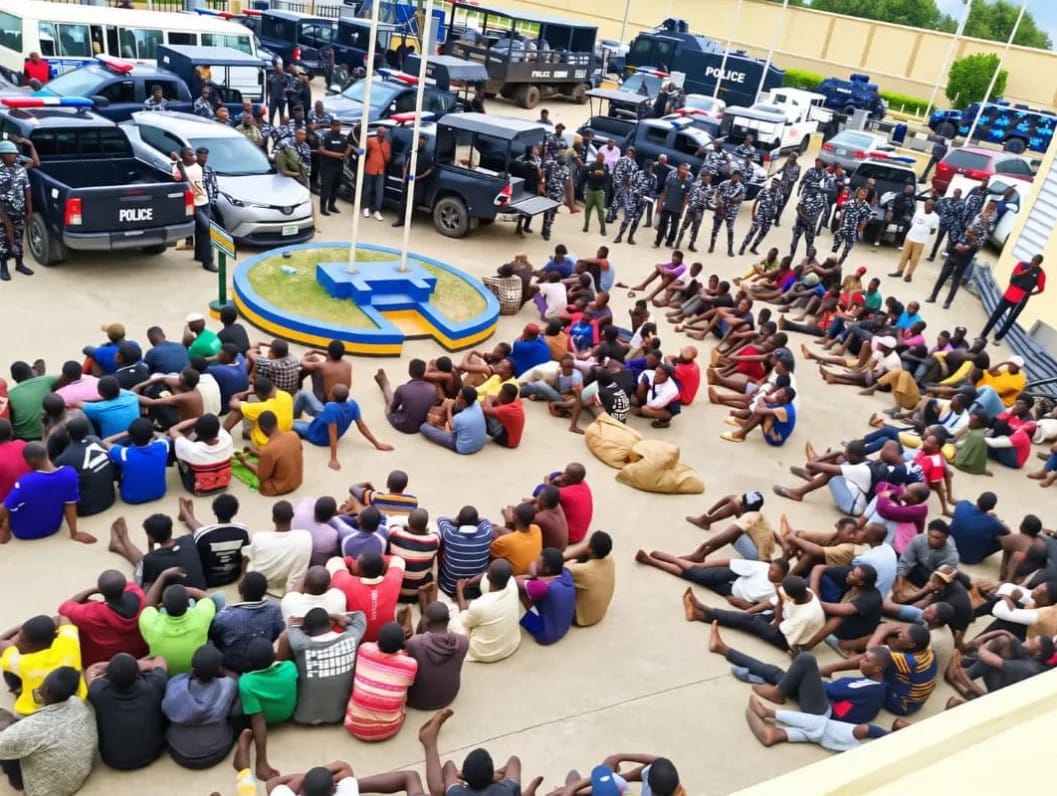
In a major crackdown to rid the nation`s capital of criminal elements, operatives of the Federal Capital Territory (FCT) Police Command have arrested about 300 suspects during coordinated raids on criminal flashpoints, shanties, and uncompleted buildings across Abuja. The massive security operation, which took place on Saturday, September 19, 2026, was part of an ongoing proactive strategy to disrupt criminal networks and guarantee the safety of residents. The FCT Police Public Relations Officer, SP Josephine Adeh, confirmed the breakthrough in a statement issued at the Command’s headquarters on Sunday. According to Adeh, lethal weapons and narcotics were confiscated during the sweep. “The operation, carried out across various locations, led to the raid of several identified criminal hideouts, with approximately 300 persons taken into custody for screening. Items recovered during the operation include knives, a toy gun, cannabis, and other illicit drugs,” the statement read. The police image maker explained that the suspects are currently undergoing rigorous screening and profiling. She assured the public that while prima facie offenders will be swiftly arraigned in court, individuals with no case to answer will be released. Reacting to the development, the FCT Commissioner of Police, Ahmed Sanusi, reaffirmed his administration`s commitment to sustaining intelligence-led raids across the territory, particularly in areas identified as vulnerability zones. CP Sanusi also seized the opportunity to sound a note of warning to youths against the dangers of narcotics, linking substance abuse directly to the rise in violent crimes. “Substance abuse can impair judgment, fuel violent and criminal behaviour, and expose individuals and communities to serious security risks,” the CP warned, urging those struggling with drug addiction to seek rehabilitation rather than turning to crime. Crucially, the police boss issued a stern warning to his officers against professional misconduct during subsequent clampdowns. He stressed that the command would show zero tolerance for extortion, harassment, or the intimidation of innocent citizens. “Any officer found engaging in such misconduct will face appropriate disciplinary action,” Sanusi cautioned. The Command urged FCT residents to remain vigilant and support security agencies by reporting suspicious movements or criminal hideouts through its emergency line: 08032003913.
NEWS /  Sun 20 Sep
Posted By; Favour Rejoice

NIGERIA WILL RISE AGAIN: BISHOP ASAMU DECLARES DIVINE RESTORATION AMIDST NATIONWIDE HARDSHIP

As economic hardship and social anxieties continue to test the resilience of millions across the country, a powerful message of hope and divine intervention was delivered today, Sunday, September 20, 2026. Speaking through the inspiration of the Holy Spirit, the Bishop of the Diocese, Bishop Akintayo Asamu, sent a wave of spiritual reassurance to the nation during "NIWAJU-OLUWA," a live Sunday Service broadcast monitored on BRAVE 91.1FM, Ogbomoso. Channeling his sermon toward the biting realities facing the populace, the cleric declared that despite the present gloom, a divine turnaround is imminent for Nigeria and its citizens. Titled "Hardship: When Things Fall Apart," the timely sermon drew its spiritual anchors from the biblical books of Ezekiel 37:1–14 and Romans 8:38–39. Bishop Asamu began by addressing the stark paradox of the Nigerian condition, observing that thousands of citizens are trapped in a daily cycle of suffering, concealed smiles, and deep-seated pain. He lamented that while the masses groan under the weight of severe socio-economic challenges, the political leadership appears unconcerned and detached from the citizens` plight, leaving many to feel entirely abandoned. Drawing a vivid historical parallel to contextualize the message, the Bishop urged the congregation and listeners to look closely at the audience of the Prophet Ezekiel. He explained that Ezekiel was writing to Jewish exiles in Babylon whose nation had been conquered, their holy city of Jerusalem destroyed, and their sacred temple reduced to ashes. The biblical imagery of a valley filled with "very dry" bones, according to the cleric, was not just a poetic description but a psychological and spiritual mirror of a community that felt cut off, hopelessly defeated, and completely dead. Delving into the first phase of the text, Bishop Asamu noted that true recovery begins with confronting the reality of hardship, just as God forced Ezekiel to walk back and forth among the scattered bones. He warned against the dangers of "toxic positivity" or ignoring genuine grief, asserting that human instinct often drives people to deny their pain or rush toward superficial solutions. The Bishop emphasized that biblical hope does not grow from denial, but from an honest, courageous acknowledgment of how broken things actually are before handing them over to God. Addressing the human response to national adversity, the cleric highlighted the limits of human logic when systems collapse. Quoting God’s staggering question to the prophet—"Son of man, can these bones live?"—Bishop Asamu stated that naturally, medically, and politically, the logical answer for Nigeria might seem to be an absolute no. However, he praised Ezekiel’s response—"O Lord God, you know"—as a masterclass in faith, reminding believers that when hardship shatters human strategies, room must be created for divine sovereignty to operate outside human boundaries. THENEWSCREDIT reports that the Bishop then charged Nigerians to unleash the power of the prophetic word over their personal lives, families, businesses, and the nation. He remarked that God’s command to Ezekiel to preach to a graveyard looked foolish from the outside, but obedience initiated a rattling sound that brought scattered bones together. "The Word of God creates reality out of nothing," Bishop Asamu declared, urging citizens to anchor themselves to divine promises rather than the loud, shifting, and discouraging reports of daily misery. Warning against superficial fixes, the cleric distinguished between mere structural adjustment and true spiritual life. He explained that though sinews, flesh, and skin eventually covered the bones in Ezekiel`s vision, they remained dead until the breath of the Holy Spirit (Ruach) entered them. Bishop Asamu cautioned that Nigerians could rebuild the external structures of their lives—securing new jobs or putting up appearances—and still remain empty inside, stressing that total restoration requires an internal resurrection that only the Holy Spirit can provide. The climax of the broadcast brought a powerful message of sovereign restoration, as the Bishop reminded listeners of God’s extravagant promise of grace to a people who believed their hope was entirely gone. He assured the public that God does not condemn citizens for feeling overwhelmed by the current dispensation, but instead promises to open their graves of despair, bring them out of exile, and settle them in prosperity. He emphasized that the gravity of Nigeria`s current collapse will never dictate the finality of its outcome. Concluding the broadcast on a high note of triumphant faith, Bishop Asamu reiterated the unshakeable truth found in Romans 8:38–39, declaring that no amount of hardship, economic distress, or governance failure can separate the believer from the love of God. He urged the thousands tuning in across the region to shift their focus from the current national cemetery to the greenhouse of miracles that God is cultivating. The live radio service concluded with intensive prophetic prayers muttered for the peace, economic revival, and spiritual awakening of Nigeria. Listeners were left with a resounding charge to consistently speak positive, faith-filled declarations over the destiny of the nation. As the broadcast closed, the prevailing sentiment among the audience on BRAVE 91.1FM was one of renewed strength, with many expressing a restored belief that what has fallen apart can, through the power of the Spirit, be put back together.
NEWS /  Sat 19 Sep
Posted By; Akinwale Akintayo

Why We Cannot Fix Petrol Prices: PIA Limits Govt Intervention, Says NMDPRA

The Nigerian Mainstream and Downstream Petroleum Regulatory Authority (NMDPRA) has stated that it lacks the legal power to fix petrol prices in Nigeria, citing strict provisions of the Petroleum Industry Act (PIA) 2021. In a statement released via its official X handle on Saturday, the regulatory body clarified that Section 205(1) of the PIA mandates that wholesale and retail prices of petroleum products must be driven entirely by unrestricted free-market forces. According to the agency, the federal government can only intervene in pricing under exceptional circumstances where a market failure has been formally declared—a situation that has not occurred. "The authority does not fix pump prices or issue administrative price templates," the NMDPRA stated, acknowledging the intense financial strain and hardships Nigerians are currently facing due to the recent spike in petrol pump prices. While ruling out direct price control, the NMDPRA emphasized that its statutory role is limited to preventing anti-competitive monopolies, price-fixing, and the abuse of market dominance. To shield citizens from exploitation, the authority revealed it has partnered with the Federal Competitive and Consumer Protection Commission (FCCPC) to run joint surveillance operations targeting under-dispensing, artificial collusion, and compromised fuel quality. Additionally, the NMDPRA is collaborating with the Nigeria Customs Service (NCS) and other security agencies to intensify border surveillance to curb product smuggling and ensure national energy security.
NEWS /  Sat 19 Sep
Posted By; Temilola Odeniyi

Return To Local Delicacies To Fight Modern Illnesses, Ohanaeze Urges South-East Residents

The apex Igbo socio-cultural organization, Ohanaeze Ndigbo, has raised the alarm over rising cases of modern illnesses in the South-East, blaming the trend on harmful, modern eating habits and the consumption of junk food. The group made the assertion during a cultural empowerment initiative where it distributed N1.2 million in cash grants to dozens of rural women trading in indigenous Igbo food condiments across the region. Speaking at the event, the Chairman of the Dunukofia Local Government Area chapter of Ohanaeze Ndigbo Worldwide, Chief Uchenna Nwoye, urged Nigerians of Igbo descent to abandon fast food and return to the healthier, organic diets of their ancestors. "Most of the illnesses people experience today come from eating unhealthy junks, which they sometimes think is modern, without knowing that it destroys organs and weakens immunity," Nwoye stated. "Our local foods are healthier, tastier, and even cheaper." To back its campaign with action, the socio-cultural group empowered 60 rural women drawn from the six communities within the Dunukofia council area. Each beneficiary received a N20,000 cash injection to scale up their businesses. According to the organization, the financial intervention targets traders and producers of vital traditional Igbo condiments—such as okpeyi, ogiri, ukpaka (oil bean), and local dried pepper—to prevent native culinary heritage from going extinct. Nwoye emphasized that the program serves a dual purpose: providing direct economic relief to rural women while safeguarding the identity and health of the Igbo people. "By supporting those who produce and sell these indigenous foods, we are not only empowering our people economically but also helping to preserve our rich cultural heritage for future generations," he added. Responding on behalf of the beneficiaries, the market women expressed gratitude to the leadership of Ohanaeze Ndigbo. They noted that the organization`s advocacy for a return to traditional diets would significantly boost patronage for local food vendors and revive the rural economy.
NEWS /  Sat 19 Sep
Posted By; Akinwale Akintayo

Relief in Sight: Tinubu and Governors Target October 1 for Lower Transport Fares

Relief appears to be on the horizon for Nigerian commuters as President Bola Ahmed Tinubu has assured the nation of a measurable reduction in transportation costs across the country starting October 1, 2026. The presidential directive is the latest update on the rollout of the National Affordable Compressed Natural Gas (CNG) Transit Programme, a flagship initiative aimed at crashing commercial transit fares by pivoting from expensive petrol to cheaper gas alternatives. This major policy commitment was made public on Saturday in an official statement issued by the Special Adviser to the President on Information and Strategy, Bayo Onanuga. The announcement comes at a critical time when inflation and rising energy costs have placed a heavy financial strain on millions of households nationwide. According to the statement, President Tinubu solidified this target during a high-level meeting on August 27 with the governors of all 36 states. During the executive session, the federal government and state leaders jointly adopted a clear objective to ensure citizens experience tangible financial relief at the parks by October. To guarantee seamless execution, the administration has established a specialized implementation committee. This body operates under the auspices of the Nigeria Governors’ Forum (NGF) and is chaired by the Governor of Kwara State, AbdulRahman AbdulRazaq. The presidency disclosed that considerable groundwork is already underway, with the committee working in lockstep with the Presidential CNG Initiative and Electric Vehicle (PI-CNG & EV) team, state governments, and other critical stakeholders. Their immediate focus is to identify priority transport corridors and determine the most effective structural interventions. Officials are currently mapping out high-traffic interstate and intra-city routes to ensure that the initial deployment of CNG-powered buses and conversion kits yields the maximum immediate impact for everyday passengers. The committee is also finalizing logistics for refueling infrastructure across the selected corridors. President Tinubu emphasized that fast-tracking this affordable transit program has become deeply urgent for the country. He noted that the aggressive push for domestic gas utilization is a necessary shield against the shocks of the ongoing global energy crisis and volatile fuel prices.
Page 2 of 129


Home   About Policy Contact

2026  ©
Developed by KITE