NEWS
2027 Presidency: Omission of Primary School Records in INEC Forms Sparks Outrage
Published on Sun 02 Aug 2026 By
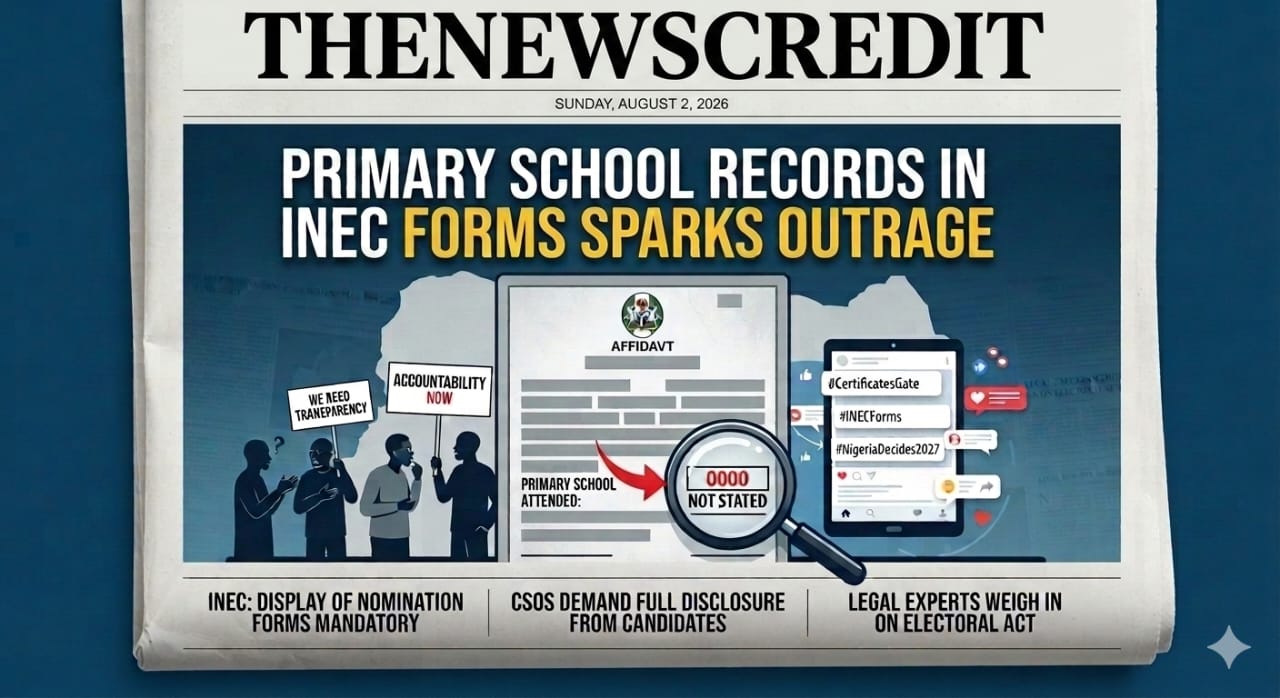
 A fierce national debate has erupted over the transparency of Nigeria’s top political contenders following the Independent National Electoral Commission’s (INEC) official release of presidential nomination documents. The public disclosure has thrown the political landscape into turmoil as citizens and analysts begin rigorous scrutiny of the credentials submitted by those vying for the villa.

Leading the wave of public reactions, popular Arise Television anchor Rufai Oseni openly questioned the integrity of candidates who omitted fundamental details of their early education. In a viral social media post on Sunday, Oseni expressed deep worry over the electorate`s willingness to support leaders with questionable profiles. "People that can’t tell you their primary school want to be your president and Nigerians will vote them," the broadcaster stated.

The controversy centers heavily on the statutory filings of the incumbent, President Bola Tinubu of the All Progressives Congress (APC). Documents displayed at INEC headquarters revealed that the President listed only his Bachelor of Science degree from Chicago State University. Strikingly, the columns requiring the names and graduation dates for his primary and secondary education were filled out as "0000."

This omission has drawn sharp contrasts with the submissions of key opposition flagbearers who provided full disclosures of their upbringing. Nigeria Democratic Congress (NDC) candidate, Mr. Peter Obi, presented a comprehensive academic timeline that tracks directly back to his primary school enrollment. Similarly, African Democratic Congress (ADC) candidate, Alhaji Atiku Abubakar, submitted an uninterrupted educational history beginning from his basic education years.

Civil society organizations have quickly weighed in, arguing that basic education tracking is essential for verifying a leader`s foundational identity. Legal experts note that while a university degree meets the minimum constitutional requirement, entering placeholder digits for early schooling invites unnecessary public suspicion. The development has already triggered intense debates across various media platforms, dividing opinions along party lines.

In response to the growing friction, the electoral umpire clarified that the publication is a mandatory procedure designed to foster transparency ahead of the 2027 polls. INEC noted that the display opens the official window for the public to verify the claims made by all political aspirants. This phase allows the electorate to independently audit the affidavits before the election timeline advances.

Under the current provisions of the Electoral Act, this scrutiny carries significant legal weight for the upcoming election cycle. Any citizen who discovers false declarations or inconsistencies in a candidate’s submission has the constitutional right to file a lawsuit. If the courts find any affidavit to be intentionally misleading, it could lead to the disqualification of the affected candidate.

As political parties prepare their campaign machinery, this credential row is expected to dominate the early phase of the presidential race. Voters are becoming increasingly sensitive to transparency issues, signaling a highly litigious pre-election period. How the ruling party handles this fresh wave of public skepticism could shape the narrative of the entire 2027 contest.
ADVERTISMENT

You May Also Like