
NEWS
Youths Are Leaders of Today, Not Tomorrow, Says Speaker Abbas
Published on Wed 05 Aug 2026 By
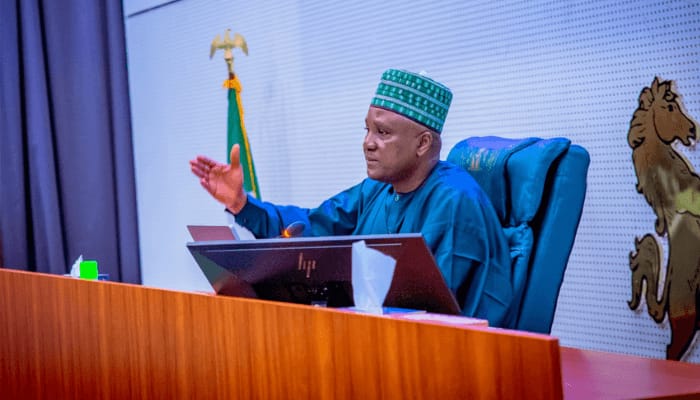
 The Speaker of the House of Representatives, Tajudeen Abbas, has declared that Nigeria can no longer afford to treat young people as “leaders of tomorrow.” He insisted that they must be deliberately prepared to assume positions of leadership and influence the country’s future immediately.

Speaking on Tuesday in Abuja at the launch of the Leadership for Equity, Advocacy and Development (LEAD) Fellowship, Abbas said Nigeria’s democratic future depends on raising a generation of ethical, competent, and institutionally minded leaders. The event was organised by the Gender Mobile Initiative at the National Assembly.

The Speaker, who was represented by the Chairman of the House Committee on Women Affairs and Social Development, Kafilat Ogbara, noted that leadership is about responsibility, accountability, and respect for democratic institutions rather than merely occupying public office.

"It is high time we prepared young people for power," Abbas said. "As the trustees of our tomorrow, they must understand how government works and how to use political office to change society for the better. Without this preparation, they risk squandering the opportunity to effect real, lasting good."

He stressed that with Nigeria’s youthful population playing increasingly active roles as voters, entrepreneurs, and innovators, they should no longer be confined to the future.

The Speaker also reaffirmed the House’s commitment to expanding women’s participation in politics through a proposed constitutional amendment seeking reserved seats for women in the National Assembly and state Houses of Assembly.

"Let me be absolutely clear: we are not attempting to lower the standard of leadership," he stated. "We are attempting to remove the barriers that prevent capable women from even reaching the starting line."

He identified inadequate campaign finance, exclusion from party structures, cultural stereotypes, and electoral violence as major barriers limiting women’s participation in elective politics.

The LEAD Fellowship is an 18-month programme designed to train 1,000 student leaders drawn from 10 tertiary institutions in ethical leadership, public policy, democratic governance, and public service.

Executive Lead of the Gender Mobile Initiative, Omowumi Ogunrotimi, explained that the fellowship was created to bridge the gap between student leadership and opportunities for meaningful participation in governance after graduation.

According to her, Nigeria faces a “democratic formation deficit,” where many young people are introduced to transactional politics early, alongside a “transition deficit” that leaves capable student leaders without structured pathways into governance.

House spokesman, Akin Rotimi, described the fellowship as a strategic investment in Nigeria’s democratic future, urging participants to place character above political ambition.

"If we want better politics, stronger institutions, and more accountable governance, we must invest in leadership development long before individuals seek public office," Rotimi said.

Also speaking, the Director-General of the National Institute for Legislative and Democratic Studies (NILDS), Prof. Abubakar Sulaiman, represented by Dr. Shuaibu Danwanka, added that ethical leadership must be cultivated from the formative stages of civic engagement.

The LEAD Fellowship is being implemented by the Gender Mobile Initiative in partnership with the Office of the Speaker of the House of Representatives, NILDS, and the Office of the Senior Special Assistant to the President on Student Engagement, with support from the Open Society Foundations.
ADVERTISMENT

You May Also Like