NEWS
Sanusi Blasts Lawmakers for 8-Year Silence on Illegal CBN Borrowing Limits
Published on Mon 29 Jun 2026 By Akintayo Asamu
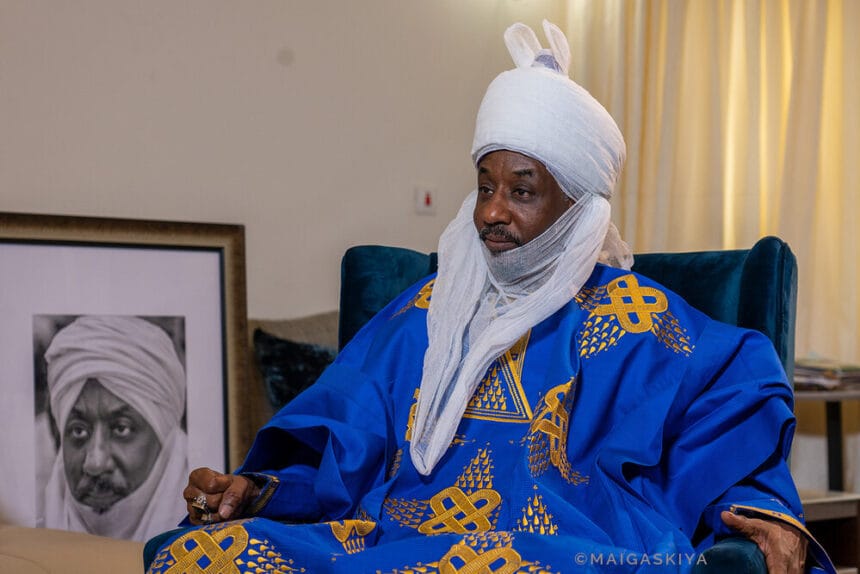
 The Emir of Kano, Muhammadu Sanusi II, has accused the National Assembly of failing to perform its constitutional duty by allowing successive federal governments to breach laws regulating borrowing from the Central Bank of Nigeria (CBN).

Speaking over the weekend on the need for stronger institutions and fiscal accountability, the former CBN governor slammed federal lawmakers for failing to check executive excesses despite clear legal limits on government borrowing from the apex bank.

Emir Sanusi explained that the law permits the Federal Government to borrow a maximum of five per cent of the previous year’s revenue from the CBN. He alleged that this provision was repeatedly violated without any action by the legislature.

“The law said you cannot lend more than five per cent of last year’s revenue. That law was broken with impunity. Where was the National Assembly? For eight years, the National Assembly was silent,” Sanusi said.

He argued that the legislature cannot function as an independent arm of government if it fails to hold the executive accountable.

“The legislature is supposed to make laws and ensure those laws are obeyed. If it cannot stand up to the executive, then it simply becomes an extension of the executive rather than an independent institution,” he stated.

Reflecting on his tenure as the apex bank boss, Sanusi recalled how he faced intense legislative scrutiny over minor issues while massive fiscal infractions went unnoticed later on.

“I was summoned before the National Assembly more than 20 times over minor matters relating to the Central Bank. I was questioned, harassed and challenged. Yet, for eight years, when the borrowing law was being violated, the same lawmakers remained silent.”

The former CBN governor maintained that Nigeria’s current economic challenges could have been drastically reduced if public institutions had consistently enforced the law and demanded accountability. He added that building stronger democratic institutions and enforcing greater oversight remain essential to preventing similar fiscal problems in the future.
ADVERTISMENT

You May Also Like