☰     THENEWSCREDIT
HOME BREAKING NEWS POLITICS METRO EDUCATION HEALTH SPORT ENTERTAINMENT OPINION VIDEOS SEARCH CONTACT

NEWS


NEWS /  Thu 25 Jun
Posted By; Akintayo Asamu

OYO SCHOOL KIDNAP: MAKINDE EXTENDS 4PM–8AM CURFEW BY 24 HOURS IN 10 LGAs

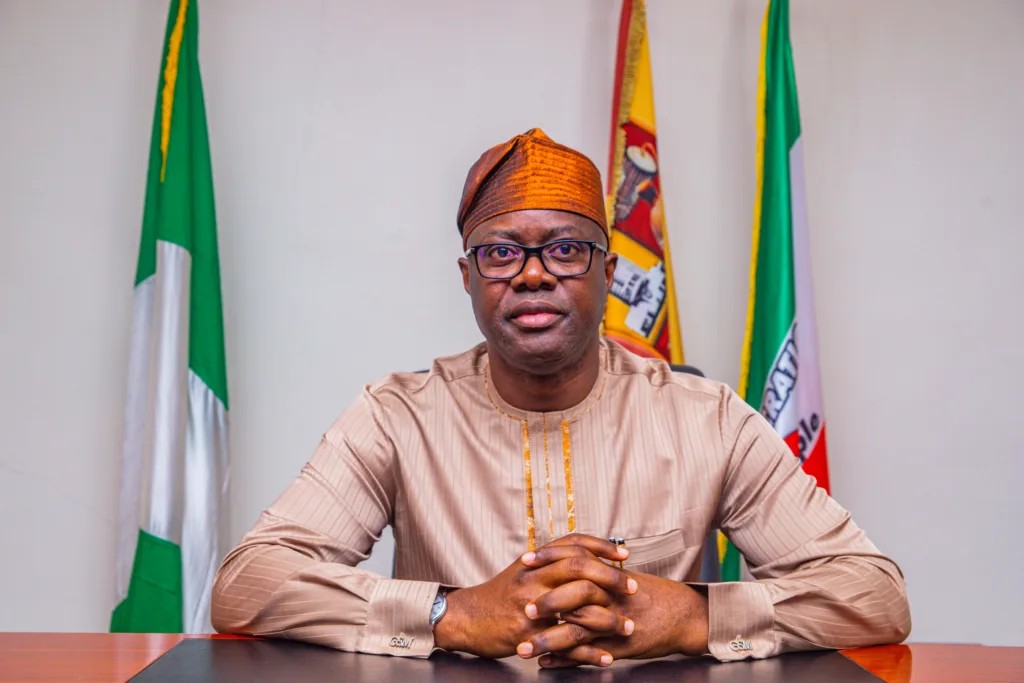
The Oyo State Government has extended the curfew imposed on 10 local government areas by 24 hours to bolster ongoing rescue operations for kidnapped schoolchildren and teachers. Governor Seyi Makinde approved the extension for the council areas bordering the Old Oyo National Park. Secretary to the State Government, Musibau Babatunde, announced the directive in a memo issued on Thursday. The restrictions will now remain in force until Saturday, June 27, 2026. The state government had initially declared a 48-hour, 4:00 PM to 8:00 AM curfew on June 23, 2026. This latest adjustment extends that window to intensify security sweeps. The 24-hour extension impacts the following local government areas:Oriire (Headquarters: Ikoyi-Ile), Orelope (Headquarters: Igboho), Irepo (Headquarters: Kisi), Saki West (Headquarters: Saki), Saki East (Headquarters: Ago-Amodu), Atisbo (Headquarters: Tede/Ago-Are)Itesiwaju (Headquarters: Otu), Iseyin (Headquarters: Iseyin), Olorunsogo (Headquarters: Igbeti), Atiba (Headquarters: Offa-Meta, Oyo). The curfew is a direct response to the May 15, 2026, bandit assault on three schools in Yawota and Ahoro-Esienle within the Oriire Local Government Area. Bandits invaded Baptist Nursery and Primary School, Community Grammar School, and L.A. Primary School. One teacher was killed during the raid, and another was later beheaded in captivity. Scores of schoolchildren and teachers remain in custody. Governor Makinde reiterated his commitment to locating the captives, stating that the government is working closely with federal security agencies to ensure all victims return home safely.
NEWS /  Thu 25 Jun
Posted By; Akintayo Asamu

Local Control Key to Nation’s Safety, Says Ubani

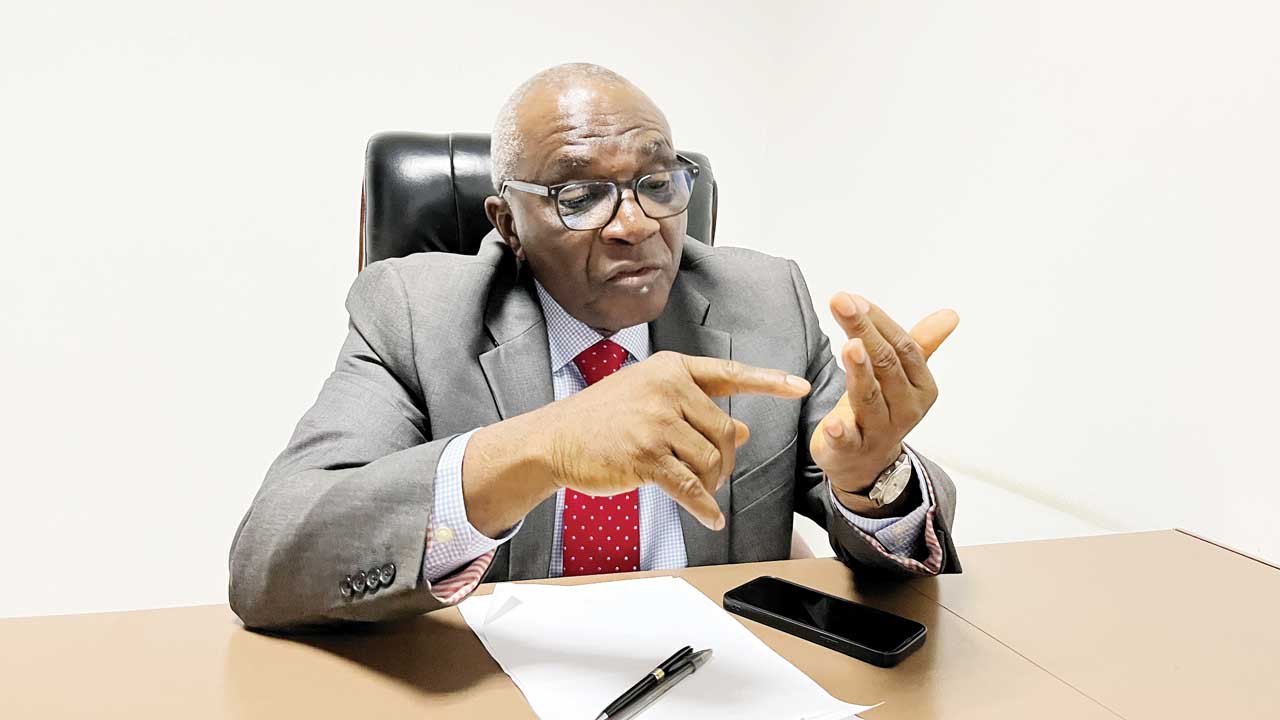
Nigeria will achieve true security only when local governments are fully empowered to manage their own territories, legal expert Monday Ubani declared yesterday. Speaking on Arise Television’s Morning Show, the Chairman of the Nigerian Bar Association (NBA) Electoral Committee strongly backed the decentralisation of the nation`s security architecture. His comments followed the Senate`s historic passage of the contentious State Police Bill, aimed at tackling the country`s worsening security crisis. "Security is local," Ubani stated, emphasising that grassroots leaders possess indispensable knowledge of their communities` entry and exit points. He argued that the current over-centralised policing system has failed to protect lives and property. Ubani praised the 10th National Assembly and the current administration for taking decisive steps toward decentralisation, calling state policing the definitive answer to Nigeria`s security challenges. News Analysis: The Path to Grassroots Policing The Senate`s passage of the State Police Bill marks a critical shift in Nigeria`s federal structure. For decades, critics have argued that a single, centrally controlled police force in Abuja cannot effectively manage a nation of over 200 million people. Ubani’s argument highlights a structural reality: local officials understand local vulnerabilities. However, the transition faces steep hurdles. Operational success will depend heavily on preventing state governors from weaponising local forces against political opponents and ensuring stable funding at the local government level.
NEWS /  Thu 25 Jun
Posted By; Akintayo Asamu

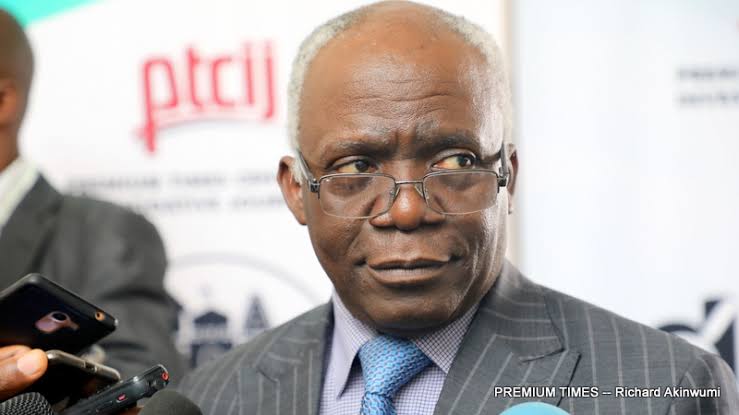
Falana: Jobless Youth, Not State Police, Drive Nigeria`s Security Crisis

Human rights activist Femi Falana, SAN, has warned that establishing state police forces will not stop Nigeria’s security crisis unless the federal government urgently tackles youth unemployment and mass poverty. Featuring as a guest on Channels Television’s Politics Today, Falana reacted to the Senate`s recent passage of the controversial State Police Bill. He argued that expanding law enforcement without providing social security is a surface-level fix for deep economic issues. "How do we employ more policemen and women without considering social security? Why are we not talking of creating employment for young people?" Falana asked. He concluded that without a holistic approach to poverty, regional policing units will fail to secure the country. The senior advocate also cautioned against dismissive political arguments, urging stakeholders to focus on structural reforms rather than weaponising the debate. He noted that the conversation surrounding restructuring must prioritize vulnerable citizens who are pushed into crime due to extreme financial desperation. Security experts have mirrored Falana`s concerns, noting that poorly funded state police forces could worsen regional instability if governors manipulate them for political gain. The bill now faces intense scrutiny as critics demand a balanced framework that combines armed surveillance with robust welfare programs.
NEWS /  Wed 24 Jun
Posted By; Akintayo Asamu

Editorial: The State Police Safeguards—Why Governors Cannot Easily Weaponize the Law

The Senate’s historic passage of the Constitution Alteration Bill to establish state police represents a watershed moment in Nigeria’s federalism. For decades, the centralized policing model has proven painfully inadequate against the hydra-headed monsters of banditry, terrorism, and kidnapping. Yet, as the nation stands on the precipice of this security revolution, a familiar, haunting question dominates public discourse: Will state governors not turn these local forces into private armies to crush political opposition and suppress dissent? While skepticism is deeply rooted in our political history, a critical look at the architecture of the new bill reveals that lawmakers were acutely aware of these dangers. The legislation is not a blank check to regional tyranny; rather, it introduces unprecedented legal and institutional safeguards designed to check gubernatorial excess. The Ghosts of the First Republic To understand the public`s anxiety, one must revisit Nigeria`s First Republic (1960–1966), when regional and Native Authority police forces operated under the control of regional premiers. During that era, localized policing degenerated into a tool for political warfare. The Native Authority police were notorious for: Opponents of ruling regional parties were routinely harassed, arbitrary arrests were rampant, and political rallies were violently disrupted. Local forces were actively deployed to intimidate voters and protect regional ruling elites during tense electoral cycles. In collusion with local judiciaries, regional police fast-tracked the imprisonment of political activists. This systematic abuse of power directly fueled the widespread political instability that led to the 1966 military coup. Consequently, the military centralized the policing structure under a single federal command to prevent regional leaders from wielding such dangerous local leverage. Why History Will Not Repeat Itself While critics fear a return to the dark days of the 1960s, the newly passed bill contains structural firewalls that the First Republic completely lacked. Clause 17(7) categorically criminalizes the weaponization of the police for political vendettas. It strictly prohibits a state Commissioner of Police (CP) from arresting, detaining, or using force against any citizen, journalist, or political party simply for criticizing the government. No such constitutional protection existed in the First Republic. A governor`s power to appoint a CP is strictly conditional, requiring formal confirmation by the State House of Assembly. This forces public scrutiny and creates an essential local check and balance. Unlike the First Republic where regional forces often operated in institutional silos, the new bill establishes a concurrent framework. The federal police structure, headed by the Inspector-General of Police, remains fully active nationwide. Federal courts, national security agencies, and human rights commissions retain overriding authority to intervene if local commands violate constitutional rights. The Verdict Devolution of policing is a necessity for a country of over 200 million people. We cannot allow the trauma of the 1960s to permanently paralyze modern security progress. The 10th National Assembly has delivered a legislative framework equipped with robust, modern legal tripwires that did not exist sixty years ago. The responsibility now shifts to the judiciary, civil society, and the Nigerian press to act as vigilant watchdogs. With these strict statutory guards in place, the era of unchecked regional tyranny will be incredibly difficult to resurrect. The safeguards are there; we must simply have the courage to enforce them.

NEWS /  Wed 24 Jun
Posted By; Akintayo Asamu

POLICING REVOLUTION: Senate Passes State Police Bill, Gives Governors Power Over CPs

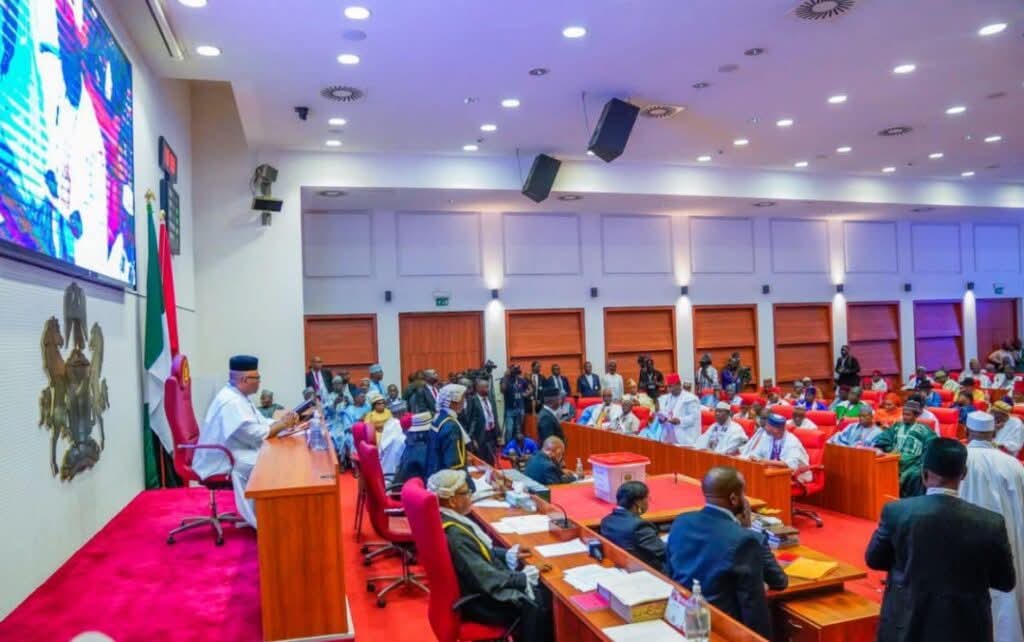
Nigeria moved a step closer to a total overhaul of its internal security architecture yesterday. The Senate passed a landmark constitutional amendment to establish state police forces. The breakthrough effectively ends decades of fierce national debate. It chips away at the Federal Government`s exclusive control over policing to combat rampant insecurity. Power to the Governors The Constitution Alteration Bill introduces a concurrent policing framework. The federal police will continue to operate under the Inspector-General of Police. However, individual states can now run their own parallel commands. The most sweeping change rests in the appointment of leadership: State governors receive explicit powers to appoint their own Commissioners of Police (CPs). All gubernatorial appointments require formal confirmation from the respective State Houses of Assembly. Governors can issue lawful written directives of a general policy nature to CPs regarding public safety. The Safeguards Against Tyranny To douse long-standing fears that governors might weaponize local forces against political rivals, lawmakers inserted strict human rights shields under Clause 17(7). The law explicitly bans CPs from arresting, detaining, investigating, or using force against any individual, group, or political party simply for criticizing the government. All police actions must strictly align with due process and existing legislation. Drama Over Digital Voting The historic session was not without procedural drama. Barely an hour before the vote, the Senate abruptly abandoned its electronic voting system. Senate Leader, Opeyemi Bamidele, moved a motion to switch to manual voting after technical glitches hit several digital devices. Senate President, Godswill Akpabio, sustained the motion, arguing that open, individual voice votes guaranteed absolute transparency. The tension-soaked floor was watched closely by top political figures, including: Femi Gbajabiamila (Chief of Staff to President Bola Tinubu),Senator Uba Sani (Governor of Kaduna State),Prince Dapo Abiodun (Governor of Ogun State),Lucky Aiyedatiwa (Governor of Ondo State) Following a rigorous, clause-by-clause evaluation, more than two-thirds of the senators openly voted in favor of the decentralization bill. The Next Hurdle While the Senate`s approval marks a massive victory for advocates of restructuring, the bill is not yet law. As a constitutional amendment, it must now secure matching approval from the House of Representatives. It then requires endorsement from at least 24 (two-thirds) of the 36 State Houses of Assembly before landing on the President’s desk for assent. If successful, this will stand as the most consequential legislative reform engineered by the 10th National Assembly.
NEWS /  Wed 24 Jun
Posted By; Akintayo Asamu

Insecurity: Oyo CAN Orders Churches To Fence Premises, Halt Late Services

Amidst a worrying surge in abductions and kidnapping, the Christian Association of Nigeria (CAN), Oyo State chapter, has ordered all churches across the state to immediately fortify their premises and suspend late-night physical activities. The directive was contained in a joint communiqué released on Wednesday by the state CAN Chairman, Rev. Elisha Ogundiya, and Secretary, Very Rev. Samuel Owolabi, following a critical review of the security situation in the state. New Security Mandates for Churches The Christian apex body instructed ministries to prioritize physical infrastructure and active surveillance to protect worshippers. The key directives include: Churches without perimeter fences and gates must construct them immediately. All late-night physical church programs and activities are suspended. Electronic security devices and cameras must be deployed strategically. Trained security guards must man church entry points during services. All existing guards and essential staff must undergo immediate security assessments. Strangers are strictly banned from sleeping inside sanctuaries or church premises. Public Travel Restrictions Beyond church regulations, CAN urged the general public to alter their movement patterns to minimize vulnerability. The body advised citizens to limit non-essential travel and completely avoid late-night journeys. Furthermore, the association called for strict compliance with Governor Seyi Makinde’s executive order, which bans commercial motorcycle operations after 10:30 p.m. across Oyo State. Call for Government Action While expressing sympathy with the families of current kidnap victims, CAN acknowledged ongoing state and federal rescue efforts, particularly regarding the recent abductions in Orire Local Government Area. However, the body resolved that the government must expedite actions to safely reunite hostages with their families. It also recommended that authorities tightly manage the dissemination of sensitive security information to the public to avoid compromising ongoing operations. "CAN will continue to collaborate with the government to ensure the peace, unity, and stability of the state," the statement concluded.
NEWS /  Wed 24 Jun
Posted By; Akintayo Asamu

Tinubu’s Spokesman Sparks Outrage: "I Don`t See the Hunger Nigerians Complain About"

Presidential spokesman Bayo Onanuga has disputed widespread claims of severe economic hardship in Nigeria, asserting that critics are overlooking the positive impacts of President Bola Tinubu’s policies. Speaking on Arise Television, Onanuga argued that several state interventions have yielded tangible benefits for citizens. He specifically cited major infrastructure projects, the interest-free federal student loan scheme, and single-digit credit facilities for civil servants. To illustrate his point, the presidential aide recounted his recent travel experiences, noting that the newly paved concrete road along the Ijebu-Ode axis and progress on the coastal highway have significantly cut down commuting times. "Is that not beneficial? What are people talking about really?" Onanuga asked, adding that public discourse has been unfairly "pigeonholed into certain assumptions" about the economy. While acknowledging the country`s current economic adjustments, Onanuga stated that his personal interactions do not match the scale of desperation often reported. He noted that feedback from his private employees suggests a different reality on the ground. The spokesman`s comments arrive amid intense national debate over the administration`s bold economic reforms. The removal of the petrol subsidy and the unification of the foreign exchange window have triggered a surge in the cost of living, though the government maintains these decisions are critical for long-term economic stability.
NEWS /  Wed 24 Jun
Posted By; Akintayo Asamu

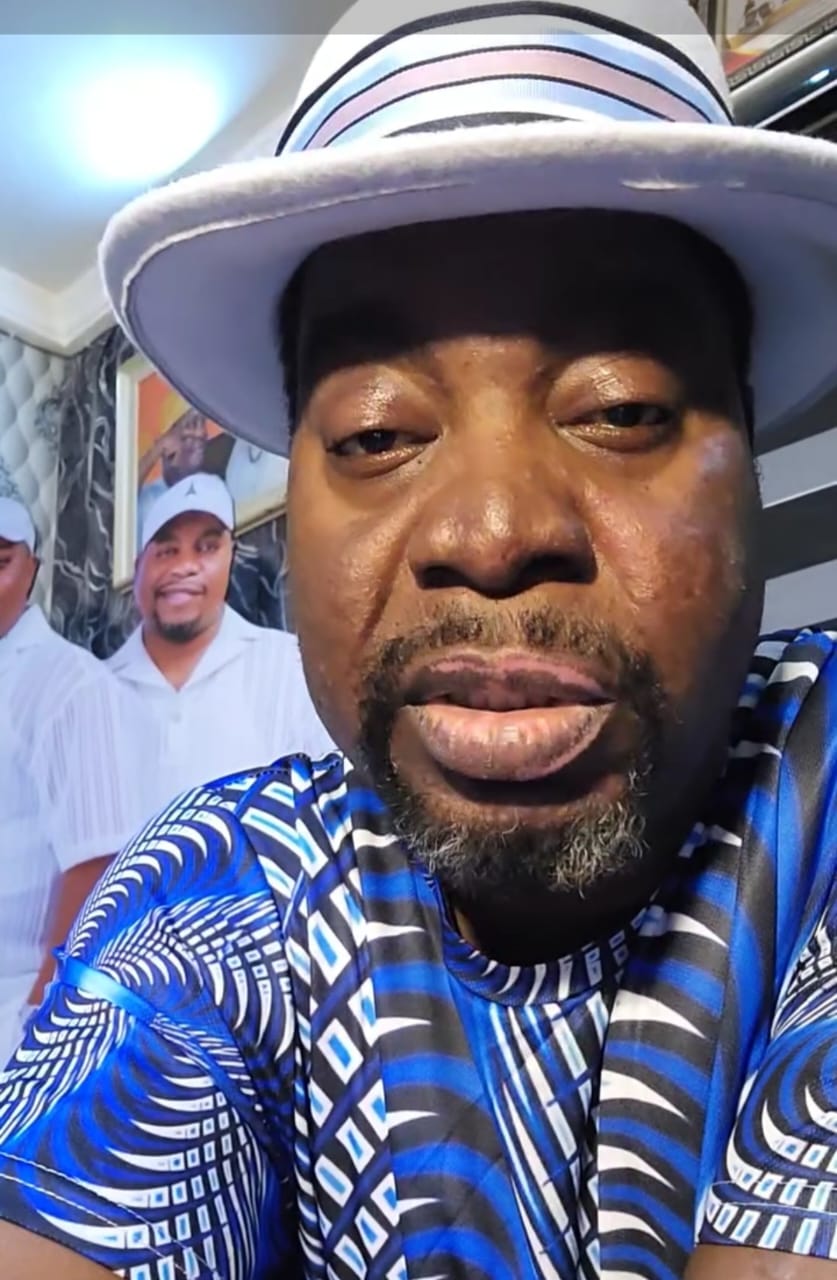
"I Am Alive and Well": Kehinde Adegbodu Blames Minor Domestic Fire for Recent Injuries, Dispels Terminal Illness Rumors.

Popular Yoruba gospel musician Kehinde Adegbodu, the surviving half of the renowned Adegbodu Twins musical duo, has formally debunked widespread social media speculations claiming he is battling a critical or life-threatening illness. Addressing his fans, colleagues, and the public in a recent update, the singer clarified that visible injuries on his face and hands were not the result of an ongoing health crisis, but rather the aftermath of a minor domestic fire accident. Following the tragic and sudden passing of his twin brother, Taiwo Adegbodu, earlier this year, public attention on Kehinde’s well-being has remained exceptionally high. The rumor mill went into overdrive recently when online videos and public appearances showed the singer with noticeable marks and burns on his face and hands. Speculation quickly spread across various social media platforms, with some reports falsely suggesting the artist was suffering from a severe, underlying medical condition,THENEWSCREDIT reports. Setting the record straight, Adegbodu explained that the incident was purely a household mishap. While he did not provide exhaustive details about the exact origin of the flame, he emphasized that it was a localized, non-fatal kitchen or domestic fire accident that was quickly brought under control. He firmly reiterated that he is not hospitalized, nor is he dealing with any terminal sickness. The artist expressed deep appreciation to his global fanbase, ministry partners, and well-wishers who bombarded his management team with calls and messages out of genuine concern for his health status. "I am doing completely fine, and I want to thank everyone who reached out," Adegbodu stated, reassuring the public that his recovery is well underway and that the accident will not deter his ongoing musical engagements or gospel ministry. The clarification brings much-needed relief to the Nigerian gospel music community, which has rallied heavily around the singer following a turbulent year marked by grief and a highly publicized household robbery incident.
NEWS /  Wed 24 Jun
Posted By; Akintayo Asamu

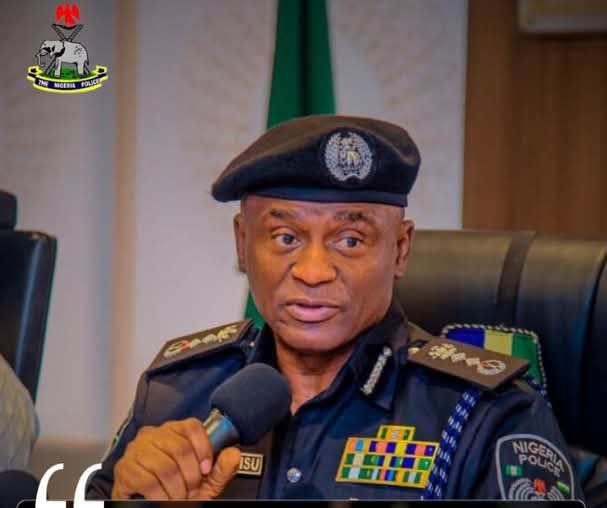
IGP MOBILISES X-SQUAD AGAINST UNIFORMED TIKTOKERS; COMMANDERS FACE SANCTIONS FOR COMPLIANCE FAILURES

Following an internal circular issued on Monday, June 22, 2026, and a formal public briefing on Tuesday, June 23, 2026, the Inspector-General of Police (IGP), Olatunji Rilwan Disu, has banned all members of the Nigeria Police Force (NPF) from engaging in unauthorised social media activities. The direct policy response from Force Headquarters follows deep institutional concerns regarding a rising trend of active-duty officers creating videos, hosting live-streaming broadcasts, and posting skits on platforms like TikTok, Facebook, and Instagram while in uniform. The policing chief warned that these actions compromise the structural integrity, core professionalism, and public perception of the nation`s primary law enforcement agency. While acknowledging that digital networks remain vital communication channels for public interaction, IGP Disu emphasised that active personnel must strictly conform to the Nigeria Police Force Social Media Policy. Under the freshly reinforced regulations, serving officers are explicitly forbidden from:Producing, uploading, or sharing self-made digital content while wearing the police uniform.Commenting publicly on official police matters or sensitive ongoing security cases.Divulging confidential operational strategies, security logistics, or tactical placements.Leveraging their official state titles and law enforcement authority for personal branding, entertainment, or financial gain. THENEWSCREDIT reports that, the IGP made it clear that regulatory compliance will stretch directly to high-level command structures. Commissioners of Police (CPs), Heads of Departments, and tactical Commanders have been mandated to immediately educate personnel under their direct supervision and enforce zero-tolerance compliance. State commissioners have seven days to disseminate the order across all formations and 14 days to submit full compliance reports to the Deputy Inspector-General of Police in charge of Operations. Supervisory officers will be held personally and professionally responsible if they fail to initiate disciplinary measures against violations occurring within their respective territorial jurisdictions. To track down violators, the IGP has mobilized the Force Intelligence Department (FID) and the Professional Standards Department (X-Squad). Both surveillance arms are directed to increase tracking across all major digital media platforms to identify and apprehend officers engaging in activities that violate professional police standards, with offenders risking dismissal or demotion. The NPF reaffirmed its dedication to institutional discipline and public transparency while assuring citizens of its continued commitment to protecting public trust.
NEWS /  Tue 23 Jun
Posted By; Akintayo Asamu

Oyo Abductions: Makinde Imposes 16-Hour Curfew on 10 LGAs

Governor Seyi Makinde has declared a 16-hour curfew across 10 local government areas in Oyo State following the recent abduction of 39 students and seven teachers. The security measure targets municipalities surrounding the Old Oyo National Park, a vast reserve where bandits are reportedly holding the hostages. The affected educators and students were seized last month from various communities within the Oriire Local Government Area. The restriction was announced late Tuesday in a statement by the Secretary to the Oyo State Government, Professor Musibau Babatunde, and distributed by the Governor`s Chief Press Secretary, Dr. Sulaimon Olanrewaju and available to THENEWSCREDIT The directive takes effect today, Wednesday, June 24, 2026. Residents must remain indoors between 4:00 p.m. and 8:00 a.m. daily. State officials confirmed that the curfew will last for an initial 48 hours while security agencies conduct tactical operations. THENEWSCREDIT reports that,the containment zone spans the following council areas:Oriire (Ikoyi-Ile)Orelope (Igboho)Irepo (Kisi)Saki West (Saki)Saki East (Ago-Amodu)Atisbo (Tede/Ago-Are)Itesiwaju (Otu)Iseyin (Iseyin)Olorunsogo (Igbeti)Atiba (Offa-Meta) Local leaders have long voiced concerns regarding the porous boundaries of the national park. Security forces have now sealed the perimeters of these locations to restrict bandit mobility and facilitate rescue efforts.
Page 28 of 129


Home   About Policy Contact

2026  ©
Developed by KITE