Posted By; Akintayo Asamu
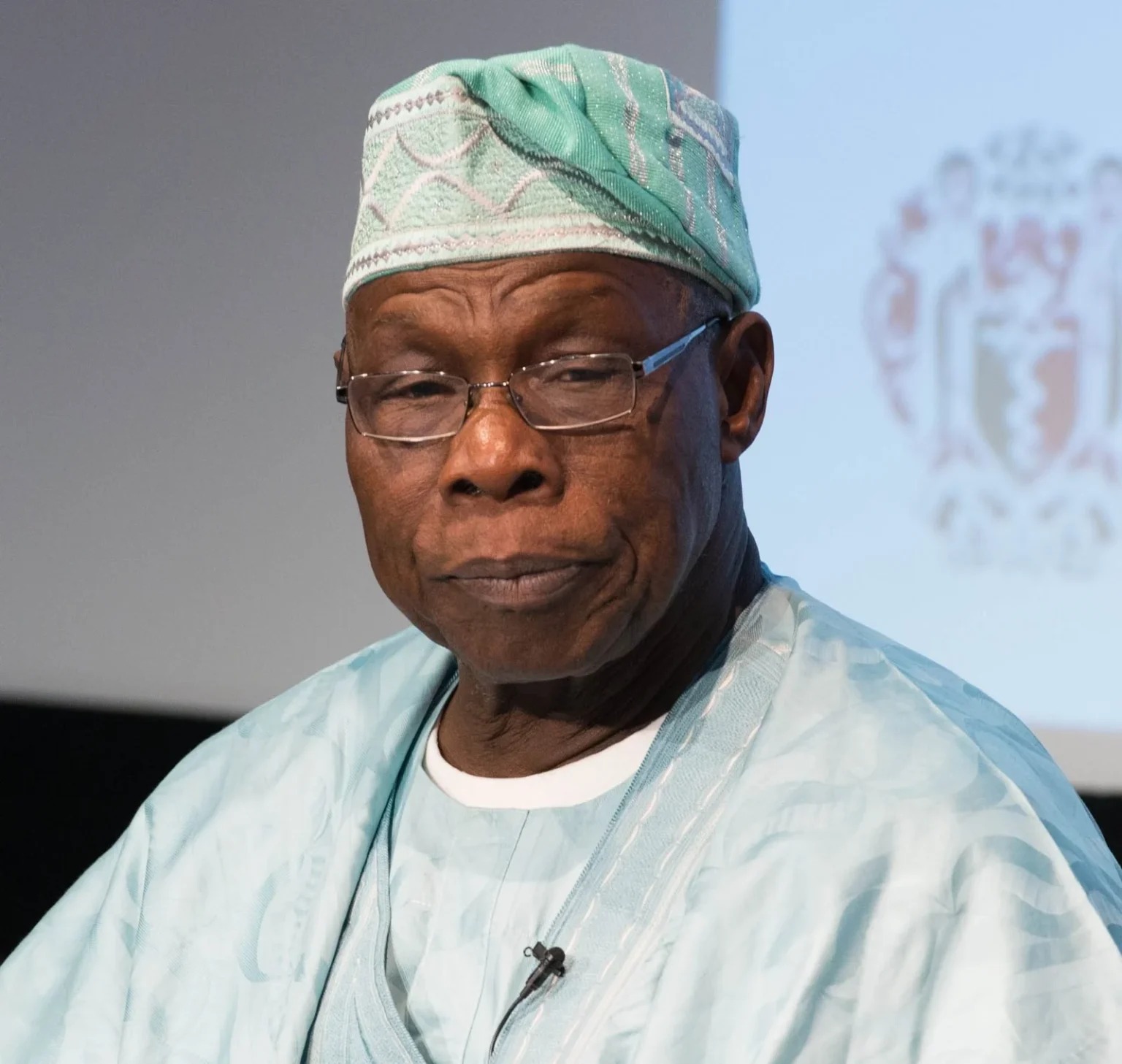
NEVER AGAIN: Nigeria Cannot Survive a Second Civil War – Obasanjo Warns
Former President Olusegun Obasanjo has issued a stark warning to the nation, stating that many of the systemic triggers that plunged Nigeria into a three-year civil war in 1967 remain unresolved and active within the country today.
Speaking at the Olusegun Obasanjo Presidential Library (OOPL) in Abeokuta on Wednesday, the former wartime commander declared that Nigeria had already fought "one civil war too many," describing the prospect of another internal conflict as entirely unthinkable.
Obasanjo made these assertions while receiving a comprehensive historical archive documenting the 1967 Asaba Massacre. The materials—comprising eyewitness video testimonies, transcripts, and scholarly research—were compiled and presented by Chief Chuck Nduka-Eze, Chairman of the Asaba Memorial Trust and the Asaba Image Branding and Project Committee.
Reflecting on conversations with contemporary leaders, the former President recalled a sobering exchange with former Head of State, General Yakubu Gowon.
"I was with a colleague when Gen. Yakubu Gowon said that we would not survive a second civil war as a country," Obasanjo revealed. "To say that we will have a second civil war, God forbid. Some of the things that led to the Civil War are still with us. How long will this remain so?"
He urged citizens to collectively adopt a strict "never again" stance, stressing that confronting historical truths, rather than burying them, is the only humanly possible path to ensuring lasting peace and national unity.
The archive presented to the former President shines a fresh light on the Asaba Massacre, a dark chapter of the war where over a thousand unarmed civilian men were reportedly killed by federal troops in the Mid-West Region.
Acknowledging his role as a soldier during the conflict, Obasanjo clarified that operations in the Asaba sector were under the direct command of the late General Murtala Mohammed, meaning he could not provide personal, field-level details of the tragedy.
However, he emphasized that high-level military leadership never ordered or condoned such atrocities. He recalled that toward the end of the war, he was personally tasked with ensuring that no further massacres occurred, noting that he once intervened directly to stop a soldier from assaulting a civilian to enforce command accountability.
"Gen. Gowon publicly acknowledged and apologized for the excesses of the war," Obasanjo added, maintaining that archiving the Asaba tragedy remains critical for ultimate national healing.
Presenting the research, Chief Nduka-Eze described the compilation as a heavily cross-referenced, bulletproof body of evidence.
According to Nduka-Eze, independent testimonies paint a horrific, repetitive pattern: civilian men were gathered in public squares, forced to chant "One Nigeria" to prove their loyalty, and then separated from women and children before being summarily executed.
"Individuals who openly affirmed their identity and loyalty as Nigerians were nonetheless killed by the same Nigerian state to which they had pledged allegiance," Nduka-Eze said, noting that deep-seated ethnic suspicion, unresolved grievances from the 1966 coup, and a total failure of military accountability triggered the slaughter.
Warning that these identical fault lines remain wide open today, Nduka-Eze observed that Nigeria’s various ethnic groups still relate to one another with deep-seated mistrust, a sentiment Obasanjo vowed to fight against to ensure the nation never walks down that destructive path again.