☰     THENEWSCREDIT
HOME BREAKING NEWS POLITICS METRO EDUCATION HEALTH SPORT ENTERTAINMENT OPINION VIDEOS SEARCH CONTACT

BREAKING


EDUCATION /  Mon 16 Mar
Posted By; Akintayo Asamu

More Families Opt Out of Homework as Economic Pressure Mounts.

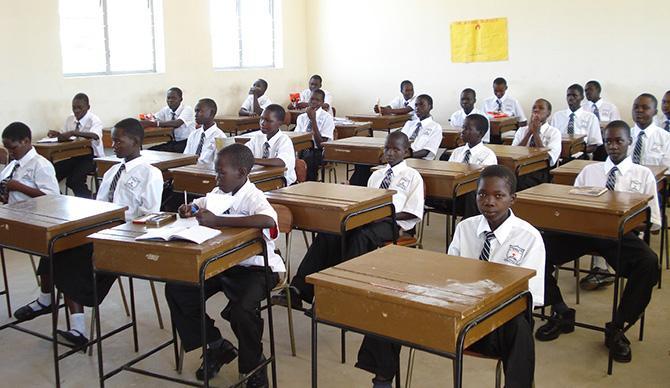
It appears the days when parents happily welcome their children’s school assignments are fast disappearing. More parents are now rejecting the assignments, concentrating more on their businesses, as the economy bites harder. The increase in price of goods and services, coupled with low purchasing power, has made many women to double their hustles, along with their wifely duties. These factors have reduced the time spent to assist children with homework, especially those in kindergarten and nursery classes. Economy&Lifestyle discovered that to contain the situation, parents now turn down voluminous school homework, citing lack of time to help children and that the scope of homework are too broad for their children’s age. Mr. Judith Shaba, a women’s wear vendor, said:”My daughter’s teacher have her french homework. A subject they just started teaching the previous week. I returned the homework back to the school. How does a 4 year old learn a new language in just a week.” On her part, Mrs. Fatimah Braimoh, a food stuff vendor said:”My son’s school teacher gave him eight homeworks. “He usually disturbs me especially with the homework he doesn’t understand. I am a 9-5 worker and also have a side hustle I do. “Everyday, same routine. I hardly have time for myself. “Recently, I just told my son to do the homework he can do and the next day the homework was in his bag. She was just smiling. “How do you give a 3 year old eight homeworks? “A child wakes up in the morning by 6 a.m and returns home by 4 p.m and you expect the child to still continue with loads of homeworks without resting. Is he a robot? Even a robot has a limit of workload.” Mrs. Sheriffat Audu, a provision seller said she returned her son’s homework undone to the teacher. “My child was told to write 1-1,000. A primary one pupil. The quantitative and verbal reasoning, English language, Tracing and painting. “I just packed everything back to the teacher and told her if she cannot give my child one or two homework, she should not bother giving at all. “How can I return home stressed and my child stressed and the only time we have to rest is to be used for homework that is beyond her Intelligience Quotient? “These schools should please rest with these voluminous homework they give to children below six years. It is too much for their brain.” However, some parents are now depending on Artificial Intelligience tools to address these numerous homework issue. Mrs. Judith Ogedengbe, a non-teaching staff of a tertiary institution said: “I stopped complaining to my son’s school since my compliant did not stop them from giving him many homeworks. “A friend introduced me to Chat GPT and that is what I have been using to help my child with his homework. “It is not easy hustling and returning home to large volume of homework. “The shouting, correction, threatening and all tricks to make the child concentrate is overwhelming too. “Schools need to trim down on these excessive draining homework because children also need to rest.”
NEWS /  Sun 15 Mar
Posted By; Akintayo Asamu

Hold on to God, Not Men": Sanusi Advises Against Desperation

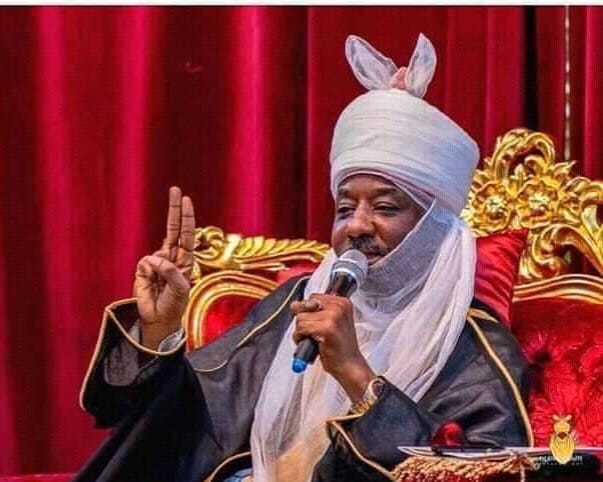
A former Governor of the Central Bank of Nigeria and 16th Emir of Kano, Muhammadu Sanusi II, has explained why he remained calm and steadfast after losing two of the most powerful positions he once held in public life. Sanusi spoke on resilience and faith while addressing participants at the Fola Adeola Annual Ramadan Lecture on Sunday. Sanusi served as CBN governor from 2009 to 2014 before being installed as Emir of Kano. He was dethroned in 2020 by the administration of former Kano State Governor Abdullahi Ganduje and reinstated to the throne in 2024 by current Governor Abba Yusuf. As reported by Daily Trust, the monarch reflected on how his belief in God helped him navigate difficult periods following his suspension as CBN governor and his later removal as Emir of Kano. He said people often make the mistake of attributing power and outcomes to individuals rather than recognising that circumstances change only by the will of God. “Too often in our lives, we attribute things to human beings, but they are all created. “Remembering that situations are not permanent, that Allah changes your circumstances, helps you cope and conduct yourself,” Sanusi said. He also cautioned against humiliating oneself in pursuit of favour from powerful individuals, noting that many people wrongly believe their fortunes depend entirely on others. “I’ve seen people who beg, cringe, and bow to human beings. They humiliate themselves because they feel this person is the one who holds the path to their position,” he said. Drawing from his personal experience, Sanusi said his life journey demonstrates how quickly fortunes can change. “I was suspended from being governor of the central bank. Three months later, I became an emir,” he said. “Several years ago I was removed as emir; four years later, I came back. I’m now in the same palace, I’m on my throne. Yes, there are challenges but at the end of the day you hold on to God. You don’t panic.” Sanusi said his time away from Kano following his dethronement allowed him to avoid situations that might have been humiliating and gave him the opportunity to pursue academic work. “I think of all the things that could have happened if I was in Kano in the last four years, the humiliation I could have faced, the people I would have had to deal with, the people I would have had to report to, but God was so merciful, so kind. He took me away from that. He gave me a chance, I went and did a PhD and I’m back,” he said. He also emphasised that losing positions should not be seen as the end of one’s purpose in life, urging people to remain guided by their principles. “If I’m taken away from positions, it’s not a big deal. At the end of the day, I ask myself, have I done anything to offend God?” he said. “It’s better for you to leave there and keep to your principles than to stay there and earn the wrath of Allah.”
NEWS /  Sun 15 Mar
Posted By; Akintayo Asamu

Rural Women’s Business Growth Stunted by Power, Internet Deficits — Women Radio CEO

The Chair of the Board of Directors of Women Radio WFM 91.7, Toun Sonaiya, has said Nigerian women, particularly those in rural communities, face significant challenges that hinder their ability to contribute fully to national development. Sonaiya stated this during her remarks at the second edition of Nigerian Women’s Day, held as part of activities at the 70th session of the United Nations Commission on the Status of Women in New York on Thursday. According to a statement made available to PUNCH Online on Sunday, the event, themed “31 Years of Progress, Resilience, Impact and Renewed Hope,” was organised by the Federal Ministry of Women Affairs and Social Development under the leadership of the Minister, Imaan Sulaiman-Ibrahim. It brought together members of the Nigerian diaspora, diplomats, gender advocates and global leaders, including the United Nations Deputy Secretary-General, Amina Mohammed. Speaking at the event, Sonaiya said, “Nigerian women, children, families and vulnerable people, especially in 774 rural areas, face big challenges that stop them from contributing to the country’s growth.” She identified some of the challenges as lack of electricity, limited access to finance and internet services, poor healthcare, limited educational opportunities and low representation of women in leadership positions. Sonaiya called on Nigerians at home and in the diaspora, as well as development partners, to support programmes aimed at empowering women and strengthening communities. She noted that the Ministry of Women Affairs had introduced several initiatives under the Renewed Hope Social Impact Interventions 774 framework, designed to support women and vulnerable groups across the country. Among the programmes highlighted were PowerHer774, which seeks to expand clean energy access to one million women and their households across the 774 local government areas, and the Women Agro Value Expansion programme targeting three million women in agriculture. Other initiatives include programmes focused on digital literacy for women and girls, child development support and interventions aimed at improving women’s health and economic empowerment. “Your positive contribution is like a piece of a jigsaw. Bit by bit we will build a bigger positive Nigeria,” Sonaiya said, urging stakeholders to partner with the government in implementing the programmes. In her address, Sulaiman-Ibrahim called for increased global and domestic investments to advance women’s empowerment. “Transforming women’s lives at scale requires sustained investment, strong partnerships, and coordinated action,” the minister said. “There is an urgent need for greater investment in women and girls, both domestically and globally. Women’s empowerment is not a social programme; it is an economic strategy, a security strategy, and a development imperative.” The event also featured a fireside conversation between the minister and the United Nations Deputy Secretary-General, focusing on Nigeria’s gender equality goals and the global agenda for women’s empowerment. Participants discussed challenges and opportunities affecting women and girls across Africa and beyond. Panel discussions held during the event addressed topics including Global Leadership, Peace and Security for Social Impact; Women, Institutions and the Economy; and Positive Masculinity. Speakers included the Minister of State for Labour and Productivity, Nkeiruka Onyejeocha; Chairman of the National Population Commission, Aminu Yusuf; Executive Secretary of the National Human Rights Commission, Tony Ojukwu; and Country Director of ActionAid Nigeria, Andrew Mamedu, among others. The programme also featured cultural performances and presentations highlighting the role of women in leadership, innovation and social development.
ENTERTAINMENT /  Sat 14 Mar
Posted By; Akintayo Asamu

Papa Ajasco Breaks Silence on Struggles: `Things Have Never Been Easy`

Veteran Nigerian actor Abiodun Ayoyinka has revealed the challenges he has faced despite gaining widespread fame for portraying the iconic character Papa Ajasco. Ayoyinka made the revelation during an interview with media personality Lucky Udu, where he explained that the trademark ownership of the character has limited his opportunities outside the popular comedy franchise. According to the actor, the character Papa Ajasco is legally registered by the production company owned by Wale Adenuga, making it difficult for him to use the identity for personal projects or commercial engagements. He said the restriction has prevented him from appearing in advertisements or brand campaigns, even though many companies want him to appear in the famous costume and persona. “The major problem is that particular character has been registered by Wale Adenuga. Anybody that wants to use me outside wants me with the character, with everything that I have, but it has never been easy for me,” he said. Ayoyinka explained that he does not have exclusive rights to use the name or costume associated with the character. “I don’t have the right. I can’t use the name Papa Ajasco unless I go and take permission. I can’t even use the costume,” he said. He added that the strong public association with the character has made it difficult for him to secure opportunities as himself. “Because that character is very strong, they want to see me as Papa, dress like Papa, look like Papa. It is always difficult for me to do it.” The actor also disclosed that he previously worked with the Lagos State Government in the Ministry of Tourism, Arts and Culture before retiring about five years ago. Despite his long career, Ayoyinka said life has been difficult in recent years. “Things have never been okay for years now. I retired five years ago, and it has never been easy for me to move around and connect with people,” he said. “I’m always thinking every day. Look at my home—I don’t have my own house. I don’t have a car.” Ayoyinka is widely known for playing Papa Ajasco in the long-running Nigerian comedy series Papa Ajasco & Company, a production of Wale Adenuga Productions that became one of Nigeria’s most popular television shows.
NEWS /  Sat 14 Mar
Posted By; Akintayo Asamu

Gowon Applauds Tinubu’s Efforts to Stabilize Nigeria

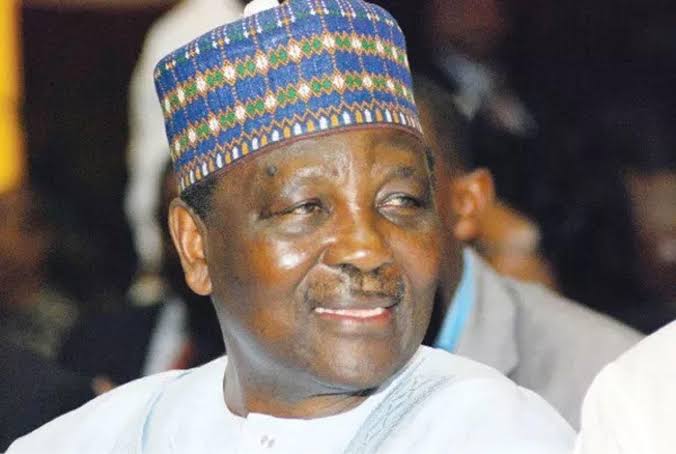
Former Head of State, Yakubu Gowon, on Saturday said President Bola Tinubu is “doing the best he can all round” in managing the affairs of Nigeria. Gowon made the remark after his meeting with Tinubu at the Presidential Villa, where he commended the president’s performance. He expressed satisfaction with Tinubu’s leadership across key sectors, including politics, the economy and social development, as well as efforts to tackle insecurity. “As far as it goes, isn’t he doing the best he can all round? So there is no particular place. Every other area—political, economic, social, etc.—and of course, the major problem that we have today, security in the area, he’s doing everything to deal with those for the good of Nigeria,” Gowon said. When asked to highlight specific areas where the president should improve, the elder statesman maintained that Tinubu’s administration is already addressing the country’s key challenges. “There is no particular place. He’s got to look after the interests of Nigeria in all areas,” he added. Gowon explained that his visit to the Presidential Villa was primarily to appreciate the president’s efforts and acknowledge what he described as progress being made under the current administration. “I came to see him and to thank him for all the good work that he’s doing for the country. “We had to look at all the good work that the president is doing and the progress that Nigeria is making economically and otherwise,” he said.
ENTERTAINMENT /  Sat 14 Mar
Posted By; Akintayo Asamu

Don`t Make My Mistake" – Toyin Abraham Warns Timini to Stay Neutral After Tinubu Backlash

Famous Nollywood actress, Toyin Abraham, has stated that her open support and campaign for president Bola Tinubu during the last election affected her. The actress made this disclosure while advising actor Timini Egbuson on how his movie can be sold out in the Box Office. Toyin said, “The first advice I will give you in my entire life is don’t put your mouth in politics. Don’t tell them you’re supporting anybody. Don’t support anybody, just be on your own. Be neutral.” When Timini tried to remind her of her open support for the Tinubu presidency during the last election, the actress stated: “That was then.” While revealing the negative impact on her craft, Toyin shouted “Haaaaaaa, it affected me oooo.” THENEWSCREDIT reports that Toyin Abraham had cried out in early 2024 after her new release movie ‘Ijakumo’ (Born-Again Stripper) was allegedly being shared on WhatsApp. While lamenting poor reviews on Ijakumo, the actress said, “You all will tell the world why choosing my own candidate is a crime and yours is not.” This came after netizens vowed not to watch her movie for campaigning for Tinubu.
ENTERTAINMENT /  Sat 14 Mar
Posted By; Akintayo Asamu

Uzor Arukwe on Workplace Boundaries: Why I Always Ask Female Colleagues for Consent Before Physical Contact

Nollywood actor Uzor Arukwe has addressed the criticisms he has been receiving over his romantic roles with married female colleagues, especially Bambam, his love interest in ‘Love In Every Word.’ Speaking in a recent interview with BBC Igbo, Arukwe revealed that he always sought the consent of his female colleagues, especially married ones, before touching them “in a certain way” during shoot. He explained that he does that because he doesn’t want his married colleagues to have issues in their marriages over movie roles. He specifically mentioned that he has never met Bambam or had any relationship with her before their first movie together. “Before filming, I ask my co-lead actor if it is okay to touch them in a certain way, especially the married ones because I don’t want them to have problems at home,” the actor explained.
NEWS /  Fri 13 Mar
Posted By; Akintayo Asamu

Oyo State Electricity Market Takes Shape with New Acting Board Appointments

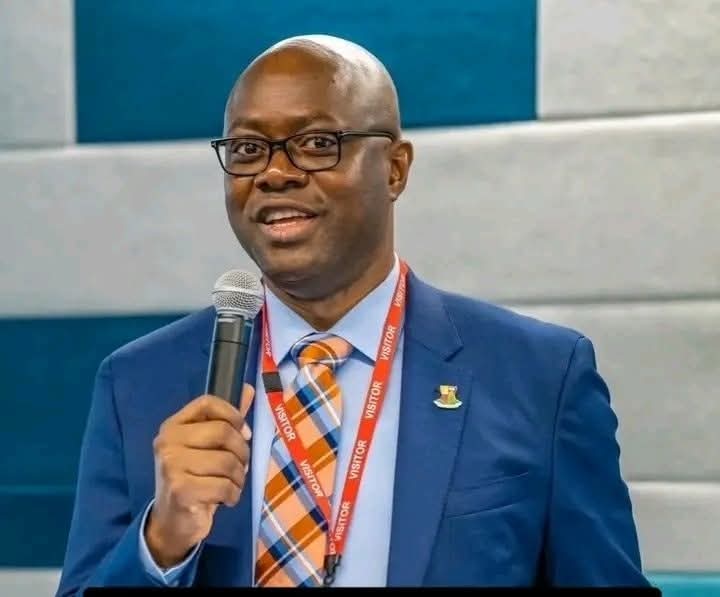
The Oyo State Governor, Seyi Makinde, has appointed the Commissioner for Energy and Mineral Resources, Prof. Dahud Kehinde Shangodoyin, as the Acting Chairman of the Oyo State Electricity Regulatory Commission. This is in a bid to facilitate the oversight functions of the commission and accelerate the opening of the state’s electricity market. The governor also appointed Mr. Ayanniyi Taiwo as Acting Secretary; Solomon Oyekunle, Acting Technical Member; Abiodun Adedoja, Acting Strategy Member; and Mrs. Omolara Omoremi, Acting Legal Member, according to a release issued on Friday by his Special Adviser (Media), Dr Sulaimon Olanrewaju. The Acting Chairman, in a statement, said the appointments were significant in the operationalisation of the Oyo State Electricity Regulatory Commission. According to him, the step “marks a major step in the implementation of the Electricity Act 2023 and the Oyo State Electricity Regulatory Commission Law 2024, which empowers Oyo State to regulate its intrastate electricity market under Nigeria’s evolving dual-tier regulatory framework.” It added that the appointments in acting capacity were aimed at “driving the institutional take-off of the commission and establishing foundational regulatory systems, licensing frameworks, compliance mechanisms, tariff oversight methodologies, consumer protection architecture, and internal governance structures.” Shangodoyin said the governor would make substantive appointments upon the formal passage of the Oyo State Electricity Market Bill into law. Explaining the oversight functions of the OYSERC, Shangodoyin stated that the commission will focus on the licensing of generation, distribution, embedded generation, captive power, and mini-grid projects within Oyo State, tariff regulation and service band oversight to prevent arbitrary upgrades, consumer complaint resolution and protection mechanisms, monitoring, compliance, and enforcement of service standards, promotion of embedded generation and local electricity market development and enforcement of technical and safety standards. He said: “By decentralising regulatory oversight, Oyo State is now positioned to respond more quickly to electricity service gaps, strengthen accountability of operators, and encourage private sector investment in local power solutions. “As a commission, we have recorded some achievements within the initial operational period, including the receiving and reviewing of consumer petitions, engaging constructively with distribution operators and stakeholders, facilitating resolution of select electricity disputes, initiating alignment with the Oyo State Electricity Priority Plan & Implementation Roadmap (2026–2031) and advancing institutional systems, staffing, and administrative frameworks. “Our focus is to open up the Oyo Electricity Market and we are positioning the state to encourage embedded and distributed generation, attract private sector investment, improve service delivery and accountability, strengthen consumer confidence, accelerate infrastructure expansion and enhance power reliability across the state. “This is a milestone that underscores Oyo State’s commitment to regulatory clarity, institutional robustness, financial sustainability, and improved electricity access for residents, businesses, and public institutions.” In a related development, the statement indicated that on February 12, the OYSERC held a high-level technical meeting with the Nigerian Electricity Regulatory Commission in Abuja to ensure regulatory coordination and seamless market transition. The statement read: “The engagement focused on jurisdictional clarity under the Electricity Act 2023, licensing and regulatory frameworks, tariff oversight and service band accountability, consumer protection systems, compliance monitoring and enforcement, digital regulatory platforms and data integration and institutional capacity development. “The meeting reaffirmed the spirit of cooperative federalism embedded in Nigeria’s electricity reform and laid the groundwork for structured collaboration between federal and state regulators.”
METRO /  Fri 13 Mar
Posted By; Akintayo Asamu

Ondo High Court Sentences Ekiti Lecturer to Death by Hanging for Armed Robbery

A lecturer at the College of Health Technology, Ijero-Ekiti, Ekiti State, has been sentenced to death by hanging by an Ondo State High Court for armed robbery. The defendant, Shittu Isiaka, was found guilty on a two-count charge of conspiracy and armed robbery by the presiding judge, Justice O. M. Adejumo. On the third count, the court acquitted and discharged Isiaka for allegedly endangering the life or health of the victim. The judge ruled that the prosecution failed to prove the allegation beyond a reasonable doubt. The defendant was first arraigned before the court on November 26, 2018, on a three-count charge of conspiracy to commit armed robbery, armed robbery and endangering life. According to the prosecution, the defendant and other suspects still at large, in 2017, robbed a commercial driver, Olatunji Olowoyeye, of his Nissan Cabstar truck with registration number XJ 214 KTU at gunpoint along Ibuji on the Akure–Ilesha Motorway. While informing the court that the victim was brought into Ogbara Oke by highway patrol officers of the Nigeria Police, it said a police witness, Inspector Kehinde Omotosho, reported that the victim wrote a statement implicating the defendant. During the trial, the defendant denied all the allegations, insisting that he had no involvement in the robbery. In his ruling, Justice Adejumo held that the prosecution failed to establish the offence of endangering life as required under Section 135(1) of the Evidence Act.
NEWS /  Fri 13 Mar
Posted By; Akintayo Asamu

No More Loans: CBN Restricts Services for Defaulters

The Central Bank of Nigeria (CBN) has issued a stern directive to commercial banks, ordering them to immediately halt the extension of further credit to “large-ticket obligors” who have failed to repay existing loans. This move targets high-value borrowers, both individuals and corporations, whose massive unpaid debts are deemed a systemic risk to the stability of the nation’s financial infrastructure. Under the new mandate, any borrower identified as a non-performing large-ticket obligor within the Credit Risk Management System (CRMS) or by licensed private credit bureaus is strictly barred from accessing new loans. The restriction extends beyond simple cash advances to include a wide array of banking services such as letters of credit, performance bonds, bankers’ confirmations, and advance payment guarantees. To further insulate the banking sector from potential defaults, the apex bank has instructed financial institutions to demand additional realisable collateral from these heavy debtors. This measure is intended to ensure that existing exposures are adequately secured, protecting depositors’ funds and maintaining the capital adequacy ratios of the affected banks. The CBN defined these specific obligors as customers whose total debt across the banking industry either exceeds the Single Obligor Limit (SOL) or materially threatens a bank’s financial health. By targeting these specific entities, the regulator aims to curb credit abuse and prevent a ripple effect that could destabilize the broader economy. This latest policy reinforces a previous circular from 2014, signaling a renewed and more aggressive stance on credit discipline. Coming just a week after the CBN ordered banks to conduct comprehensive stress tests, the directive underscores a prioritized mission to sanitize the Nigerian banking system and enforce stricter prudential compliance.
Page 72 of 124


Home   About Contact

2026  ©
Developed by KITE