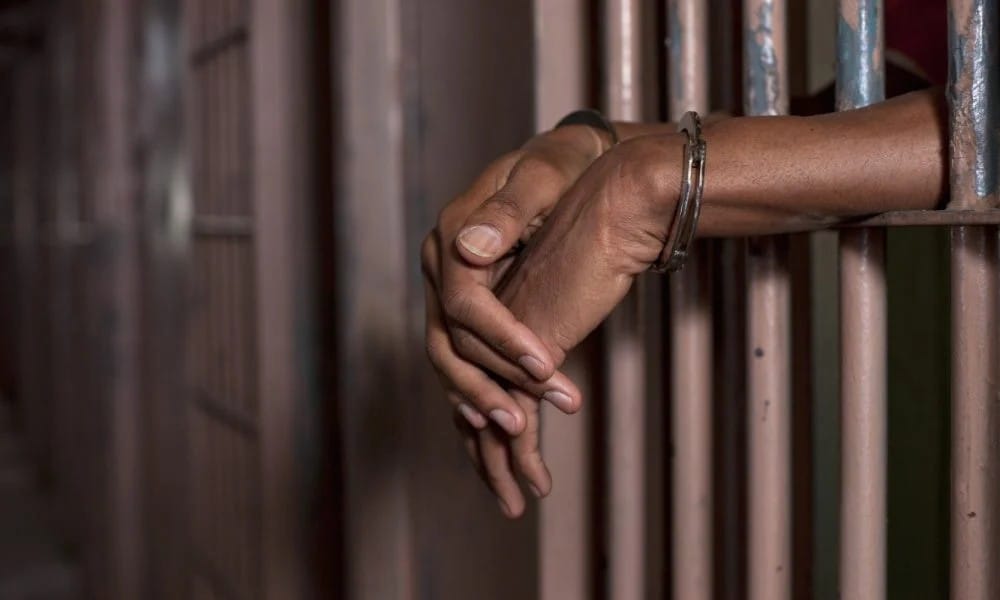
NEWS / Thu 03 SepPosted By; Akinwale AkintayoThe Director-General of the Department of State Services (DSS), Oluwatosin Ajayi, has strictly prohibited operatives of the secret police from arresting individuals involved in purely civil matters.
Speaking in a media interview on Thursday, Ajayi explained that the directive is part of a broader institutional overhaul designed to enforce strict adherence to the rule of law and clean up the agency’s human rights record.
Since taking the helm of the DSS, Ajayi noted that he has rolled out sweeping reforms targeting five core pillars: law enforcement, inter-agency synergy, accountability, respect for human rights, and infrastructural and administrative modernization. These changes, he stated, have established a definitive boundary between civil and criminal jurisdictions within the agency`s operations.
Reflecting on his career experience, the DSS chief acknowledged that the agency had historically conflated civil disputes with criminal acts—a practice he vowed to end, emphasizing that the deployment of state force in private disputes is entirely inappropriate.
“You cannot apply the use of force in civil matters. Even some criminal matters don’t require force,” Ajayi stated.
To illustrate the agency`s shifting approach, Ajayi cited a high-profile case involving political economist Prof. Pat Utomi regarding allegations of attempting to establish a "shadow government." Rather than moving to detain Utomi, the DSS opted to seek judicial interpretation. The court subsequently ruled that the move was unconstitutional, illegal, and a threat to national security, achieving resolution without a controversial arrest.
He further referenced a legal battle with the Socio-Economic Rights and Accountability Project (SERAP), which dragged the agency to court over allegations that two DSS operatives had invaded its premises. Ajayi highlighted that the DSS allowed the judicial process to run its course without ordering any retaliatory arrests, even after the court ultimately awarded over ₦100 million in damages against the agency and in favor of SERAP.
When pressed on whether the DSS is now fully deferring to the judiciary on civil contentions, Ajayi confirmed the paradigm shift.
“Yes. I have told my people that there should be no arrest in any civil case," Ajayi said. "And I’m sure you have found out that, even in cases involving journalists, we would rather approach the court because we do the same job."
Extending an olive branch to the media, the DSS Director-General added: “I call you guys our professional colleagues. The only difference is that, while you inform the public, we inform the Government. And because we inform the Government, our information is classified until we declassify it.”


.jpg)