NEWS
SUBSIDY SAVINGS: FG, States, LGAs Share ₦15.8tn In Three Years
Published on Wed 19 Aug 2026 By Akinwale Akintayo
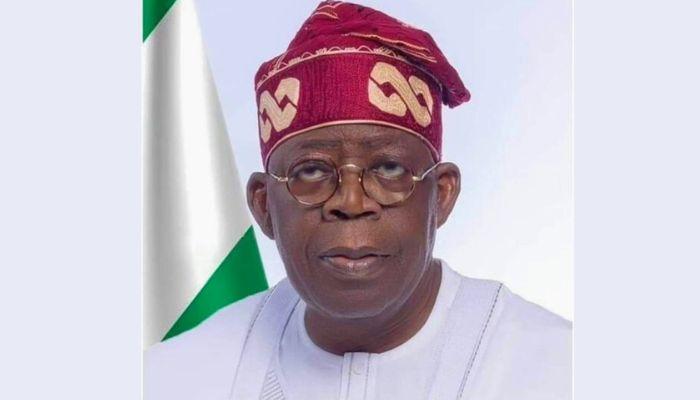
 The President Bola Ahmed Tinubu-led administration has officially unveiled the fiscal scorecard of its economic overhauls, revealing that Nigeria saved a staggering ₦15.8 trillion following the termination of the petrol subsidy regime over the last three years. The disclosure marks the first comprehensive account provided by the administration regarding the financial windfall generated from its toughest economic policies.

Speaking at an Abuja press conference monitored on Wednesday, the Minister of Finance presented a detailed breakdown of the revenue accruals. According to the treasury chief, the massive savings did not remain trapped at the centre but were directly funneled into the Federation Account to boost the financial capacities of all tiers of public administration.

A further breakdown of the ₦15.8 trillion pool showed that State Governments emerged as the highest beneficiaries, pocketing ₦6.52 trillion to fund localized development. The Federal Government received the second-highest share at ₦5.43 trillion, while the 774 Local Government Areas collectively walked away with ₦3.88 trillion to improve grassroots governance.

Beyond the baseline subsidy savings, the Finance Ministry noted that the administration’s wider economic adjustments yielded an extra ₦3.12 trillion in incremental revenues. However, to stay afloat amid severe macroeconomic headwinds, the government was also forced to source an additional ₦11.85 trillion through incremental borrowings during the period under review.

Consequently, the Federal Government amassed a total of ₦20.4 trillion in incremental resources over the three-year timeline. Despite this substantial inflow, officials quickly dispelled public misconceptions that the government is sitting on an idle hoard of cash, clarifying that national expenses heavily outweighed the newly generated funds.

The Ministry revealed that additional expenditures incurred during the same period reached ₦30.64 trillion, outstripping the reform gains by over ₦10 trillion. Officials argued that the subsidy removal did not create a surplus pool of cash, but rather acted as a crucial buffer that prevented the country from plunging into a catastrophic debt crisis.

To justify the heavy spending, the government detailed that ₦9.39 trillion went into civil service wage adjustments and welfare palliatives, while ₦9.37 trillion was gulped by external debt servicing. Furthermore, ₦6.47 trillion was injected into critical infrastructure projects, and another ₦3.14 trillion was spent on cushioning electricity tariff subsidies.

It will be recalled that upon assuming office in mid-2023, President Tinubu executed the immediate deregulation of the downstream petroleum sector and the liberalisation of the foreign exchange market. While these twin policies sparked unprecedented inflation and sharp hikes in domestic pump prices, the government insists they remain the only pathway to saving Nigeria from total fiscal collapse.
ADVERTISMENT

You May Also Like