☰     THENEWSCREDIT
HOME BREAKING NEWS POLITICS METRO EDUCATION HEALTH SPORT ENTERTAINMENT OPINION VIDEOS SEARCH CONTACT

BREAKING


POLITICS /  Tue 03 Feb
Posted By; Akintayo Asamu

Wike’s aide Lere Olayinka fires back at Makinde over vagabond comment

Lere Olayinka, media aide to the Minister of the Federal Capital Territory, FCT, Nyesom Wike, has fired back at the Oyo State Governor, Seyi Makinde, over a recent comment against his principal. THENEWSCREDIT reports that Makinde on Tuesday threw jabs at Wike, for saying he (Wike) is interested in the Peoples Democratic Party, PDP, in Oyo State. Speaking at a PDP National Executive Council meeting, the minister said above any other thing, he is interested in the PDP structure in the state being led by Makinde. The comment, however, didn’t go well with the Oyo State governor, who is an arch rival of Wike. Speaking at the opening of a new PDP secretariat on Tuesday, Makinde described Wike and other members of the PDP faction as vagabonds, insisting that the Oyo chapter of the party remained stable, focused and united. “In Yoruba land, we always say that if you see a house or compound that is peaceful, the vagabond in that house has not grown up. “The vagabond in PDP, they grew up in 2015, they had their time and then 10 years, they practiced their vagabond in the PDP but they have been expelled in November 2025, so no more vagabond in PDP,” Makinde said. Reacting, Lere Olayinka in a post on his official Facebook page, called the governor a “political vagabond”. Olayinka wrote, “There is this political vagabond in Ibadan. He is only loyal to his personal political interests and he his always ready to sacrifice anything, including friendship. “In 2007 when he sought PDP ticket to contest for Senate and he couldn’t get it, he went to ANPP. “In 2015 when he sought PDP ticket to contest for Governor and he couldn’t get it, he went to SDP. “Now that this vagabond has been expelled from the PDP, and his Ibadan Amala Kanifa is nullified by the court, where will he go next?”
POLITICS /  Tue 03 Feb
Posted By; Akintayo Asamu

Makinde Confirms Political Split from Wike

Oyo State Governor, Seyi Makinde, has stated that he has withdrawn from his previous alignment with the faction loyal to the Minister of the Federal Capital Territory, FCT, Nyesom Wike, warning that the Peoples Democratic Party, PDP, in Oyo State will not be allowed to serve the interests of another political party. Makinde made the remarks during the commissioning of the newly constructed PDP Secretariat in Oke-Ado, Ibadan. He openly criticised Wike’s involvement in Oyo PDP affairs, insisting that the former Rivers State governor lacks the moral justification to interfere in the party’s operations within the state. “Let me confess, I came into government in 2019, and towards 2023, I was aligned with them, but now I have repented. I am now born again. But for them to hold PDP just for another party to be in power? It is a no,” the governor said. He further challenged Wike’s record in Rivers State, questioning the basis of his influence in Oyo PDP politics. “What exactly has he done for the PDP in Rivers State that now gives him the moral standing to dabble into the affairs of Oyo State?” Makinde asked. According to the governor, the unity and steady growth of the PDP in Oyo State are products of inclusive leadership and collective effort. He cautioned party members against allowing internal distractions to weaken the party’s cohesion. Makinde also expressed confidence in the judiciary to resolve the lingering factional disputes within the PDP. THENEWSCREDIT recalls that his comments come in response to Wike’s recent statement at the PDP National Executive Committee, NEC, meeting in Abuja, where the FCT minister declared his interest in the politics of Oyo State PDP following a Federal High Court ruling that recognised his faction as the party’s legitimate leadership.
NEWS /  Tue 03 Feb
Posted By; Akintayo Asamu

Ill-gotten money can’t make you rich, CAN warns Yahoo boys

The Northern Chairman of the Christian Association of Nigeria, Rev. John Hayab, has advised youths to desist from cybercrime and money-making rituals, stressing that ill-gotten money cannot make them rich. Hayab gave the advice in an interview with the News Agency of Nigeria in Abuja on Tuesday. He spoke against the increasing rate of youth involvement in the heinous acts popularly known as “Yahoo Yahoo” and “Yahoo-plus.” He said, “The Bible does not discourage money-making or wealth creation; however, it says that the love of money is the root of all evil. “Ill-gotten money cannot make you rich. “Those involved in cybercrime and ritual killing take money that does not belong to them and must desist from it. “Painful as it is, if they do that just to compete with others doing the same, then it is sad.” According to him, many English words are used to describe certain actions, and such words tend to downplay the gravity of the acts. “A word like financial embezzlement might sound pedestrian, but it means stealing money that is not your own. “When you steal money, you are a thief. “That is unacceptable because if that continues, these young people will become nothing but terrors in the future. “No wonder they can abduct young girls and end up using them for criminal activities or rituals. “When you begin to kill in order to make money, then you lose your humanity and your peace,” he said. The cleric attributed the increasing youth involvement in such acts to what he described as the erosion of parental discipline. “Parental discipline has been abandoned by many parents, and that is why you find some of them encouraging, endorsing, or even boasting about what their children are doing. “Moral decadence has eaten deep into society, and that is why some parents accept this terrible and ungodly means of making money. “Some parents will never allow that to happen in their homes,” he said. According to him, if society ignores the trend and such children grow up to become leaders with aspirations to be chairmen, governors, senators, and members of the House of Representatives, things will become worse. This, he said, is because they will use their ill-gotten wealth to buy their way into elective positions. “So, I advise parents to teach their children to eschew laziness and embrace hard work, transparency, honesty, and integrity. “As a nation, we must stand up and fight it,” the cleric said. Hayab, who is also the Country Director of the Global Peace Foundation, a non-governmental organisation, said that to ensure proper youth upbringing, the organisation had made youth development one of its major focus areas. According to him, the foundation has been promoting girl-child education in Nigeria, with the expectation that such efforts would help raise disciplined mothers. He said the mothers would, in turn, train their children to become decent and responsible individuals who would care for others. “We ensure that mothers are educated by mentoring young girls to grow and become responsible parents. “We help girls to enrol in school and complete their education; otherwise, they could be enticed and recruited by the so-called ‘Yahoo boys,’ and that would be a shame,” he said.
METRO /  Tue 03 Feb
Posted By; Akintayo Asamu

Lagos father seeks justice as son dies in hotel swimming pool

A distraught father, Henry Airenekhuemen, has called for a thorough investigation into the death of his son, Mattias, who reportedly drowned in a swimming pool at Signatious Hotel in the Ajao Estate area of Lagos State. In an interview with our correspondent on Monday, Airenekhuemen said Mattias had attended a poolside event at the hotel on Saturday evening, where he was selling tickets to earn some income. He explained that his ordeal began when one of Mattias’ older brothers alerted him that the young man had been rushed to Isolo General Hospital and that the family was urgently needed. “I was told that my son had been taken to Isolo General Hospital. When I got there, I was shocked to see his lifeless body inside the vehicle that brought him,” Airenekhuemen said. According to him, inquiries at the hospital revealed that Mattias was said to have drowned in the hotel’s swimming pool. He recounted what he was told by a friend who accompanied his son to the venue. “The friend said Mattias was with him and a lady. About five minutes after leaving them, he tried calling Mattias, but there was no response. When he returned to where they had been sitting, the lady told him Mattias had stepped away, even though his phone was still there, charging,” he narrated. Airenekhuemen said it was during a search for Mattias that his body was allegedly discovered inside the swimming pool. However, the grieving father expressed doubts about the drowning narrative, citing what he described as suspicious physical observations. “If he actually drowned, why was his stomach not bloated? And why was there foam coming out of his mouth and nose?” he queried. He said the incident was promptly reported to the police, who visited the hospital, documented the scene, and transferred the body to the morgue. Officers later accompanied the family to the hotel to inspect the premises. During the visit, Airenekhuemen said concerns were raised over the absence of a pool supervisor or professional diver at the time of the incident, but no satisfactory explanation was given. He disclosed that three individuals are currently in custody at the Ajao Estate Police Division in connection with the case. “The hotel manager was invited and asked to provide CCTV footage, but he claimed he had just resumed work. He is being detained. The lady who was with my son has also been detained after giving her statement, as well as the friend who said he found my son in the pool,” he said. The father also alleged that certain developments deepened the family’s suspicion surrounding the death. “One of my sons received a call from someone who claimed to be a hotel staff, asking what we wanted to settle the matter. Also, the pool party continued that same night, even after my son was found dead in the pool,” he lamented. Efforts to obtain a response from the Lagos State Police Command were unsuccessful. Calls to the Police Public Relations Officer, Abimbola Adebisi, were not answered, and a text message sent to her had not been replied to as of the time of filing this report.
NEWS /  Tue 03 Feb
Posted By; Akintayo Asamu

Big money, small impact: Govs face fire over N9tn FAAC windfall

Despite receiving an estimated N9tn in Federation Account Allocation Committee inflows in 2025, state governors are facing mounting criticism from labour unions, civil society groups and opposition parties over what many describe as a widening gap between soaring revenues and limited improvements in citizens’ welfare. FAAC allocations to states surged by over N2tn in one year, according to an analysis of Federation Account disbursement data published by the National Bureau of Statistics and collated by The PUNCH, highlighting the scale of the revenue windfall that flowed to subnational governments in 2025 amid higher federation inflows. The sharp rise has triggered criticism from organised labour and opposition political parties, with the Nigeria Labour Congress warning that higher allocations have failed to deliver meaningful improvements in citizens’ welfare due to weak governance, misplaced priorities, and corruption at the state level. Civil society organisations have also faulted state governments, accusing them of mismanaging the inflows and failing to translate increased revenues into visible development outcomes, while calling for stronger accountability and oversight. Economists, meanwhile, say the surge has expanded states’ fiscal space but caution that heavy dependence on federally shared revenue and poor revenue management continue to undermine sustainable development at the subnational level. The Federation Account disbursement data show that state governments received a total of N7.315tn from the Federation Account Allocation Committee in 2025, compared with N5.186tn in 2024. The year-on-year increase of roughly N2.13tn represents a jump of about 41 per cent in direct FAAC allocations to states. When the constitutionally mandated 13 per cent derivation revenue is added, total inflows attributable to states climbed to N8.934tn (about N9tn) in 2025, up from N6.533tn in 2024, a rise of N2.4tn or 36.74 per cent. This surge came against the backdrop of a sharp expansion in total FAAC distributions. Aggregate allocations to the three tiers of government, including derivation, rose from N15.259tn in 2024 to N21.897tn in 2025. States therefore captured a substantial share of the overall increase, both in absolute terms and as a proportion of total federation revenues. Without the 13 per cent derivation component, states’ N7.315tn allocation in 2025 accounted for about 33.4 per cent of the N21.897tn total FAAC disbursement for the year, compared with roughly 34.0 per cent in 2024. When derivation revenue is included, total state-linked receipts of N8.934tn represented about 40.8 per cent of total FAAC disbursements in 2025, down from around 42.8 per cent in 2024, indicating that while inflows grew in nominal terms, their relative share declined as allocations to all tiers expanded. A closer look at monthly disbursements shows that state allocations improved steadily throughout 2025. States received N498.50bn in January, well above the N396.69bn recorded in January 2024. Monthly allocations continued to trend higher, peaking at N727.17bn in October before easing to N601.73bn in December. By contrast, only two months in 2024 recorded allocations above N500bn, with the highest monthly figure being N549.79bn in December. By the end of June 2025, states had already received over N3.32tn, compared with about N2.33tn in the first half of 2024, easing short-term liquidity pressures, particularly for states with heavy wage bills and debt service obligations. Derivation revenue also played a critical role. In 2025, derivation payments rose to N1.619tn from N1.347tn in 2024, an increase of about N272bn or just over 20 per cent. Monthly derivation inflows were especially strong in September 2025, when oil-producing states shared N183.01bn, compared with N99.47bn in September 2024. Despite the surge, states did not disproportionately outpace other tiers. Federal Government allocations rose from N4.951tn in 2024 to N7.613tn in 2025, while local government allocations increased from N3.774tn to N5.351tn. Nevertheless, the impact on states is particularly significant given their responsibility for delivering education, healthcare, and infrastructure. The additional N2.4tn received in 2025 alone is equivalent to nearly half of what states received from FAAC in total in 2024. The 10th edition of the BudgIT State of States Report, titled ‘A Decade of Subnational Fiscal Analysis: Growth, Decline and Middling Performance’, revealed that over 30 states rely heavily on FAAC allocations. An executive of BudgIT said on Channels Television’s Politics Today programme, “At least thirty states, excluding Lagos, Ogun, and Enugu, relied on FAAC for more than sixty per cent of their recurrent revenue. Lagos remains an outlier, but Ogun and Enugu also seem to be performing quite well. “In total, 31 states depended on FAAC for at least 80 per cent of their current revenue, which shows just how challenging the fiscal situation has become for many of them. “For example, Lagos’s FAAC allocation rose from N4.24bn to N11.38bn, a massive increase that highlights how significant federation account transfers have become within a single fiscal year. Still, credit should go to the states that recorded strong year-on-year growth, as well as those that grew consistently over the ten-year period we reviewed.” The report added that 29 states relied on FAAC receipts for at least half of their total revenue, 28 relied on it for at least 55 per cent, and 21 relied on it for over 70 per cent. The BudgIT executives expressed concern that rising FAAC inflows were discouraging states from expanding internally generated revenue. This is “concerning because the more FAAC money states receive, the less incentive some of them have to develop their own internal revenue sources”. They noted that “the proportion of IGR within total recurrent revenue declined slightly from 25.27 per cent in 2023 to 20.27 per cent in 2024, indicating continued dependence on federal transfers”. The Managing Director of Optimus by Afrinvest, Dr Ayodeji Ebo, said, “These revenues are volatile and largely outside state control, making budgets vulnerable to oil price shocks. Over time, this approach also discourages ingenuity, as states become dependent on external inflows rather than building durable local revenue sources.” A development economist and Chief Executive Officer of CSA Advisory, Dr Aliyu Ilias, said subnational governments are creating challenges for the federation through how they manage FAAC allocations. He suggested “counterpart funding,” where states that increase their IGR receive proportional benefits, warning that without incentives, states would continue to rely heavily on Abuja. Ilias said, “While FAAC allocations are at unprecedented levels, they are not necessarily translating into improved living standards.” NLC speaks The country’s biggest labour union said rising FAAC allocations have failed to deliver meaningful benefits to citizens, blaming weak governance, misplaced priorities, and persistent corruption at the state level. “Very few states are doing well in terms of how they deploy what they receive,” Assistant Secretary-General of the NLC, Onyeka Christopher, told The THENEWSCREDIT “The idea behind federal allocations is to bring the government closer to the grassroots, but unfortunately, in many states, this has not translated into the desired results for well-known reasons.” The NLC added that, “Once people know there are no consequences, they will continue to steal public funds,” warning that kleptocracy continues to undermine development. “For FAAC to truly benefit the people, the issue of kleptocracy must be addressed. What are the EFCC and ICPC doing?” it asked. CSOs react Chairman of the Centre for Accountability and Open Leadership, Debo Adeniran, described subnational governments as “meddlesome interlopers”. “Because we have been so complacent, we in the civil society, and maybe the media, have not been following the money from the point of release to the point of expenditure,” he said. “The increase in allocations to states has just increased the financial opportunity for the state governors, not percolating to the level of the people that are supposed to be the final recipients of government charities,” Adeniran added. The Executive Director of CISLAC, Auwal Musa Rafsanjani, said, “There’s no physical, verifiable, tangible evidence to show that the monies the governments are receiving are touching lives in terms of healthcare, electricity, physical infrastructure, or even agriculture.” “What you see in the states is that these monies are collected, but it is about decamping, defections, and strategising for 2027,” he said. Opposition parties lament As federal allocations to states continue to rise, opposition parties, civil society actors and government officials across several states have expressed sharply differing views on whether the increased revenue has translated into tangible development and improved living conditions for citizens. In Lagos State, the Chairman of the opposition African Democratic Congress, George Ashiru, said rising federal allocations and internally generated revenue had failed to ease hardship among residents. According to him, inflationary pressures triggered by federal policies have outweighed gains from increased funding. “Rents have gone up between 200 and 400 per cent in many areas. Social services have not matched inflationary trends, while infrastructure development still focuses on legacy projects instead of overcrowded inner-city areas,” Ashiru said. He added that ongoing demolitions appeared to favour high-end housing projects, while public schools, healthcare facilities, intra-city roads and the overall cost of governance continued to suffer neglect. The Peoples Democratic Party in Sokoto State rated the current development in the state as zero when compared to the huge allocations received from the federal government. The spokesman of the party in the state, Hassan Sahabi Sanyinnawal, while speaking with our correspondent on the telephone, said the state government, led by Governor Ahmad Aliyu of the All Progressives Congress, only concentrates on two out of the 23 local government areas in the state. “There is nothing on the ground to show for the huge allocation. We have 23 LGs in the state, but there is absolutely nothing going on in 21 LGs. In the two LGs within the metropolis, they are busy doing roundabouts, street fencing, and beautification. “They did not do anything that the people of the state needed. Water is no longer running in the metropolis, the health sector is not getting attention, our education is not getting the necessary attention, among many others, but they are beautifying the metropolis. “The beautification has no economic impact on the people of the state. They need to do better when you compare it with the money being received now,” he added. On his part, the Kano State Chairman of the Social Democratic Party, Ali Shettima, said the absence of clear information on state allocations made it difficult to carry out a fair assessment of the government’s performance. “I don’t even know how much is allocated to the state. I can’t give an accurate assessment based on something I don’t know,” he said. In Plateau State, the Chairman of the Alternative Democratic Party (ADP), Bitrus Boyi, questioned the visibility of development projects despite claims of increased federal allocation. “If truly there has been an increment in federal allocations, it has not translated to development. Most of the projects we see are funded by development partners,” he said, urging the state government to ensure that increased revenue benefits residents. Similarly, the Peoples Redemption Party (PRP) in Bauchi State accused the state government of prioritising “luxury and white elephant projects” over education and healthcare. The party’s chairman, Abbas Abba, described the condition of schools and hospitals as “poor and alarming,” alleging that government spending focused more on propaganda than sustainable impact. However, the ruling Peoples Democratic Party in Bauchi rejected the claims, insisting that development was evident in regular salary payments, road projects, healthcare revitalisation and school renovations across the state. In Zamfara State, politicians Alhaji Musa Yankuzo and Mohammed Sani said the state had little to show despite higher federal allocations, accusing governors of mismanaging funds for selfish interests rather than development. The ADC in Kebbi State also dismissed the achievements of Governor Nasir Idris, with the party’s chairman, Sufiyanu Bala, citing unemployment, dilapidated schools, out-of-school children and weak healthcare services as evidence that increased allocations had failed to improve living standards. In Gombe State, the PDP said development remained “one-sided,” alleging that the ruling APC focused mainly on capital projects with little direct impact on citizens’ welfare. “The essence of democracy is to improve education, health, water supply and security. That is not what we are seeing,” PDP spokesman Abdulkadir Ahmad said. Contrasting views In contrast, the Labour Party in Nasarawa State commended the Governor Abdullahi Sule-led APC government for infrastructure development, particularly the completion of the over N16bn Lafia flyover and ongoing projects in Akwanga, Keffi and Karu. LP chairman Alexander Ombugu praised the administration’s prudence and commitment, urging the governor to do more. President Bola Tinubu had commissioned the Lafia flyover in June 2025 alongside other projects, including roads, a new secretariat complex and a solar mini-grid. In Kwara State, the PDP and APC traded blame over the impact of rising federal revenue. The PDP accused the state government of concentrating spending in limited areas of Ilorin, the capital city, and neglecting insecurity, workers’ welfare and rural communities. “We have had huge allocations since 2019, yet the people have benefited close to nothing,” PDP spokesman Olusegun Adewara said, calling for improved security, better wages and investment in the informal sector.

NEWS /  Tue 03 Feb
Posted By; Akintayo Asamu

People who benefited most from Nigeria are least committed to its stability – Buhari’s Chief of Staff

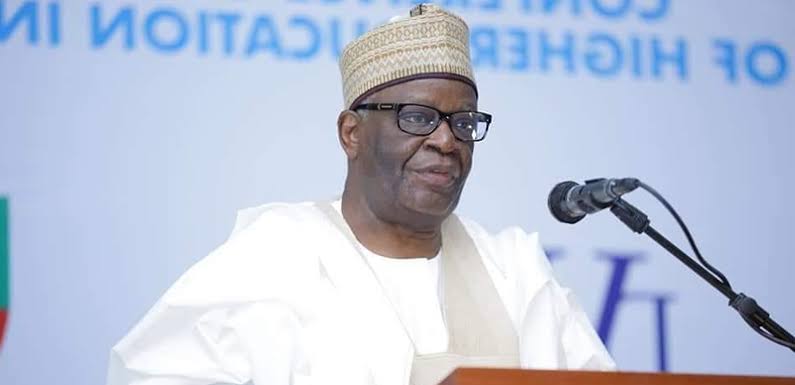
Prof Ibrahim Gambari, an ex-Chief of Staff to former President Muhammadu Buhari, says those who benefited most from Nigeria are the ones least committed to its stability. Prof Gambari spoke during an interview on Channels Television’s Politics Today on Monday. He said that his three years of service in the administration equipped him with insights into Nigeria. According to him, this category of people often seeks power but lacks the willingness to make sacrifices for ordinary citizens. “What is shocking is that I have seen the possibilities of that office, of the presidency. But I have also seen how those who benefitted most from what this country has to offer are the least committed to its stability, progress and development. “They seek power, but they are not willing to make the sacrifices that come with the responsibility to govern, which include being fair and just, and thinking nationally rather than ethnically or religiously. “Some of these issues weigh heavily on me, but the opportunities for change are there. “However, with experience, you also come to understand the limitations involved in bringing about rapid change,” he said. THENEWSCREDIT recalls that Buhari appointed Gambari, who served as a minister during his military regime in the 1980s, as his Chief of Staff in 2020 after the death of Abba Kyari, who occupied the position until his demise.
POLITICS /  Tue 03 Feb
Posted By; Akintayo Asamu

Buhari was same I worked with in 1984, nothing like Jubrin of Sudan – Gambari

Chief of Staff to late former President Muhammadu Buhari, Prof Ibrahim Gambari, says he has no doubt that he was the same person he worked with in 1984. Prof Gambari made this known on Monday while fielding questions in an interview on Channels Television’s Politics Today. According to him, there was nothing like ‘Jubril of Sudan’ as widely purported by some Nigerians. He said: “I’m sorry to disappoint. I had no doubt at all that the Buhari I knew in 1984 was the same until his death. That was really quite a silly thing to say he was a different person (Jubril of Sudan). “But the fact is that you have people in this country who actually believe the worst about anything and any government. “This man was talking to me when he offered me the job. He was talking to me about the things we did in 1984 and 1985 to the details. He was talking about the kind of loyalty he got from me.”
NEWS /  Tue 03 Feb
Posted By; Akintayo Asamu

140 million Nigerians to be plunged into poverty in 2026 – Economist, Ngwu

Director of Public Sector Initiative, Lagos Business School, Franklin Ngwu, says at least 140 million Nigerians will be described as poor in 2026 despite the reform by the President Bola Tinubu’s administration, particularly the issue of foreign exchange floating. Speaking during an interview on Arise Television’s ‘Prime Time’ on Monday, Ngwu said unemployment is going up. “I think the way to look at it is maybe to look at key economic indicators before and after. But in terms of, did we need reform? Yes, we needed reforms. “Another issue is the way the reforms were implemented, basically looking at fuel subsidy removal and then foreign exchange, I mean, other reforms follow that. “So if we look at key economic indicators; unemployment, how are we doing at the moment? it’s rising. Poverty, is it going down or going up? It’s increasing. Debt- Is it going up or going down? It’s increasing. “Inflation is being rebased, and we are told it’s coming down to about 15%. Revenue of the government, is it increasing? Yes, it’s increasing in terms of other economic indicators. “So you have some of them going up and some of them coming down. But the main thing is how do ordinary Nigerians see, perceive and feel about these reforms? And the two key areas will be poverty and unemployment. “And if you look at this, the UN report has said that about 30 million Nigerians will move into poverty this year. So it means that we are looking at almost 140 million Nigerians described as poor in terms of unemployment,” he said.
POLITICS /  Mon 02 Feb
Posted By; Akintayo Asamu

Wike vows to protect PDP from ‘vampires,’ monitor Oyo politics

The Minister of the Federal Capital Territory, Nyesom Wike, has said he is closely following developments within the Oyo State chapter of the Peoples Democratic Party, insisting that his interest is driven by a desire to see the party survive and succeed. Wike made the remarks on Monday while speaking at the 105th meeting of the PDP’s National Executive Committee in Abuja. He told party leaders that his focus was not limited to one state but extended to the overall stability and progress of the PDP across the country. “Let me declare my interest clearly: I am interested in the survival and success of this party. I am also interested in all the happenings in Oyo State PDP. That is all I am interested in,” he said. During his address, the former Rivers State governor spoke about the party’s internal disputes, ongoing legal issues and the need to reposition the PDP ahead of future elections. He dismissed claims that party members were being intimidated, arguing that recent court cases had weakened such threats. “Who will intimidate us to the end? Some of us, by the grace of God, do not see what anyone can threaten us with. The legal battle has collapsed. They have no option but to recognise the Caretaker Committee,” Wike stated. He also warned against what he described as attempts by “vampires” to hijack the party’s structure across the 36 states and the Federal Capital Territory, stressing that such efforts must be resisted. According to him, the party is now waiting for clear guidance from the Caretaker Committee, particularly on the conduct of delayed congresses, which he said are essential for organising a credible national convention. “They have no choice. We are waiting for the Caretaker Committee to give direction on the next steps, especially to ensure that congresses already due are conducted, after which we move to the National Convention,” he said. Wike urged PDP members to abandon what he described as a culture of entitlement and return to grassroots mobilisation, warning against treating the party as a charity. “Go to the wards. Go to the polling units. Go to the grassroots. Forget the idea that this is a charity organisation. Many people move from place to place without any political identity,” he cautioned. He rejected the view that a political party’s strength depends solely on having incumbent governors, recalling his own rise within the party. “Some people believe that if you do not have a sitting governor, then you are nothing. Who told them that? I was not a governor when I became governor. We were told we were not governors, but we became governors,” he said. Despite the challenges facing the PDP, Wike maintained that the party remains a strong political force capable of recovery. “The PDP is too strong, very strong. We must capitalise on what we have and move forward,” he added. While acknowledging peace appeals from the Board of Trustees and the National Working Committee, he cautioned party members to remain alert, warning that efforts to destabilise the PDP were ongoing. “Yes, the BoT has appealed for peace. Yes, the NWC has appealed for peace that is their responsibility. But those of us following the process must be extremely careful. We must be vigilant,” he said. He expressed confidence that such attempts would not succeed, urging members to stay united. “They will not give up until they believe you are destroyed. But I will not be destroyed. You will not be destroyed. Let us move forward,” Wike said. The FCT minister also highlighted the party’s internal capacity, pointing to its legal and organisational officers as assets in navigating the current situation. “We have a competent Legal Adviser. We have a competent National Organising Secretary. Experience matters. When we combine our collective experience, the results will speak for themselves,” he said. Wike concluded by thanking NEC members for attending the meeting at short notice and encouraged them to remain committed to rebuilding the PDP as a strong opposition party. Its party bloc has fixed March 28 and 29, 2026, for its national convention in Abuja, where the party will elect a new National Working Committee and other statutory organs. The announcement followed the faction’s 105th meeting of the PDP National Executive Committee held on Monday in Abuja. The decision follows a Federal High Court ruling in Ibadan, which nullified the PDP’s National Convention held between November 15 and 16, 2025, that produced Taminu Turaki as the PDP National Chairman. The court also affirmed that the Caretaker Committee led by Abdulrahman Mohammed and Samuel Anyanwu remains the only recognised NWC, pending a valid national convention.
POLITICS /  Mon 02 Feb
Posted By; Akintayo Asamu

2027: I’ll run as presidential candidate – Peter Obi rejects VP role

Peter Obi, a prominent figure within the African Democratic Congress, ADC, has signaled his plan to seek the party’s presidential ticket ahead of the 2027 general elections. He revealed this ambition while addressing supporters at a campaign event for the ADC candidates in the Federal Capital Territory, FCT, Area Council elections, which took place at the Abuja Municipal Area Council, AMAC. In his remarks, Obi made it clear that he is aiming for the top position and would not settle for a subordinate role in the party’s long-term political strategy. He stressed that the AMAC election is closely tied to his wider political aspirations and called on party faithful and local residents to throw their weight behind the ADC candidate. According to Obi, success in the AMAC poll would play a crucial role in advancing his political mission, adding that his involvement in the coming elections is as a leading contender and not in a supporting capacity. “This coming election, support us in AMAC; it will help me. Your support in AMAC is critical to our journey. I am involved and contesting the coming election as number one. When I come back, you will see. I assure you,” Obi said. Obi’s supporters, particularly members of the Obidient Movement, have intensified pressure on the ADC leadership to adopt him as the party’s standard-bearer for 2027, with many insisting that the ticket should go to Obi alone. However, the ADC is hosting several other high-profile politicians with presidential ambitions, including former Vice President Atiku Abubakar and former Minister of Transportation, Rotimi Amaechi.
Page 82 of 124


Home   About Contact

2026  ©
Developed by KITE