NEWS
11th Senate Set to Consider Single Six-Year Term for President and Governors After 2027 Polls
Published on Tue 09 Jun 2026 By Akintayo Asamu
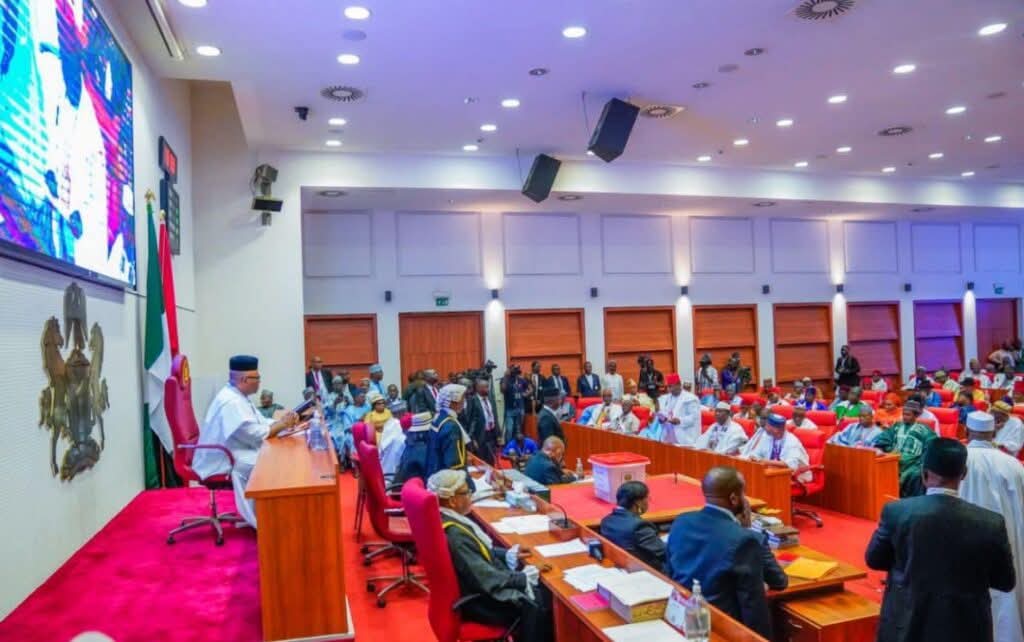
 ABUJA, NIGERIA — The Nigerian Senate is officially preparing to consider a groundbreaking constitutional amendment bill that proposes a single six-year tenure for the President and state governors, intended to take effect after the 2027 general elections.

The disclosure was made on Tuesday on the floor of the upper legislative chamber by the Senate Leader, Opeyemi Bamidele, who revealed plans to sponsor the bill ahead of the transition to the 11th Senate.

According to Bamidele, the core objective of the reform is to eliminate the distractions associated with the current two-term structure. Under the prevailing system, elected executives frequently spend a significant portion of their first four-year term focused on political survival and plotting re-election strategies.

"If you know you are there for six years, only one tenure, you put in your best from day one. You know this is the only chance that you have."— Senate Leader, Opeyemi Bamidele

Lawmakers backing the proposal argue that an unrenewable six-year term will allow executives to focus fully on public service delivery, policy implementation, and long-term national development without political interference.

The legislative push aims to reshape Nigeria’s executive landscape through several major constitutional shifts:

Replaces the current four-year renewable system with a strict, non-renewable six-year single term for the President and state governors.

The law is strategically designed to be deliberated and implemented following the conclusion of the 2027 general elections to prevent immediate self-succession conflicts.

Proponents expect the bill to significantly lower the financial burden, national friction, and electoral costs tied to repetitive, high-stakes re-election campaigns.

The concept of a single executive term is not entirely new to Nigeria`s democratic discourse. Similar attempts were explored during previous constitutional reviews, notably under former Presidents Olusegun Obasanjo and Goodluck Jonathan, though prior efforts ultimately fell through due to regional anxieties and political misalignment.

Prominent opposition figures, including former Vice President Atiku Abubakar, have also recently advocated for a six-year single term tied to a rotating presidency between Nigeria`s geopolitical zones to foster equity.

While the announcement marks a defining moment for electoral reform discussions, Senate Leader Bamidele emphasized that the proposal is in its formative stage. Passing the bill will require comprehensive constitutional amendment procedures. This includes:Extensive public stakeholder consultations.A two-thirds majority vote in both chambers of the National Assembly.Formal concurrence from at least 24 of the 36 State Houses of Assembly.

As debate builds among political leaders, legal experts, and citizens, the proposed legislation stands to be one of the most substantial structural shifts to Nigeria’s democracy since the return to civilian rule in 1999.
ADVERTISMENT

You May Also Like